The Movie Cricket

Movie reviews by Sean P. Means.

  • The Movie Cricket
  • Sundance 2026
  • Reviews
  • Other writing
  • Review archive
  • About

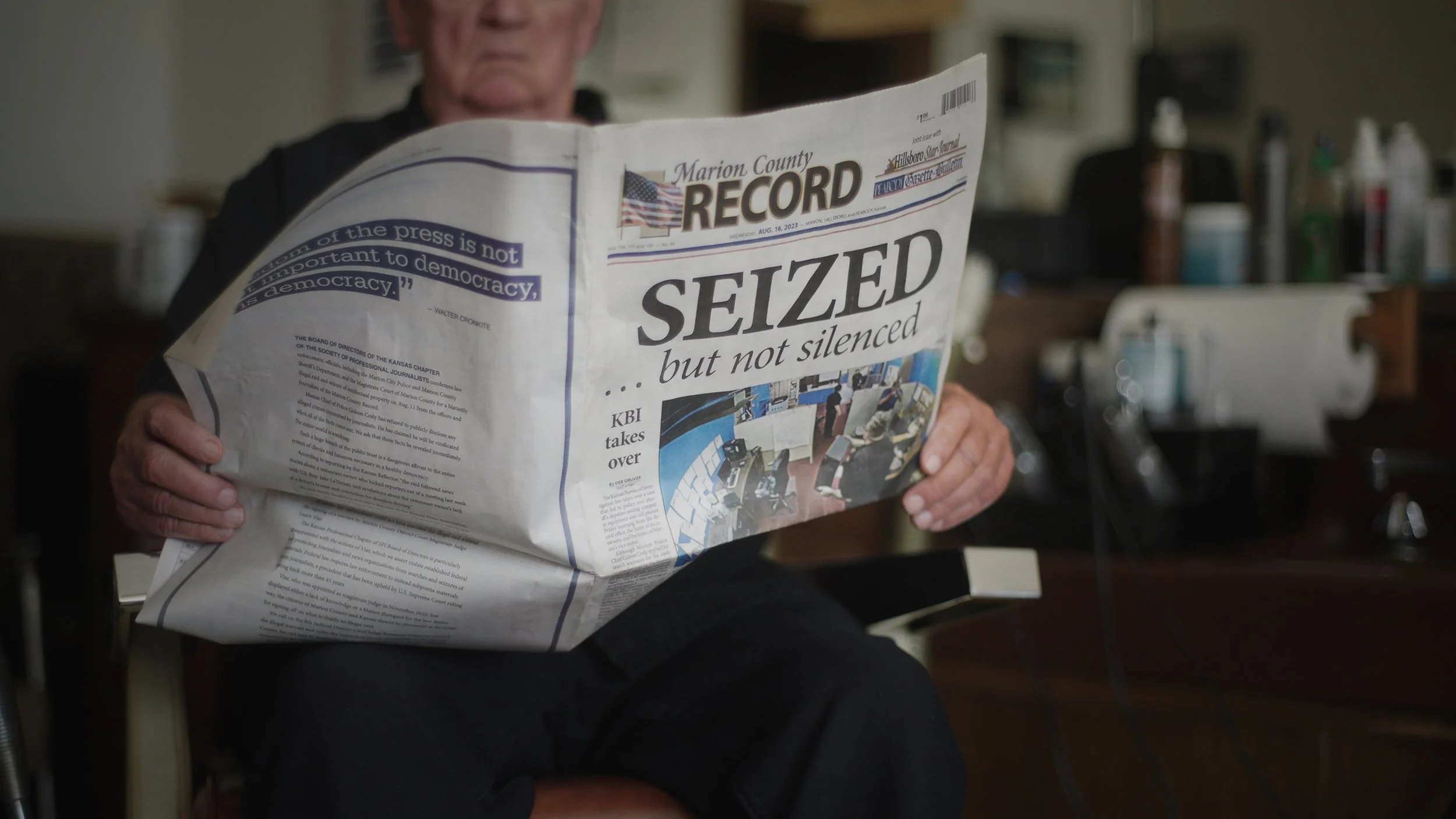
A resident of Marion, Kansas, reads a copy of the town’s paper, the Marion County Record, in a moment from Sharon Liese’s documentary “Seized,” playing in the U.S. Documentary competition of the 2026 Sundance Film Festival. (Photo by Jackson Montemayor, courtesy of Sundance Institute.)

Sundance review: 'Seized' chronicles with fascinating detail a battle between a small-town paper and local officials who appeared eager to stifle it

January 25, 2026 by Sean P. Means

As an old newshound, I was primed to like “Seized,” director Sharon Liese’s documentary about a small-town Kansas newspaper’s legal battle against the town’s overreaching officials — but what made me fall for the movie was how Liese, like a good reporter, digs deeper to get the full story.

The part of the story that most people know about: On Aug. 11, 2023, police in Marion, Kansas, raided the offices of the town’s weekly newspaper, the Marion County Record, seizing computers, cellphones and materials used in reporting. They did the same at the home of the paper’s editor, Eric Meyer, raising the ire of Meyer’s 98-year-old mother, Joan, whose husband joined the paper in 1948 — and who bought the paper in 1998.

The story gained even more traction nationally when Joan Meyer died the next day, reportedly from the stress caused by the police seizure.

Liese’s documentary raises some serious questions about the actions of the Marion police, the county sheriff, the county prosecutor and the judge who approved the search warrant — and how all of their actions appear to be clear violations of the First Amendment protections for a free press. 

The movie also shows how city and county officials’ gripes about the Marion County Record, and Eric Meyer in particular, go back decades. Meyer talks about a 2004 story, about an algae-contaminated reservoir and the conflicting information he got from city officials — including one who is now Marion’s mayor. The Record also had done investigative work about the police chief’s history at other police departments, which among some residents Liese interviewed smacked less of watchdog journalism than a grudge against the chief.

“Seized” shows Meyer to be a gruff old-school journalist, particularly when juxtaposed with a cub reporter who arrives about a year after the raids. Their conversations provide, in a nutshell, a look at where American journalism has been and where it’s going, and the continued battles the profession faces from technology, anti-press politicians and a distracted audience.

——

‘Seized’

★★★1/2

Screening in the U.S. Documentary competition of the 2026 Sundance Film Festival. Not rated, but probably PG-13 for some strong language. Running time: 94 minutes.

The film screens again: Monday, Jan. 26, 1:10 p.m., Redstone Cinemas 2, Park City; Tuesday, Jan. 27, 9:30 p.m., Broadway Centre Cinemas 6, Salt Lake City; Thursday, Jan. 29, 8:30 a.m., Park City Library, Park City; Saturday, Jan. 31, 2:30 p.m., Redstone Cinemas 4, Park City. Also screening on Sundance’s web portal, Thursday through Sunday, Jan. 29 to Feb. 1. 
January 25, 2026 /Sean P. Means
Comment

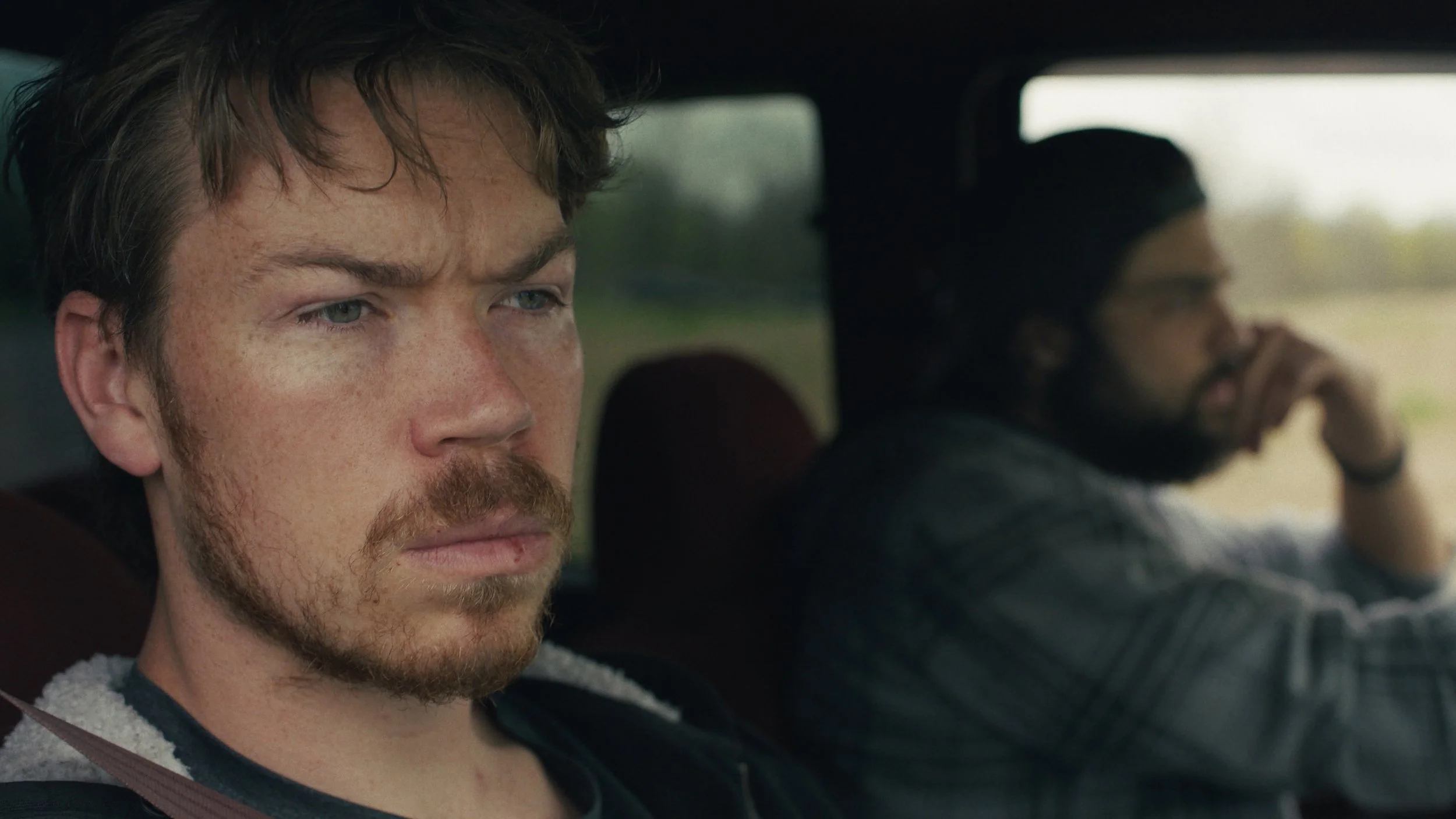
Cody Parsons (Will Poulter, left) and his foster brother, Jack (Noah Centineo), are enrolled in a county-mandated drug court, in writer-director Adam Meeks’ drama “Union County,” playing in the U.S. Dramatic competition of the 2026 Sundance Film Festival. (Photo by Stefan Weinberger, courtesy of Sundance Institute.)

Sundance review: 'Union County' puts Will Poulter and a cast of nonprofessional actors through a richly detailed look at recovery from addiction

January 25, 2026 by Sean P. Means

Most movies about recovery from addiction fall into familiar plot patterns of struggle, relapse and redemption — but what makes writer-director Adam Meeks’ drama “Union County” one of the better examples of this genre is how he digs into the true-life details of such battles.

Will Poulter (“Death of a Unicorn”) plays Cody Parsons, recently out of jail and returned to his Ohio home town, where he’s enrolled in a county-mandated drug court program. He’s required to show up at court every day, keep a daily log of his activities, and take regular drug tests. On his first day, he runs into his foster brother, Jack (Noah Centineo), who’s also in the program.

Getting Cody and Jack back together isn’t the best thing for either man’s recovery efforts. We see them drive up to a house, buy some drugs, and shoot up in Cody’s car. They immediately crash the car, and Cody stumbles into the house where their sister, Kat (Emily Meade), lives with her little girl. The next morning, after finding Cody asleep on her couch, Kat calls the cops.

If there’s a silver lining in this moment, it’s that the judge decided Jack should be sent to a more restrictive rehab program in a nearby town — which opens up a space for Cody, who had been living out his car, to stay in the town’s sober living center. 

Meeks roots the story in the reality of addiction treatment in Bellefontaine, Ohio, about 30 minutes from the filmmaker’s home town of Columbus. The judge and the county clerk who oversee the drug court program, as well as several of its participants, portray themselves, depicting how opioid addiction has devastated this small town and many others like it. 

Poulter gives a grounded and understated performance that shows how hard and how mundane the day-to-day struggle to stay clean can be. Poulter’s portrayal of Cody’s addiction battle feels almost as real as the ones of his nonprofessional casemates.

——

‘Union County’

★★★1/2

Screening in the U.S. Dramatic competition of the 2026 Sundance Film Festival. Not rated, but probably R for drug use and language. Running time: 97 minutes.

The film screens again: Monday, Jan. 26, 8:30 a.m., Park City Library, Park City; Tuesday, Jan. 27, 8:10 p.m., Redstone Cinemas 2, Park City; Wednesday, Jan. 28, 6 p.m., Rose Wagner Performing Arts Center, Salt Lake City; Sunday, Feb. 1, 3:45 p.m., Holiday Village Cinemas 1, Salt Lake City. Park City. Also screening on Sundance’s web portal, Thursday through Sunday, Jan. 29 to Feb. 1. 

January 25, 2026 /Sean P. Means
Comment

Hanna (Hana Mana) dances in her Tehran apartment in "The Friend's House is Here," directed by Hossein Keshavarz and Maryam Ataei, playing in the U.S. Dramatic competition of the 2026 Sundance Film Festival. (Photo courtesy of Sundance Institute.)

Sundance review: 'The Friend's House Is Here' is a joyous story of friendship, and an insistent reminder of the fragility of artistic freedom

January 25, 2026 by Sean P. Means

You may not find two better friends, and more liberated creative spirits, than Pari and Hanna, who share an apartment and rehearsal space in Tehran’s underground art scene — and the first of many surprises in “The Friend’s House Is Here” is that there is an underground art scene under the nose of Iran’s repressive regime.

Pari (Mahshad Bahram) is a playwright who creates her works outside the view of Iran’s official censors. The play she’s making as the film starts has Pari frantically contacting all her friends, because her best pal Hanna (Hana Mana) has gone missing — possibly in the regime’s custody. Hanna is in the front of the audience watching this play, and at the afterparty admits that she didn’t understand it all, except the parts about her.

Hanna seems like a likely target for the regime’s oppression. She has more than 100,000 followers on Instagram, where she posts videos that show her dancing in front of world landmarks. She has applied for a visa to leave Tehran for Paris. And she stays up all night chatting with Ali (Farzad Karen), a video editor who — if you read between the lines a bit — is slowly becoming Hanna’s boyfriend.

Hossein Keshavarz and Maryam Ataei, the husband-and-wife team that wrote and directed this subsersively joyous film, follow Pari and Hanna as they hang out in cafes and go shopping at the mall — and only once get harassed because they don’t wear the hijab. One could easily edit their scenes together as a gal-pal comedy, without the constant tension that we’re in Tehran, where the axe of oppression may fall at any time.

Bahram and Mana deliver a twinned pair of strong performances, as the oh-so-serious Pari and the vivacious Hanna work to keep their artistic voices and their cluster of collaborative friends intact. They make “The Friend’s House Is Here” both a charming story of true friendship and an urgent reminder of how important and how fragile artistic freedom can be.

——

‘The Friend’s House Is Here’

★★★1/2

Screening in the U.S. Dramatic competition of the 2026 Sundance Film Festival. Not rated, but probably PG-13 for suggestions of violence and sensuality. Running time: 97 minutes; in Farsi with subtitles.

The film screens again: Sunday, Jan. 25, 4:40 p.m., Redstone Cinemas 2, Park City; Friday, Jan. 30, 8:10 p.m., Redstone Cinemas 2, Park City; Sunday, Feb. 1, 6:45 p.m., Holiday Village Cinemas 1, Park City. Also screening on Sundance’s web portal, Thursday through Sunday, Jan. 29 to Feb. 1. 

January 25, 2026 /Sean P. Means
Comment

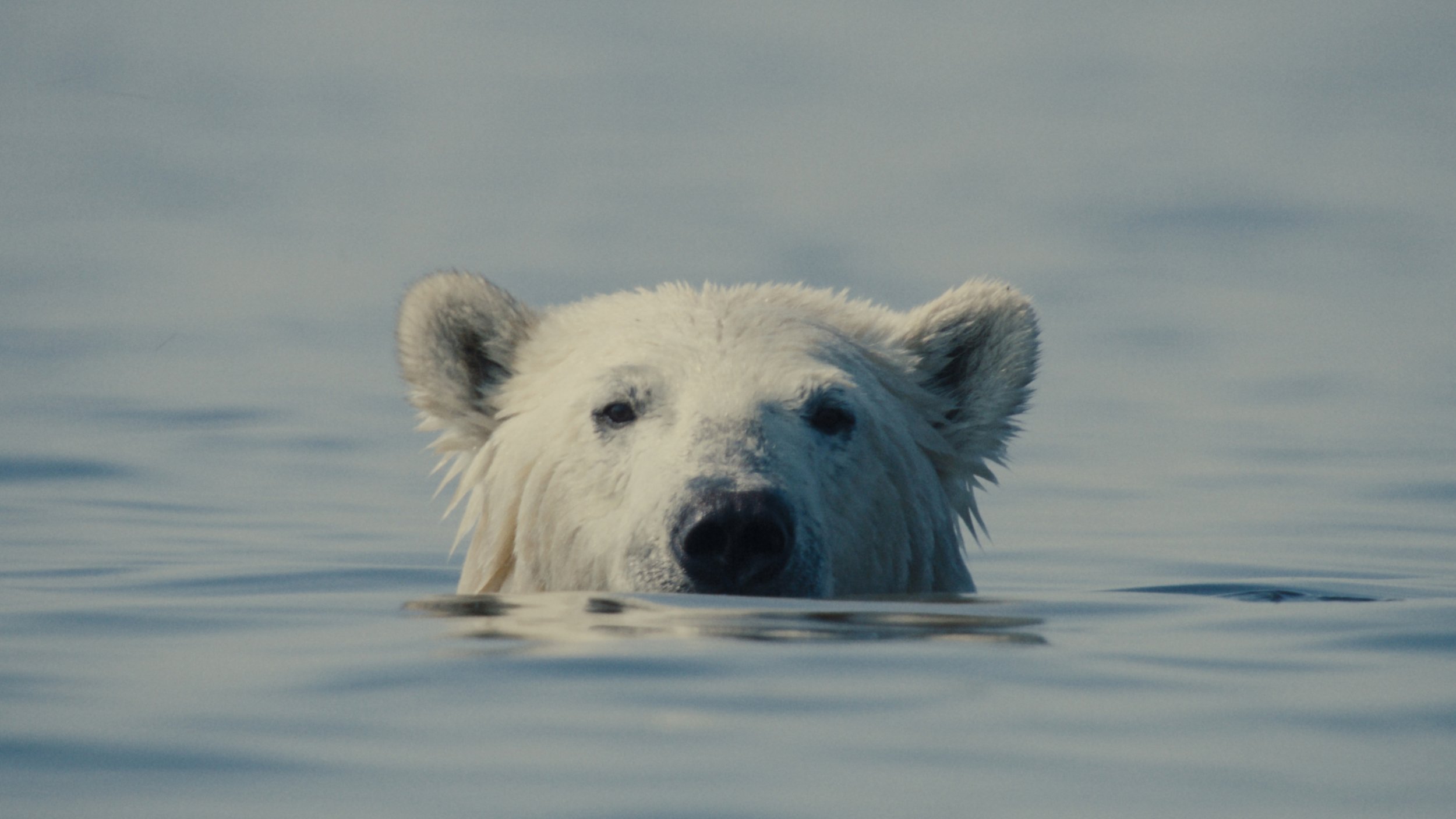
A polar bear surfaces from a swim in Hudson Bay, in the documentary “Nuisance Bear," directed by Gabriela Osio Vanden and Jack Weisman, and playing in the U.S. Documentary competition of the 2026 Sundance Film Festival. (Photo by Gabriela Osio Vanden, courtesy of A24.)

Sundance review: 'Nuisance Bear' is a documentary that's long on impressive footage, but short on suggesting solutions for Canada's polar bear problem

January 25, 2026 by Sean P. Means

There’s some impressive nature cinematography in “Nuisance Bear,” a documentary that captures two divides — between humans and polar bears, and between Indigenous people and people of European descent who share Canada’s far northern regions.

Directors Gabriela Osio Vanden and Jack Weisman take their cameras to Churchill, Manitoba, on the western shore of Hudson Bay in northern Canada. Churchill calls itself the “Polar Bear Capital of the World,” and there’s a fair-sized tourist industry based on taking people out where they can see polar bears in their natural environment.

The problem is that the polar bears’ natural environment — namely, shelves of sea ice, from which they can hunt for seals, beluga and big fish — is disappearing. The ice doesn’t form like it used to, so the bears are mostly stuck on land, which they have to share with people. The bears often get closer to Churchill than people would like, so Canadian wildlife officers have to scare them away from human habitation with fireworks and other tricks.

The filmmakers also take us further north along the bay shore, to the town of Arviat in Nunavut. Here, the indigenous Inuit people have coexisted with the bears for generations, and are a bit resentful of the Canadian government limiting bear hunting. The government says the polar bear is endangered, while the Inuits see more bears encroaching on the town than ever before.

The film’s narrator is an Inuit leader, Mike Tunalaaq Gibbons, who speaks in his native language about the Indigenous people’s relationship with the bears, and how Canada’s European colonizers disrupted that balance by working to destroy Inuit culture. Gibbons describes movingly how shame for his Indigenous culture — fostered by white-run boarding schools — led to a personal tragedy.

The imagery of these bears, encroaching on human habitation, forms the backbone of “Nuisance Bear,” and is enough to make me recommend the film. Unfortunately, there’s little offered in the way of solving the bears’ problem — and, by extension, the problems faced by the humans who live near them.

——

’Nuisance Bear’

★★★

Screening in the U.S. Documentary competition of the 2026 Sundance Film Festival. Not rated, but probably PG-13 for some wildlife bloodshed and thematic material. Running time: 90 minutes; in English and Inuit with subtitles.

The film screens again: Sunday, Jan. 25, 11 a.m., Redstone Cinemas 4, Park City; Wednesday, Jan. 28, 5:20 p.m., Redstone Cinemas 3, Park City; Saturday, Jan. 31, noon, Holiday Cinemas 3, Park City; Sunday, Feb. 1, 11:30 a.m., Broadway Centre Cinemas 3, Salt Lake City. Also screening on Sundance’s web portal, Thursday through Sunday, Jan. 29 to Feb. 1. 

January 25, 2026 /Sean P. Means
Comment

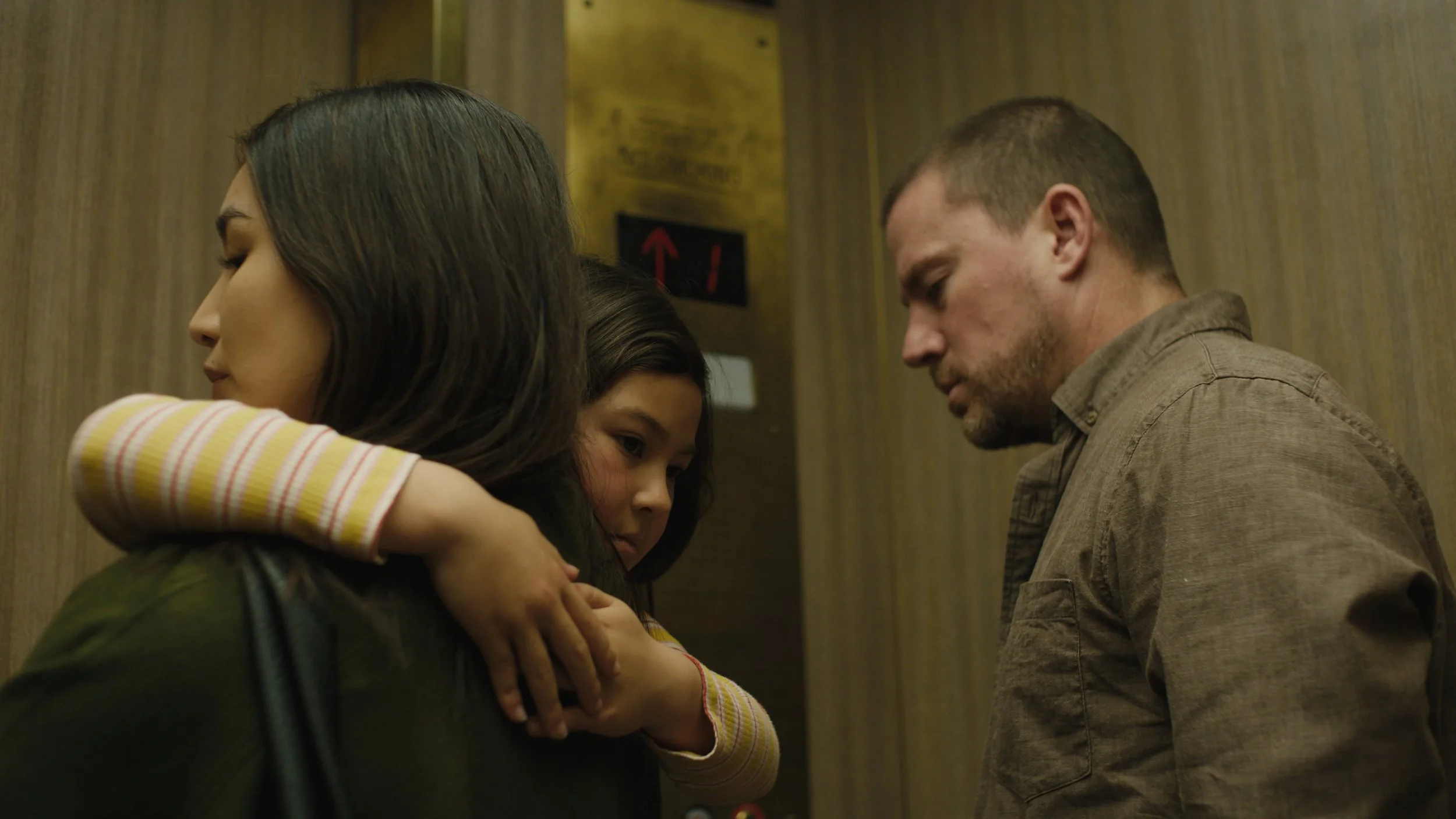
Claire (Gemma Chan, left) holds her daughter, Josephine (Mason Reeves), while her husband, Damian (Channing Tatum), looks on, in a scene from director-writer Beth de Araújo’s drama “Josephine,” playing in the U.S. Dramatic competition of the 2026 Sundance Film Festival. (Photo by Greta Zozula. courtesy of Sundance Institute.)

Sundance review: 'Josephine' tackles some dark territory — a child witnessing a brutal event — with intelligence and sensitivity

January 25, 2026 by Sean P. Means

A couple tries, and spectacularly fails, at protecting their 8-year-old girl from the horrors of the real world in “Josephine,” writer-director Beth de Araújo’s gripping drama seen largely from that girls viewpoint.

Josephine — played by Mason Reeves, in a heartbreaking debut — and her dad, Damian (Channing Tatum), are going to San Francisco’s Golden Gate Park early one Sunday morning to practice her soccer moves and do some jogging. When they get separated on a trail, Josephine sees something terrible: A man (Philip Ettinger) beating and raping a woman (Syra McCarthy).

Josephine has no understanding of what she’s seen, and no way to process it. Damian tries to defer and deflect, telling his wife, Claire (Gemma Chan), that Jo’s too young to be affected by this. Claire clearly knows better, and insists Jo see a child psychologist to help her make sense of what she witnessed. Jo objects, dangerously so, and gets Dad on her side — the first of many arguments Damian and Claire have about how to help their daughter.

Meanwhile, Jo starts imagining the rapist in her room, walking down the street, and anywhere else she is. She also begins to react harshly, even violently, to any male of the species, from the bully at her school to her own dad.

There’s no scene in “Josephine” where young Reeves doesn’t appear, and often the camera is pointing out from her point of view. This is particularly effective in the late innings, when the little girl is faced with the decision of whether to testify in court against the rapist. 

Both Tatum and Chan are outstanding here, exposing the cracks in what had seemed to be a happy family — as both parents find their own past traumas hindering them from helping their daughter through this current one. “Josephine” is a dark journey through some difficult subject material, but de Araújo handles it with intelligence and sensitivity, treating Jo’s emotional state as valid as that of any of the adults.

——

‘Josephine’

★★★1/2

Screening in the U.S. Dramatic competition of the 2026 Sundance Film Festival. Not rated, but probably R for a violent sexual assault, other violence, and language. strong sexuality, Running time: 120 minutes.

The film will screen again: Monday, Jan. 26, 1 p.m., Rose Wagner Center for the Performing Arts, Salt Lake City; Thursday, Jan. 29, 4 p.m., Redstone Cinemas 1, Park City; Sunday, Feb. 1, 4:30 p.m., The Yarrow, Park City. Also screening on Sundance’s web portal, Thursday through Sunday, Jan. 29 to Feb. 1. 

January 25, 2026 /Sean P. Means
Comment

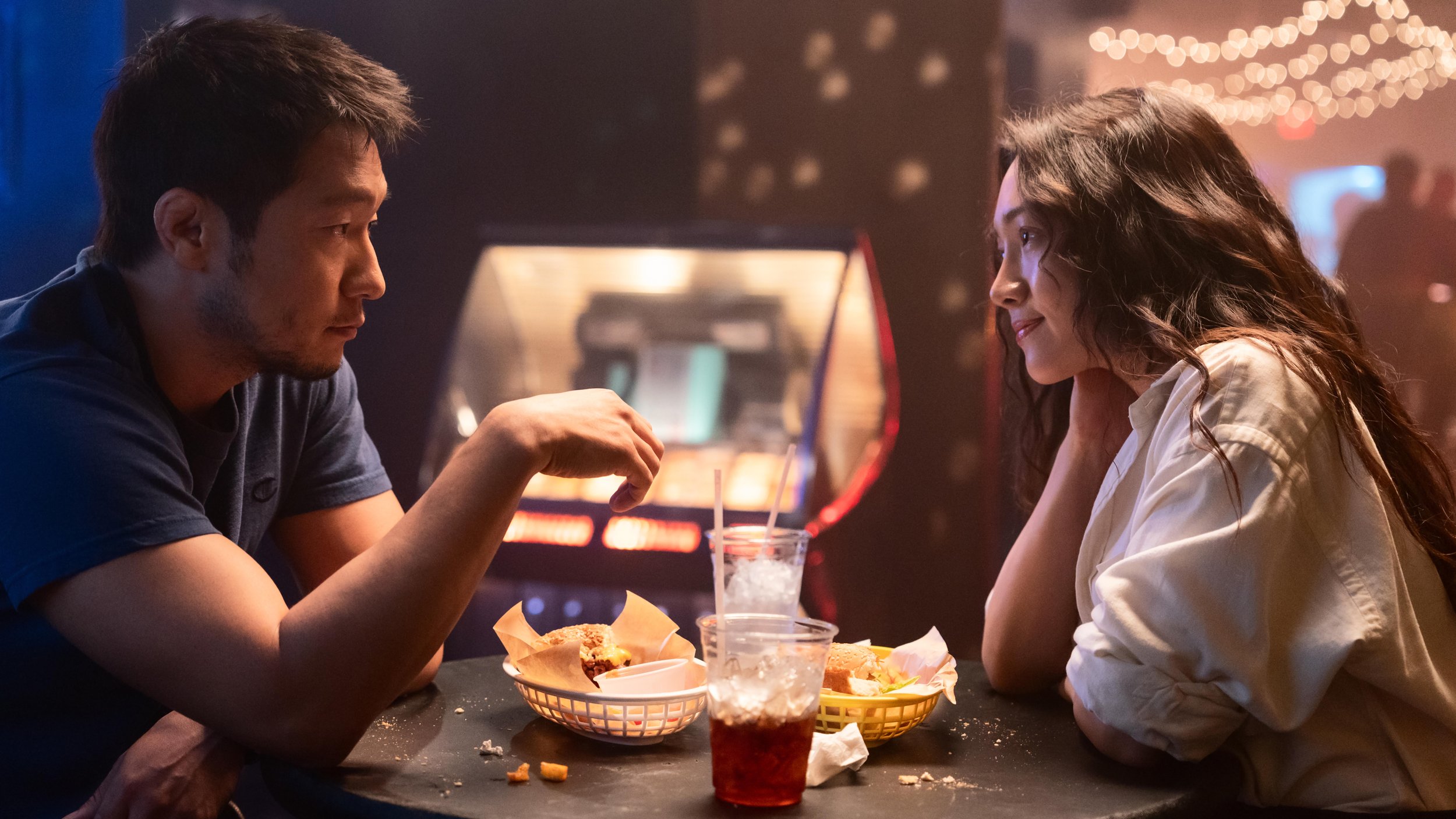
Eli (Son Sukku, left) and Audrey (Moon Choi), two Korean American thirty-somethings in New Jersey, try to make a connection in writer-director Stephanie Ahn’s drama “Bedford Park.” (Photo by Jeong Park, courtesy of Sundance Institute.)

Sundance review: 'Bedford Park' captures two lonely people, dealing with family histories and Korean American expectations, coming together in a tender drama

January 24, 2026 by Sean P. Means

Two people trying to find connection and make up for past mistakes come together in “Bedford Park,” a sensitive romantic drama brilliantly handled by director-screenwriter Stephanie Ahn.

The story spins out from the consequences of a minor traffic accident in New Jersey, sometime in the aughts. Eli (Son Sukku), a Korean American college student avoiding his adoptive brother, Jay (Jefferson White), swerves into the oncoming lane, and hits a car driven by an elderly Korean American woman (Won Mi Kueng). The woman suffers a minor injury, and calls her daughter, Audrey (Moon Choi) to take care of her and help negotiate the damages.

Audrey has a complicated backstory. She works as a physical therapist, but she also posts on dating apps that attract men who are into BDSM stuff — and it’s a coin flip whether she’s doing it for money or to get out of her own head. She also has a complicated relationship with her mom and her dad (Kim Eung-soo), who gets abusive when he’s been drinking, which happens a lot.

Audrey and Eli are annoyed with each other at first, as they try to work out how to pay the damages from the accident. But when Audrey learns Eli is without a car, and she’s looking to get out of the house, she offers to give him rides to and from work. You may imagine what happens next, but it’s more complicated than that — as both Audrey and Eli try to navigate the expectations placed on them by their very different families.

Ahh lets the audience get to know Eli and Audrey just as they’re getting to know each other — a little bit at a time, with revelations that show the complexities of their childhoods and current situations, like any couple must navigate. It helps that her lead actors, both based in Seoul but making their way into U.S. film, give strong, sympathetic performances.

——

‘Bedford Park’

★★★1/2

Screening in the U.S. Dramatic competition of the 2026 Sundance Film Festival. Not rated, but probably R for strong sexuality, language and images of domestic violence. Running time: 121 minutes; in English and in Korean with subtle.

The film will screen again: Sunday, Jan. 25, Redstone Cinemas 1, Park City; Wednesday, Jan. 28, 2:30 p.m., Eccles Theatre, Park City; Friday, Jan. 30, 6 p.m., Redstone Cinemas 4, Park City; Saturday, Jan. 31, 2:15 p.m., Broadway Centre Cinemas 3, Salt Lake City. Also screening on Sundance’s web portal, Thursday through Sunday, Jan. 29 to Feb. 1. 

January 24, 2026 /Sean P. Means
Comment

Sundance review: 'American Doctor' takes viewers to Gaza, through the view of three doctors trying to save lives during wartim

January 23, 2026 by Sean P. Means

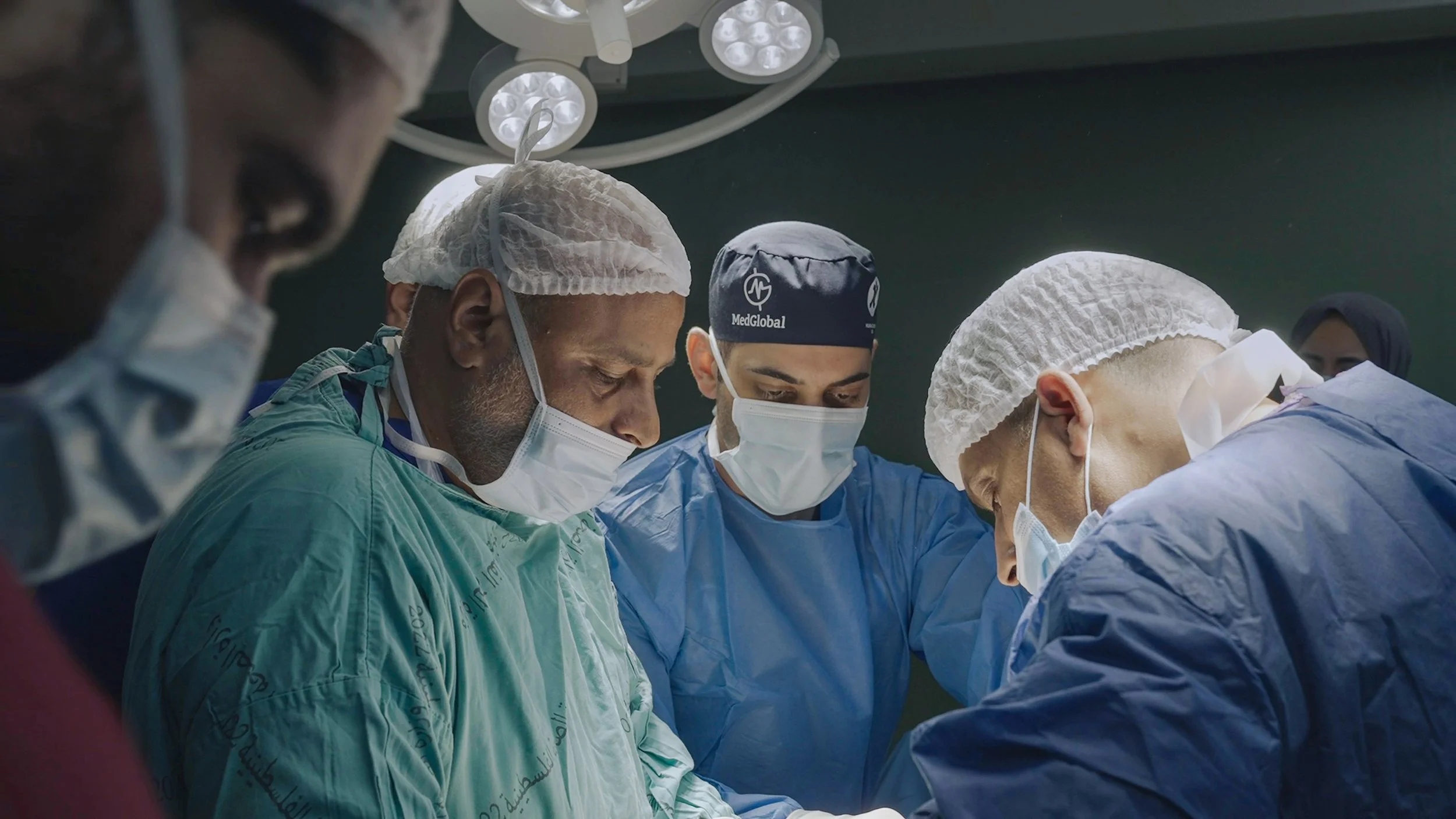
“Harrowing” doesn’t begin to describe the war violence shown in director Poh Si Teng’s documentary “American Doctor,” which shows the efforts of three U.S.-based surgeons trying to save lives in Gaza — and how they try to process the horrors of what they’ve experienced.

The three doctors have all worked at Nasser Medical Center, in Khan Younis in Gaza, often at the center of the response to shelling and bombings by Israeli military forces. And their reactions, as we find out, are shaped in part by their different backgrounds:

• Dr. Feroze Sidhwa, an abdominal surgeon from California, arrived last March during a ceasefire — and stayed when the bombing started. He’s of Pakistani heritage, and he talks about how his parents faith (they’re Zoroastrians) have led him to advocate for peace wherever possible. He also expresses frustration that the United States, the government of his country, supplies so many armaments to the Israeli government.

• Dr. Mark Perlmutter, an orthopedic surgeon from North Carolina, works at Nasser to save the limbs of children wounded in Gaza. He’s Jewish, but is also ferociously angry at the Israeli Defense Forces and the Netanyahu government, which he blames for perpetuating the deadly violence in Gaza.

• And Dr. Thaer Ahmad, an emergency-room doctor from Chicago, is Palestinian American. He’s worked before at Nasser, but as the movie unfolds is frustrated that the Israeli government regularly blocks him from returning to treat the wounded in Gaza. Instead, he tries to raise awareness in the U.S. of what he’s seen firsthand.

Poh Si Teng, who’s also one of the movie’s five cinematographers, captures the daily grind and panic of the doctors and nurses trying to keep people alive. The film also labors to keep the doctors’ political leanings at arm’s length — there’s a conversation at one point about whether Perlmutter’s militancy helps or hurts the hospital’s efforts — but in this hot-button atmosphere, how one views “American Doctor” may be preordained by where one stands to begin with.

——

‘American Doctor’

★★★1/2

Screening in the U.S. Documentary competition of the 2026 Sundance Film Festival. Not rated, but probably R for graphic scenes of war violence, and for language. Running time: 93 minutes; in English, and in Arabic with subtitles.

The film will screen again: Saturday, Jan. 24, 11 a.m., Redstone Cinemas 4, Park City; Sunday, Jan. 25, 11:30 a.m., Rose Wagner Center for the Performing Arts, Salt Lake City; Thursday, Jan. 29, 8:45 p.m., Park City Library, Park City; Saturday, Jan. 31, 5:30 p.m., Redstone Cinemas 4, Park City. Also screening on Sundance’s web portal, Thursday through Sunday, Jan. 29 to Feb. 1. 

January 23, 2026 /Sean P. Means
Comment

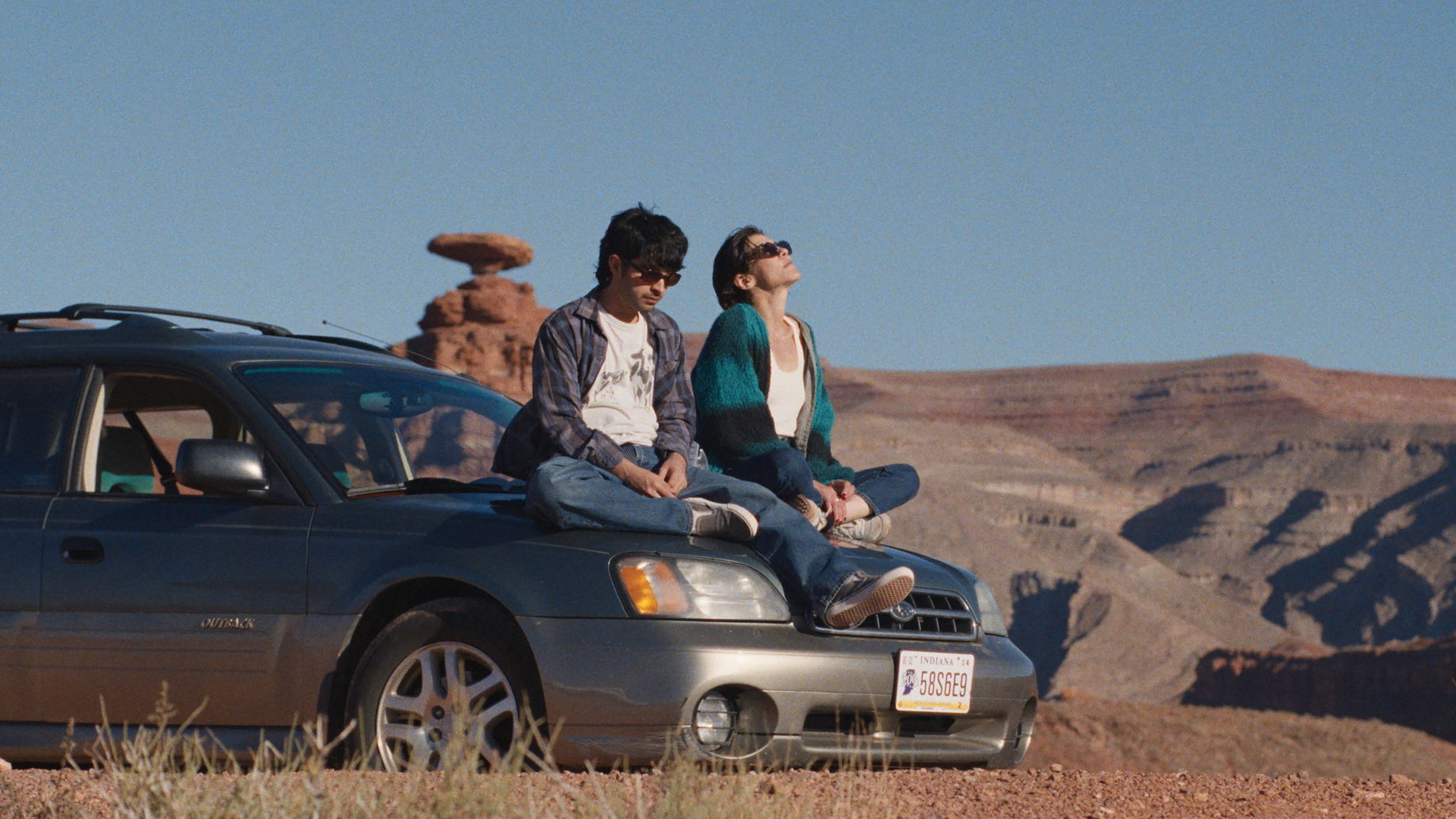
Daniel (Daniel Zolghadri, left) and her mother, Layal (Lubna Azaval), hit the road through the American West, in writer-director Ramzi Bashour’s comedy-drama “Hot Water,” playing in the U.S. Dramatic comopetition of the 2026 Sundance Film Festival, (Photo by Alfonso Herrera Salcedo, courtesy of Sundance Institute.)

Sundance review: 'Hot Water' puts a frazzled mother and her troubled son on a comic road trip, with Lubna Azabal giving a masterclass in barely concealing her stress

January 23, 2026 by Sean P. Means

Writer-director Ramzi Bashour’s road-trip movie “Hot Water” doesn’t break much new ground in the cinematic depiction of mothers and sons — but it finds sufficient wit and wisdom in the interplay of the two characters at its center.

Lubna Azaval (“Incendies”) stars as Layal, who’s fighting off some major stress. She’s an Arabic language professor at the University of Indiana, dealing with entitled students who want their justly deserved bad grades changed. She’s recently stopped smoking, and taken to eating oranges as a substitute. Her mother in Beirut has had a fall, and her sister calls regularly with updates. And she’s learned that her 19-year-old son, Daniel (Daniel Zolghadri), is being expelled from another high school — this time for fighting with a player on a rival hockey team.

Exasperated, her only solution for handling Daniel is having him live with his father, Anton (Gabe Fazio), in Santa Cruz, California. The plan is for Layal to drive with Daniel to a midpoint in Colorado — but when Anton calls to tell her he can’t do that, she must make the entire drive with Daniel to California.

What Bashour gives us next is a mostly light-hearted road trip, in which mother and son appreciate the sights on winding two-lane highways. They have some interesting encounters, with a free-spirited nudist (Dale Dickey, always delightful) and a scruffy hitchhiker, but the focus is on the softening of tensions between Layal and Daniel.

The best thing about “Hot Water” is Azabal’s performance, as she finds the fragments of humor and heartbreak in her understandably wound-up character. Azabal makes Layal the most relatable mom who ever found herself at the end of her rope.

——

‘Hot Water’

★★★

Screening in the U.S. Dramatic competition of the 2026 Sundance Film Festival. Not rated, but probably R for language, some nudity and some drug use. Running time: 97 minutes; in English and some scenes in French and Arabic, with subtitles.

The film will screen again: Saturday, Jan. 24, 9 a.m., Redstone Cinemas 1, Park City; Sunday, Jan. 25, 5:30 p.m., Broadway Centre Cinemas 3, Salt Lake City; Thursday, Jan. 29, 9 p.m., The Yarrow, Park City; Saturday, Jan. 31, Holiday Village 3, Park City. Also screening on Sundance’s web portal, Thursday through Sunday, Jan. 29 to Feb. 1. 
January 23, 2026 /Sean P. Means
Comment

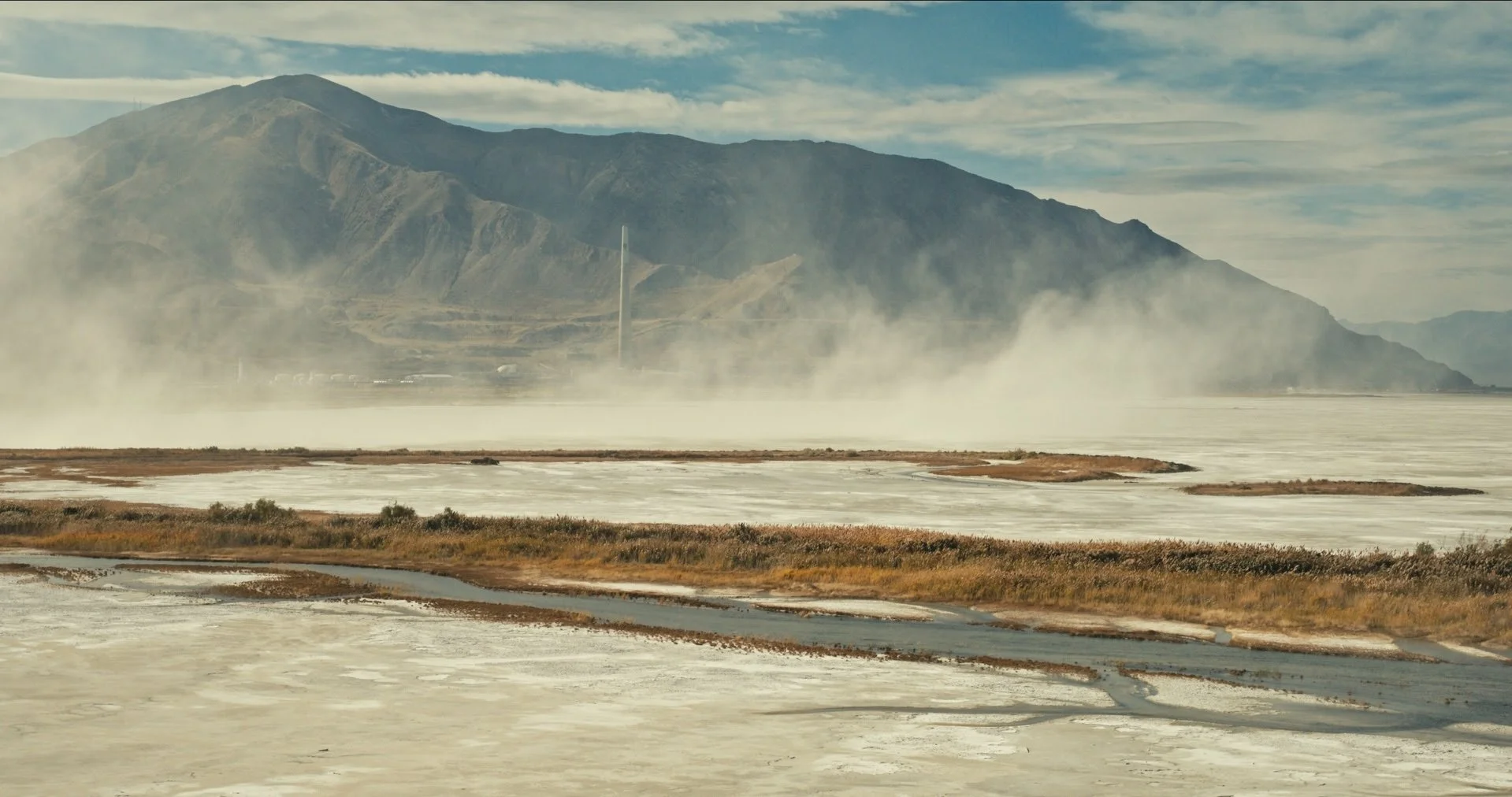
A view of the Great Salt Lake, from “The Lake,” a documentary from director Abby Ellis, premiering at the 2026 Sundance Film Festival. (Photo courtesy of Sandbox Films.)

Sundance review: 'The Lake' gives the Great Salt Lake its closeup, and highlights the people trying to save a fragile natural wonder

January 22, 2026 by Sean P. Means

I may not be the right audience for “The Lake,” director Abby Ellis’ quietly compelling documentary about the environmental plight of the Great Salt Lake — because, as a journalist in Utah whose colleagues have reported on the lake for decades, I already know a lot of the information and some of the players in this film.

If you’re from outside Utah, or are in Utah but haven’t paid attention, Ellis’ movie is a bracing introduction to the problems of what The New York Times once called an “environmental nuclear bomb.”

Ellis starts in 2023, as several scientists warn about the dangers posed by the lake losing its water supply. Exposing the lake bed, they warned, would allow toxic dust — with chemicals like arsenic and cadmium — into the air, spreading up and down the Wasatch Front, threatening the health of some 3 million people downwind. 

Two of those scientists — ecologist Ben Abbott at Brigham Young University and biologist Bonnie Baxter at Westminster University — take the lead on a study that issues a dire warning: Within five years, the lake will shrink to the point where the dust will overwhelm hundreds of square miles in Utah and beyond.

Ellis’ documentary follows the aftermath of that report, which was roundly rejected by Utah political leaders, particularly after two years of good rain reset the timetable. Ellis shows Abbott wrestling with the urgency of the lake’s plight, and whether his passion to spread the word veers into activism. Baxter, on the other hand, deals with the possibility that lake bed exposure might be affecting her own health.

The third person highlighted in Ellis’ film is Brian Steed, a longtime player in Utah government, who’s tabbed to be the state’s first Great Salt Lake commissioner. Steed works to navigate the political landscape, seeking common ground between the two groups— farmers and cities — that use much of the water that isn’t getting to the lake. 

Ellis lays out complicated concepts, like how terminal lakes are created and how so many of them have ceased to exist, with lucid explanations — illustrated with gorgeous images of the lake’s eerie beauty. She also gives all sides a chance to tell their stories, as they seek to build bridges and work together to find a solution. It’s a rare documentary about the environment that doesn’t cast anyone as the bad guy, and doesn’t leave the audience without hope.

——

‘The Lake’

★★★1/2

Screening in the U.S. Documentary competition of the 2026 Sundance Film Festival. Not rated, but probably PG for thematic elements. Running time: 88 minutes. 

The film will screen again: Friday, Jan. 23, 3 p.m., Rose Wagner Performing Arts Center, Salt Lake City; Wednesday, Jan. 28, noon, The Yarrow, Park City; Thursday, Jan. 29, 9:30 a.m., Holiday 1, Park City; Sunday, Feb. 1, 5:30 p.m., Park City Library, Park City. Also screening on Sundance’s web portal, Thursday through Sunday, Jan. 29 to Feb. 1. 
January 22, 2026 /Sean P. Means
Comment

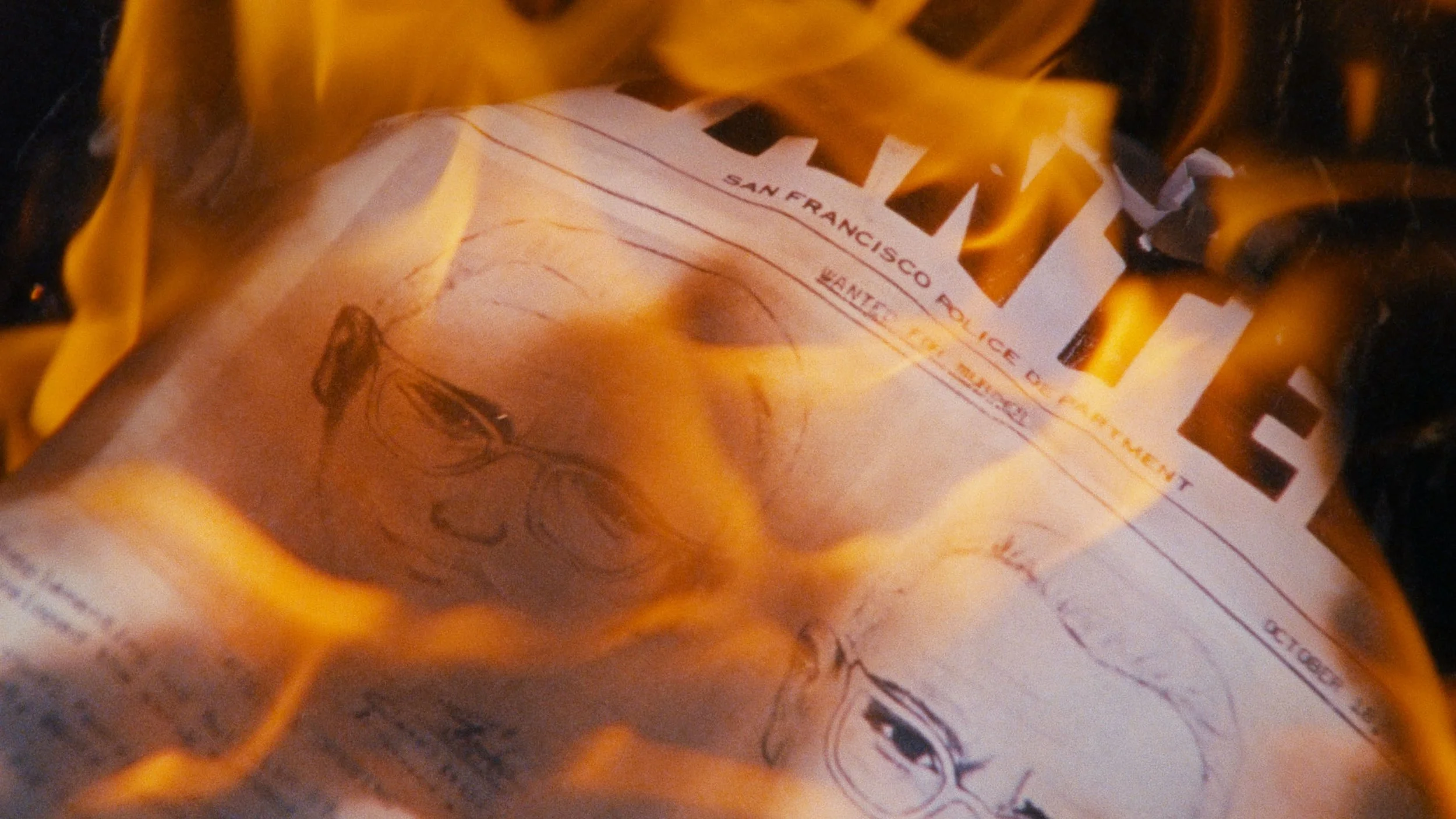
An image from director Charlie Shackleton’s examination of the true-crime genre, “Zodiac Killer Project,” an official selection of the 2025 Sundance Film Festival in the Next program. (Photo courtesy of Sundance Institute.)

Sundance review: 'Zodiac Killer Project' scrutinizes the true-crime documentary genre, taking apart the genre's cliches and why the audience expects them

February 01, 2025 by Sean P. Means

For his sake and ours, it’s a good thing director Charlie Shackleton didn’t get to make the movie he planned to make about the Zodiac Killer — because instead of making yet another true-crime documentary, he made an insightful dissection of the genre with his “Zodiac Killer Project.”

Shackleton — who is the movie’s director, editor and narrator — explains that he had been working on a movie about the infamous California serial killer of the 1970s, based on a memoir by Lyndon Lafferty, a former California Highway Patrol officer who said he spotted someone he thought was a likely suspect in the five known homicide cases. Shackleton had already started pre-production work when he got an email informing him that Lafferty’s family had declined to sell the film rights to the memoir.

The film opens with a long camera pan across a rest stop off of a California freeway. The camera stops at an empty parking space, and Shackleton narrates the opening shot he was planning to do — showing a CHP police cruiser parked in that same spot, seeing a car pulling up alongside. Shackleton describes how Lafferty, in the cruiser, makes eye contact with the driver of the other car, who resembles the familiar police sketch of the suspected Zodiac Killer.

Shackleton repeats this trick throughout the film (and it is film — the pan shots employ 16mm stock), showing us the general idea of the kind of scene he intended to film. Those shots, he says in the narration, would have been recreations of key moments Lafferty wrote about. Usually, the locations are simulated, too; he often mentions that the house or church he’s filming are the real locations of the events Lafferty’s book mentions. (Shackleton also quotes just enough of the book to stay on the legal side of the “fair use” defense. He also gleans enough of what’s in Lafferty’s book from outside sources to cover a fair amount of it without violating copyright.)

These scenes that never were, Shackleton tells us, each fit neatly into the formula of true-crime documentaries — from the enigmatic credits through the scene-setting of the small town with a dark secret. To demonstrate, Shackleton compiles montages of other true-crime shows from HBO and Netflix that use those same techniques.

With “Zodiac Killer Project,” Shackleton’s failed attempt at joining the true-crime pantheon — one that sounds pretty average, based on his description — instead takes apart the cliches of the genre, and the audience’s expectations behind each of them.

——

‘Zodiac Killer Project’

★★★1/2

Screening in the Next program of the 2025 Sundance Film Festival. No more in-person screenings are scheduled. Online screenings available through Sunday, February 2, 11:55 p.m. Mountain time. Not rated, but probably PG-13 for mature themes involving a serial killer. Running time: 92 minutes.

February 01, 2025 /Sean P. Means
Comment
  • Newer
  • Older

Powered by Squarespace