Sundance review: 'Nuisance Bear' is a documentary that's long on impressive footage, but short on suggesting solutions for Canada's polar bear problem
There’s some impressive nature cinematography in “Nuisance Bear,” a documentary that captures two divides — between humans and polar bears, and between Indigenous people and people of European descent who share Canada’s far northern regions.
Directors Gabriela Osio Vanden and Jack Weisman take their cameras to Churchill, Manitoba, on the western shore of Hudson Bay in northern Canada. Churchill calls itself the “Polar Bear Capital of the World,” and there’s a fair-sized tourist industry based on taking people out where they can see polar bears in their natural environment.
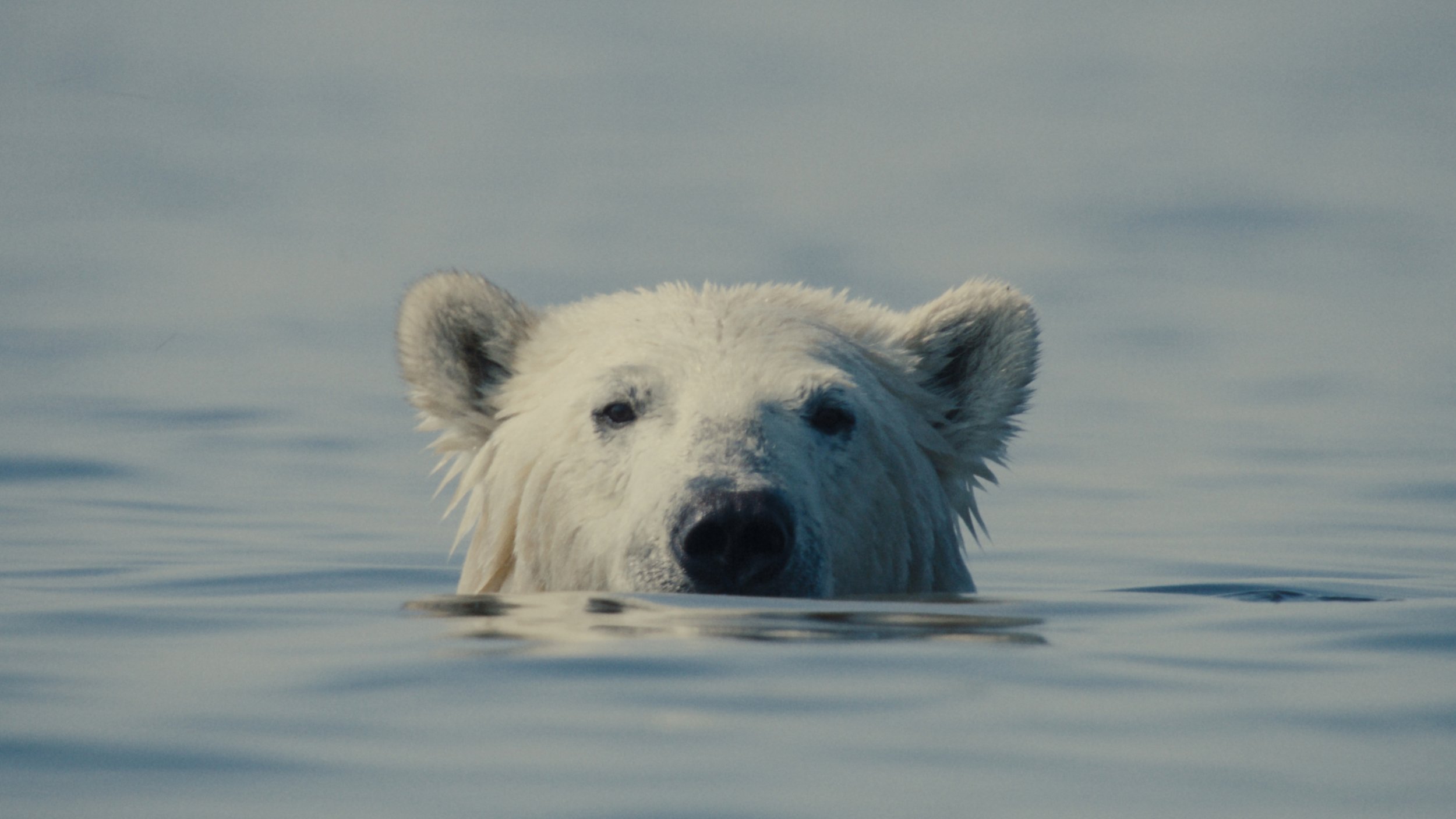
The problem is that the polar bears’ natural environment — namely, shelves of sea ice, from which they can hunt for seals, beluga and big fish — is disappearing. The ice doesn’t form like it used to, so the bears are mostly stuck on land, which they have to share with people. The bears often get closer to Churchill than people would like, so Canadian wildlife officers have to scare them away from human habitation with fireworks and other tricks.
The filmmakers also take us further north along the bay shore, to the town of Arviat in Nunavut. Here, the indigenous Inuit people have coexisted with the bears for generations, and are a bit resentful of the Canadian government limiting bear hunting. The government says the polar bear is endangered, while the Inuits see more bears encroaching on the town than ever before.
The film’s narrator is an Inuit leader, Mike Tunalaaq Gibbons, who speaks in his native language about the Indigenous people’s relationship with the bears, and how Canada’s European colonizers disrupted that balance by working to destroy Inuit culture. Gibbons describes movingly how shame for his Indigenous culture — fostered by white-run boarding schools — led to a personal tragedy.
The imagery of these bears, encroaching on human habitation, forms the backbone of “Nuisance Bear,” and is enough to make me recommend the film. Unfortunately, there’s little offered in the way of solving the bears’ problem — and, by extension, the problems faced by the humans who live near them.
——
’Nuisance Bear’
★★★
Screening in the U.S. Documentary competition of the 2026 Sundance Film Festival. Not rated, but probably PG-13 for some wildlife bloodshed and thematic material. Running time: 90 minutes; in English and Inuit with subtitles.
The film screens again: Sunday, Jan. 25, 11 a.m., Redstone Cinemas 4, Park City; Wednesday, Jan. 28, 5:20 p.m., Redstone Cinemas 3, Park City; Saturday, Jan. 31, noon, Holiday Cinemas 3, Park City; Sunday, Feb. 1, 11:30 a.m., Broadway Centre Cinemas 3, Salt Lake City. Also screening on Sundance’s web portal, Thursday through Sunday, Jan. 29 to Feb. 1.