The Movie Cricket

Movie reviews by Sean P. Means.

  • The Movie Cricket
  • Sundance
  • Reviews
  • Other writing
  • Review archive
  • About

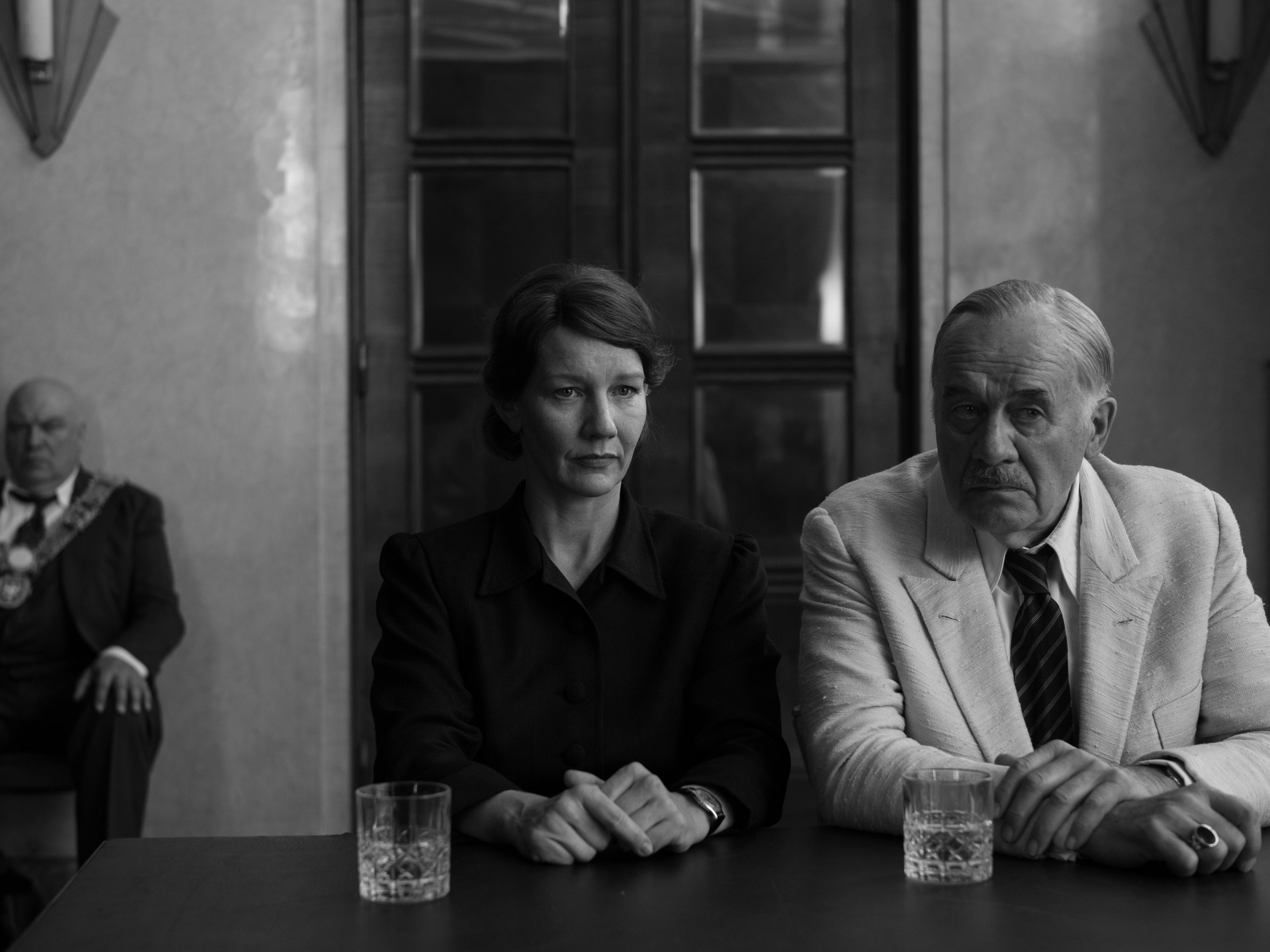
The author Thomas Mann (Hanns Zischler, right) and his daughter, Erika (Sandra Hüller), take a road trip through two Germanys after World War II, in writer-director Pawel Pawlikowski’s “Fatherland.” (Photo by Agata Grzybowska, courtesy of Mubi.)

Review: 'Fatherland' explores the aftermath of a war, and the fractures between a famous writer and his daughter.

November 05, 2026 by Sean P. Means

In the drama “Fatherland,” Polish director Paweł Pawlikowski captures the emotional tensions of a particular father-daughter road trip, and the shared sense of legacy and the survivor’s guilt that comes with thoughts of the family member who’s not there.

The story takes place in 1949, shortly after World War II has left much of Germany a wreck, and the burgeoning Cold War has begun to divide the country into the Soviet-controlled eastern zone and the Allied-occupied west side. It’s a country that the author Thomas Mann (Hanns Zischler) hasn’t visited since Hitler came to power in the ‘30s. 

Mann is back to accept an award, the Goethe Prize for literature. Actually, he’s receiving it twice, because both the West German East German governments want to honor him. This gets tricky for Mann and his daughter, Erika (played by Sandra Hüller), his assistant and driver. Mann and Erika live in America, where Mann has received U.S. citizenship but Erika’s application has been denied.

Arriving in Frankfurt, Erika intercepts letters sent to her father, accusing him of being a traitor to his “fatherland.” She also has to convince Mann that the argument he wants to make, that Goethe’s work predates the war and has no Communist influences, isn’t likely to dissuade red-baiting American politicians from pursuing him as a Red.

The ghosts of the war linger. One of the people Erika runs into at a Frankfurt cocktail party is her ex-husband, a German actor who famously palled around with Hitler’s second-in-command, Hermann Göring; the conversation ends with Erika slapping him. And Mann is buttonholed by young twin men who are the grandsons of Richard Wagner, who’s trying to rehabilitate their grandpa’s image, tarnished when Hitler declared himself a fan.

Erika’s also dealing with a phone call, which we see in the movie’s opening scene, from her brother, Klaus (August Diehl). Klaus is in Cannes, and disillusioned about his writing and the art world in general. Erika invites him on this trip, and checks with the hotel clerk to see if he’s called back. Then she gets the word that Klaus has died from an intentional drug overdose, and Erika and Mann have to decide whether to go on with the trip.

Pawlikowski filmed “Fatherland” in black-and-white, as he did with his movies “Ida” and “Cold War,” and again the monochrome cuts away distractions and leaves the core emotions Mann and Erika are trying to reconcile. Zischler and Hüller give beautifully paired performances, as both actors present characters who know after decades how much to expect from the other. “Fatherland” is about a father and daughter wanting to go home, and understanding that for them and millions displaced by the war, there may not be any such place.

——

‘Fatherland’

★★★1/2

Opens Friday, November 6, at the Broadway Centre Cinemas (Salt Lake City). Not rated, but probably R for language, themes of suicide and drug use, and smoking. Running time: 82 minutes; in German, French and some English, with subtitles.

November 05, 2026 /Sean P. Means
Comment

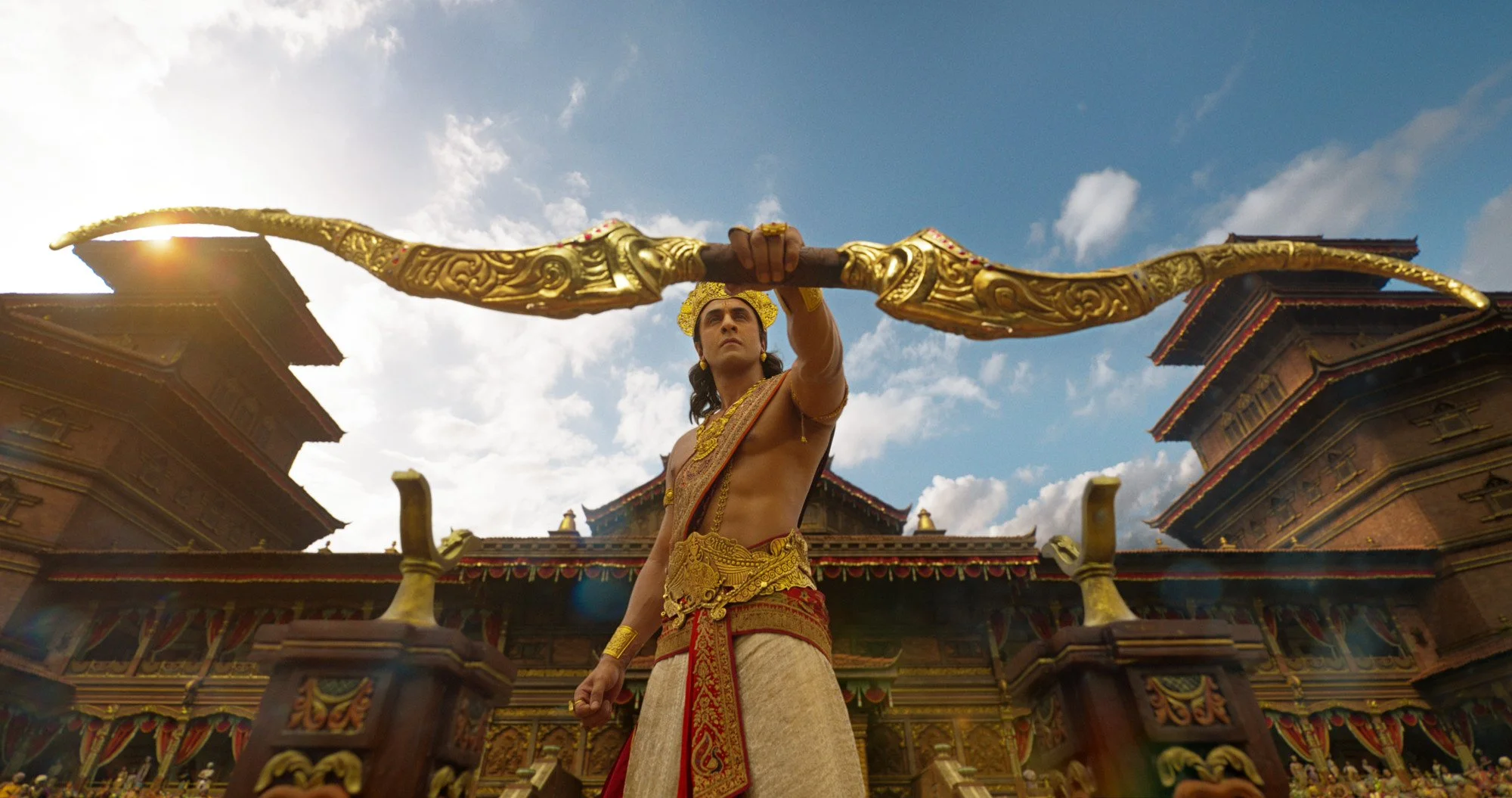
Rama (Ranbir Kapoor) is the hero of Namit Malhotra's “Ramayana: Rise of a Legend,” based on Hindu mythology. (Photo courtesy of Sony Pictures Releasing.)

Review: 'Ramayana: Rise of a Legend' uses splashy special effects to tell the foundational saga of Hindu mythology — and only get halfway there.

November 05, 2026 by Sean P. Means

As an American movie lover, watching the Indian epic “Ramayana: Rise of a Legend” feels like watching “The Ten Commandments” or “The Greatest Story Ever Told” without ever read the Bible — in that you get a sense of the massive scope of the story, but without the cultural touchpoints that one imagines people in India have engrained in them since a young age.

“Ramayana” begins with the Hindu triad: Brahma, the creator of all life; Shiva, the destroyer and transformer; and Vishnu, the preserver who brings balance to the chaos. The movie tells us that Vishnu frequently picks humans to be avatars, granting them powers to keep the forces of evil from overwhelming the Earth.

The movie introduces us to Dashanan (played by the one-named actor Yash), a mortal who asks Brahma for immortality. When Brahma declines, Dashanan asks for the next best thing: To have the ability to live through anything that the gods, magic, disease or supernatural creatures or forces can deliver. 

Dashanan leaves one loophole, by not asking for protection from humans — though it would take quite a human to defeat Dashanan, who takes the name Ravana, and the armies of demons and giants he amasses in his kingdom, Lanka.

Vishnu, though, has a human in mind who can eventually take on Ravana. That is Prince Rama (Ranbit Kapoor), the handsome and unfathomably virtuous son of King Dashrath (Arun Govil) in the kingdom of Ayodhya. Rama has three brothers — or half-brothers, since the king has three wives — and Rama is closest to Lakshman (Ravi Dubey), who becomes his guardian.

Rama falls in love with Sita (Sai Pallavi), and is being groomed by his father to become king. Then one of his stepmoms, Kaikeyi (Lara Dutta), maneuvers to get her son, Bharat (Addinath M. Kothare), to be king instead. Rama, so wholesome he makes Clark Kent look like a con artist, vows to go into exile to ensure the kingdom’s survival, and Sita and Lakshman opt to go with him.

In exile, though, the trio keep having adventures — which is where you’re reminded that this is the sort of foundational legends that probably inspired everything from “The Odyssey” to “The Lord of the Rings,” whether those stories’ creators knew it or not. At one spot in the forest, I expected Ram to run into the Rodents of Unusual Size, which just tells you how universal these kind of stories are.

Finally, near the three-hour mark, Ravana kidnaps Sita, setting up the long-awaited showdown with Rama. (It can’t be a spoiler if the story is 2,500 years old.) Then come for words that had me howling in laughter: “End of Part 1.” The movie promises that part 2 is coming “Diwali 2028,” which is October of that year. (Diwali is a big movie weekend in India, I learned, much like Thanksgiving is in the U.S.)

What writer-director Nitesh Tiwari delivers here is visually impressive, with freakish monsters, well-choreographed one-on-one fights and massively staged battle sequences that any Hollywood blockbuster would use. (In fact, some of the same Indian-based effects houses the studios employ are used here.) The bigger-than-life fantasy look is assisted by a regal score, by composers Hans Zimmer (“Dune,” “Gladiator” and A.R. Rahman (“Slumdog Millionaire”). 

I can’t say how much I’d recommend “Ramayana: Rise of a Legend” until I’ve seen the second installment. Three hours is a big time commitment for a story with a ton of characters to keep sorted, and if you’re not already versed in the mythology, only after Part 2 will we know for sure if it’s worth the investment.

——

‘Ramayana: Rise of a Legend’

★★★

Opens Friday, November 6, at theaters everywhere. Rated PG-13 for sequences of strong violence and action, and some bloody images. Running time: 195 minutes (in Hindi with subtitles) or 165 minutes (dubbed in English). 

November 05, 2026 /Sean P. Means
Comment

KJ Apa plays Jimmy Stewart during the actor’s stint as an Army Air Corps bomber pilot in World War II, in the biographical drama “Jimmy.” (Photo courtesy of Burns & Co.)

Review: 'JImmy' recounts Jimmy Stewart's wartime exploits, with all the corniness of one of the actor's old movies.

November 05, 2026 by Sean P. Means

The biographical drama “Jimmy” treats the life of the legendary actor Jimmy Stewart much the way Stewart-starring biopics like “The Glenn Miller Story” and “The Spirit of St. Louis” did — a mix of treacle and grandiosity that may have worked decades ago but feel as dated as the public-domain needle drops.

Director Aaron Burns focuses on Stewart’s life in the 1940s, as the callow young actor (played with aplomb by KJ Apa) has just won his Academy Award for “The Philadelphia Story” and is semi-seriously romancing one of Hollywood’s leading actresses, Ginger Rogers (Jemma Donovan). Back home in Indiana, Pennsylvania, Jimmy’s father (Neal McDonough), is less impressed with Jimmy’s Oscar than with the local boy who just signed up for the Army — a more noble pursuit than acting, in Dad’s mind.

When Stewart’s number gets called in the draft, the head of MGM, Louis B. Mayer (Jason Alexander), offers to arrange for his actor to avoid service, until the gossip columnist Hedda Hopper (Sarah Drew) gets wind of it and prompts a publicity nightmare. Stewart enlists in the Army Air Corps, intent on seeing combat in Europe, even though his commander (Rob Riggle) would prefer a stateside assignment because “America can’t afford to lose Jimmy Stewart.”

Undaunted, Stewart heads to Tibenham Air Base in England, and Justin Strawhand’s script focuses largely on his military service — which culminated in 20 bombing missions over Nazi Germany, some of which are reenacted with gritty authenticity. Less realistic is a fabricated romance with a widowed English aristocrat, Lady Julia Tyndall (Kara Killmer) who sees the shell shock and imposter syndrome Jimmy is suffering, the guilt over using his acting talents to convince other young men to go into war.

Framing Jimmy’s World War II heroics and survivor’s guilt is the story of what happened when the war was over. Mayer tells him his fame has diminished, and it’s only a long shot script from his director pal Frank Capra (Max Casella) that might resurrect his career — a feel-bad holiday drama about a small-town banker coping with financial setbacks, a movie called “It’s a Wonderful Life!”

Burns and Strawhand serve up Stewart’s story with enough corn to make tortillas, and Apa’s earnest performance relies too heavily on nailing Stewart’s famously aw-shucks vocalisms and aping his onscreen mannerisms. The production is rich in period splendor, but it all feels like a big game of dress-up. “Jimmy” gets the surface details of Stewart’s story, but not the spirit he displayed in his films.

——

‘Jimmy’

★★

Opens Friday, November 6, in theaters everywhere. Rated PG-13 for some war violence/bloody images, thematic elements and smoking. Running time: 120 minutes.

November 05, 2026 /Sean P. Means
Comment

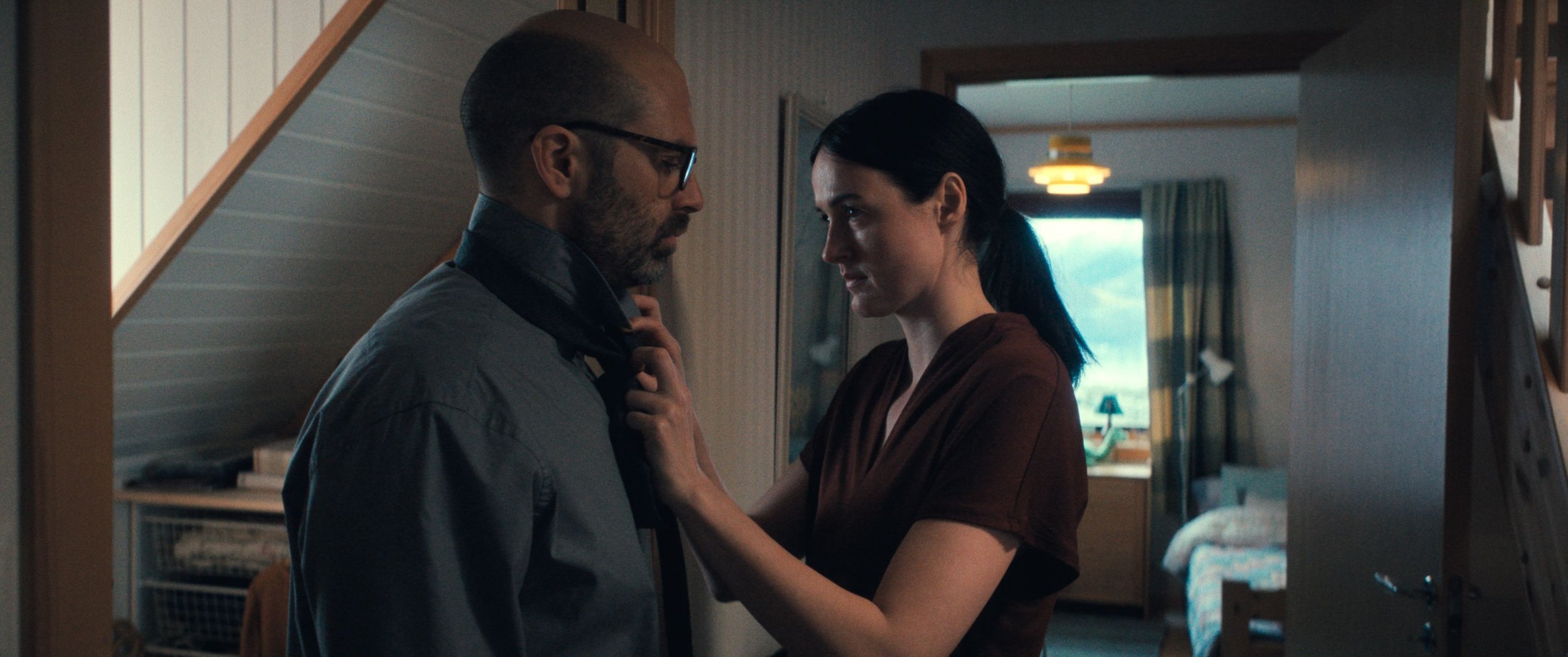
Sebastian Stan and Renate Reinsve play Mihai and Lisbet, an evangelical Christian couple whose beliefs are put on trial in writer-director Cristian Mungiu’s Palme D’Or-winning drama “Fjord.” (Photo courtesy of Neon.)

Review: 'Fjord' is a harrowing drama about a Christian family at odds with Norwegian law, with great performances but mixed messages

October 29, 2026 by Sean P. Means

I can’t think of a movie that was so good and yet aggravated me as much as “Fjord,” Romanian writer-director Cristian Mungiu’s Palme D’Or-winning drama that pits two opposite forces — liberal Norwegians and conservative Christians — and gives the audience reasons to dislike both of them.

The family details we get early here is that Mihai and Lisbet Gheorghiu — played by Sebastian Stan and Renate Reinsve — have moved from his home country of Romania to her birthplace, a small town in Norway. (As it happens, those are the birth countries of the two actors.)

Mihai and Lisbet have five children, including a year-old baby, and have raised them in an evangelical Christian faith. Even so, Mihai and Lisbet befriend their next-door neighbor, Mats Halberg (Markus Scarth Tønseth), the liberal headmaster at the town’s school, and his wife, Mia (Lisa Carlehed). The Gheorghius’ oldest daughter, Elia (Vanessa Ceban), quickly becomes close with the Halbergs’ rebellious daughter, Noora (Henrikke Lund-Olsen).

When a gym teacher notices bruises on Elia’s back and neck, it sets in motion what becomes a nightmare scenario for Mihai and Lisbet. Several teachers call in Child Protective Services, who act quickly to remove the children — even the baby, who Lisbet is still breastfeeding — from the Gheorghius’ house and to live with foster parents.

Mihai is convinced the CPS caseworker, Gunda (Ellen Dorrit Petersen), and her liaison at the school, Frida (Lisa Loven Kongsli), are prejudiced against hardcore Christians. Though even their church’s Norwegian members warn Mihai not to fight the CPS, whose power to trample on families’ civil rights is unquestioned in Norwegian law and society. Even the couple’s first lawyer (Anne E. Kokkinn) quits after one meeting, because she refuses to listen to Mihai’s side of things. 

Their neighbor, Mia, who’s a lawyer, starts to realize that the case isn’t so simple — because of a language barrier with the younger children, and Frida and Gunda’s biases — and offers to help the Gheorghius in civil court to get their children back. By then, Mihai is fed up and finds another way to fight the system.

What keeps us engaged with the Gheorghiu parents are the actors playing them. Stan, best known for his work in the Marvel universe, gives a breathtaking performance as the religiously rigid Mihai, and Reinsve counters heartbreakingly as Lisbet, who’s caught between the people she grew up with and her love for her husband and her children. (Stan and Reinsve have shown great chemistry before, in the 2024 dark comedy “A Different Man.”)

Mungiu’s “plague on both your houses” attitude about the two sides here — the Gheorghius’ strict Christianity and the Norwegians’ equally dogmatic governmental protectiveness — ends up being more infuriating than illuminating. Presenting both sides fairly isn’t the same as showing each as being wrong.

——

‘Fjord’

★★★1/2

Opens Friday, October 30, in theaters. Rated R for language, full nudity and self-injury. Running time: 146 minutes; in English and Norwegian and Romanian, with subtitles.

October 29, 2026 /Sean P. Means
Comment

Climbers Hilaree Nelson and Jim Morrison, in Colorado in 2022. The two are featured in the documentary “Everest: The Other Side.” (Photo by Jim Morrison, courtesy of National Geographic Documentary Films.)

Review: 'Everest: The Other Side' beautifully shows us the work behind climbing Mt. Everest, but leaves open the question of "why?"

October 29, 2026 by Sean P. Means

I don’t know if mortals are supposed to understand why there are some people who pursue extreme physical challenges. The closest we have to understanding such people is the husband-and-wife documentary team of Jimmy Chin and Elizabeth Chai Vasarhelyi, and even for them the figures chronicled in “Everest: The Other Side” are on the edge.

The couple won an Oscar for their documentary portrait of rock climber Alex Honnold in “Free Solo,” and that familiarity with the climbing world comes into play with this look at Jim Morrison and Hilaree Nelson, who shared a dream to ascend Mount Everest the hard way — up the steep, snow-covered north face of the world’s highest mountain.

Morrison tells us that some 13,000 people have climbed to the summit of Mount Everest in history, almost all of them from the classic southern route from Nepal. Only five people, we’re told, have done it from the other side — mostly because of the steep terrain,  but also because the Chinese government owns the north face, and gives out permits sparingly.

Morrison and Nelson met while on Everest, and as partners raised Nelson’s two boys and went out on climbing expeditions. They shared a dream to climb the north face and ski down it, something no one has ever done. (There was a 1975 documentary, “The Man Who Skied Down Everest,” about Japanese climber and skier Yuichiro Miura, who went down the south face on skis in 1970. He just turned 94.)

The new movie shows Morrison and Nelson training for that climb when in 2022 Nelson was caught in an avalanche and killed on Manaslu, the world’s eighth-highest mountain, in the Himalayas. After a grieving period, Morrison decides he’s going to complete the climb he wanted to do with Nelson — and he asks Chin to be his climbing partner. 

Before Chin says yes, the movie gives us perhaps the most real moment ever: A conversation between Chin and Vasarhelyi, where she asks her husband how many of their friends are now dead. 

Still, Chin joins Morrison on this climb, and that’s what the rest of the movie shows.

The filmmakers take pains to show the thousand little details that go into an Everest climb, any one of which could go wrong on an expedition team. The two most important things, the movie shows us, are a good team of Nepalese guides who set up the ropes and camps that get people up the mountain, and the spotters who radio in details of the land they’re hitting next — and the weather that’s also on its way.

And with a crew like this, there’s a third group: The ones filming it all, and capturing spectacular views of the climb. Chin and Vasarhelyi have an uncanny talent for finding or creating those moments, and to not get int he way too much when putting them together.

“Everest: The Other Side” never satisfactorily answers the question of why these climbers do it — when asked, they either hem and haw or fall back on Sir Edmund Hillary’s famous “because it’s there.” But if the movie can’t uncover the why, it excels at depicting the how, and that may be enough.

——

‘Everest: The Other Side’

★★★

Opens Friday, October 30, in theaters. Rated PG-13 for thematic material and brief strong language. Running time: 110 minutes; in English and Sharpa with subtitles.

October 29, 2026 /Sean P. Means
Comment

John Turturro plays Harry, the title character in writer-director Noah Segan’s “The Only Living Pickpocket in New York.” (Photo courtesy of Sony Pictures Classics.)

Review: 'The Only Living Pickpocket in New York' gives John Turturro the showcase he's long deserved, and he steals every moment

October 29, 2026 by Sean P. Means

Like most movie fans, I’m the sort who sees John Turturro in a tiny role in a lackluster movie and wishes somebody, anybody, would give this boundlessly talented actor a meaty role and just let him cook. Writer-director Noah Segan’s “The Only Living Pickpocket in New York” is the showcase for Turturro’s subtle talents that we’ve been waiting for.

Turturro plays Harry, who is the pickpocket of the title. Harry’s an old-school thief, smoothly lifting wallets and jewelry from people on the subway or the street, then bringing his purloined goods to his friend Ben (Steve Buscemi), a fence who runs a pawn shop. Ben has a niece, Eve (Victoria Moroles), who knows the new computer-driven crime, but Harry prefers to keep it low-tech and human. And after a day of picking pockets, he goes to the senior center to pick up his wife, Rosie (Karina Arroyave), who’s in a vegetative state.

One night, Harry sees an arrogant young man, Dylan (Will Price), driving a classic 1969 hot rod he doesn’t deserve. Dylan seems like a perfect mark, so Harry gets into his car and takes a gym bag. Inside, he later finds, are a wallet with a large stack of $100 bills, an imposing-looking handgun, and a memory card that Harry has no idea what to do with. But Harry quickly figures out that Dylan is the last person he should have hit: A member of a certain kind of New York family, the kind that doesn’t like to be robbed.

Dylan and his young thugs soon find Harry and threaten him and Rosie if he doesn’t bring back one item: The memory card. Thus begins Harry’s journey through four of the five boroughs, both to find the missing card but also to tie up some loose ends, since he knows there’s no coming back from this one.

Among those loose ends are Warren (Giancarlo Esposito, for those seeking a “Do the Right Thing” reunion), a detective who’s wanted to put away Harry for decades, and a character played by Tatiana Maslany that I will not describe further. 

Segan neatly blends a thriller’s pacing with a slightly laconic love letter to New York City’s urban beauty and idiosyncrasies. Mostly, though, Segan gives Turturro a chance to show the gritty side, the romantic side and the heroic side we always knew he had. It’s the best platform Turturro has had to show off his acting skills since, perhaps, “Quiz Show.” 

——

‘The Only Living Pickpocket in New York’

★★★1/2

Opens Friday, October 30, in theaters. Rated R for language. Running time: 88 minutes.

October 29, 2026 /Sean P. Means
2 Comments

Léa Seydoux plays Lucy Weiss, a pianist who discovers a horrible secret, in writer-director Maria Kreutzer’s drama “Gentle Monster.” (Photo courtesy of Netflix.)

Review: 'Gentle Monster' is a drama in which star Léa Seydoux does everything right while so much around her goes wrong

October 29, 2026 by Sean P. Means

The French actress Léa Seydoux gives a compelling performance in “Gentle Monster,” writer-director Maria Kreutzer’s cross-European drama that manages to get so much wrong about the disturbing subject matter in the story around her.

(Consider this your one warning: I can’t discuss this movie adequately without revealing an early plot point on which the entire movie pivots. It would be considered a spoiler only to the Netflix marketing department, who are working diligently to keep this plot point hidden.)

Seydoux plays Lucy Weiss, a French pianist and experimental musician, who sells out concert halls with her avant-garde interpretations of pop songs. Her mother, Eloise (the great Catherine Deneuve), is also a famous pianist, we’re told, but Lucy’s work is categorized as a rejection of her mother’s classical style. This doesn’t turn out to be important in the story, but it’s an interesting distraction from what’s coming.

Lucy lives in a country house outside Munich, with her husband, Philip (Laurence Rupp), a German documentary filmmaker, and their son, Johnny (Malo Blanchet), who’s about 10. One day, Lucy wakes up to the sound of Munich police serving a search warrant on Philip, taking all of his computers and other devices — on suspicion of trafficking in child sexual assault material. (The Munich cops still use the phrase “child porn,” which advocates have urged writers to avoid, because the word “porn” implies consent and children cannot give consent at their age.)

The rest of the movie largely shows Lucy trying to sort out in her mind whether her husband, the father of their child, is capable of such horrible actions. She has to listen to his excuses — he was doing research for a documentary, or he was dealing in such images for the money — and determine what’s a lie, while willing herself to ask the most unthinkable question: Did Philip ever take or distribute images of Johnny?

Meanwhile, Kreutzer invests much of the film’s running time with the lead police detective, Elsa Kühn (Jella Haase), Her scenes involve a complicated home life, centered on her aging father (Sylvester Groth) and the live-in nurse (Patrycja Ziółkowska) who threatens to quit because Dad won’t keep his hands to himself.

Seydoux, known on both sides of the Atlantic for such films as “Blue Is the Warmest Color” and “No Time to Die,” gives a stunning performance, channeling the confusion, grief and rage of a woman learning that the man she raised a son with isn’t at all who she thought he was. Seydoux also brings out the best from Deneuve, that French institution, who at one point here gives one of the best double-takes I’ve ever seen. 

But Kreutzer, whose best-known movie to date was the Vicky Krieps-starring period piece “Corsage,” overloads this modern story with extraneous distractions from Lucy’s main path. Between the muddled message of contrasting Lucy’s life to Elsa’s and the self-congratulatory atmosphere that comes in a movie tackling a disturbing subject like this one, “Gentle Monster” is as heavy-handed as a TV weepie and about as unpleasant. 

——

‘Gentle Monster’

★★1/2

Opens Friday, October 30, in theaters. Rated R for sexuality, graphic nudity and some language. Running time: 114 minutes; in English, French and German, with subtitles. 

October 29, 2026 /Sean P. Means
Comment

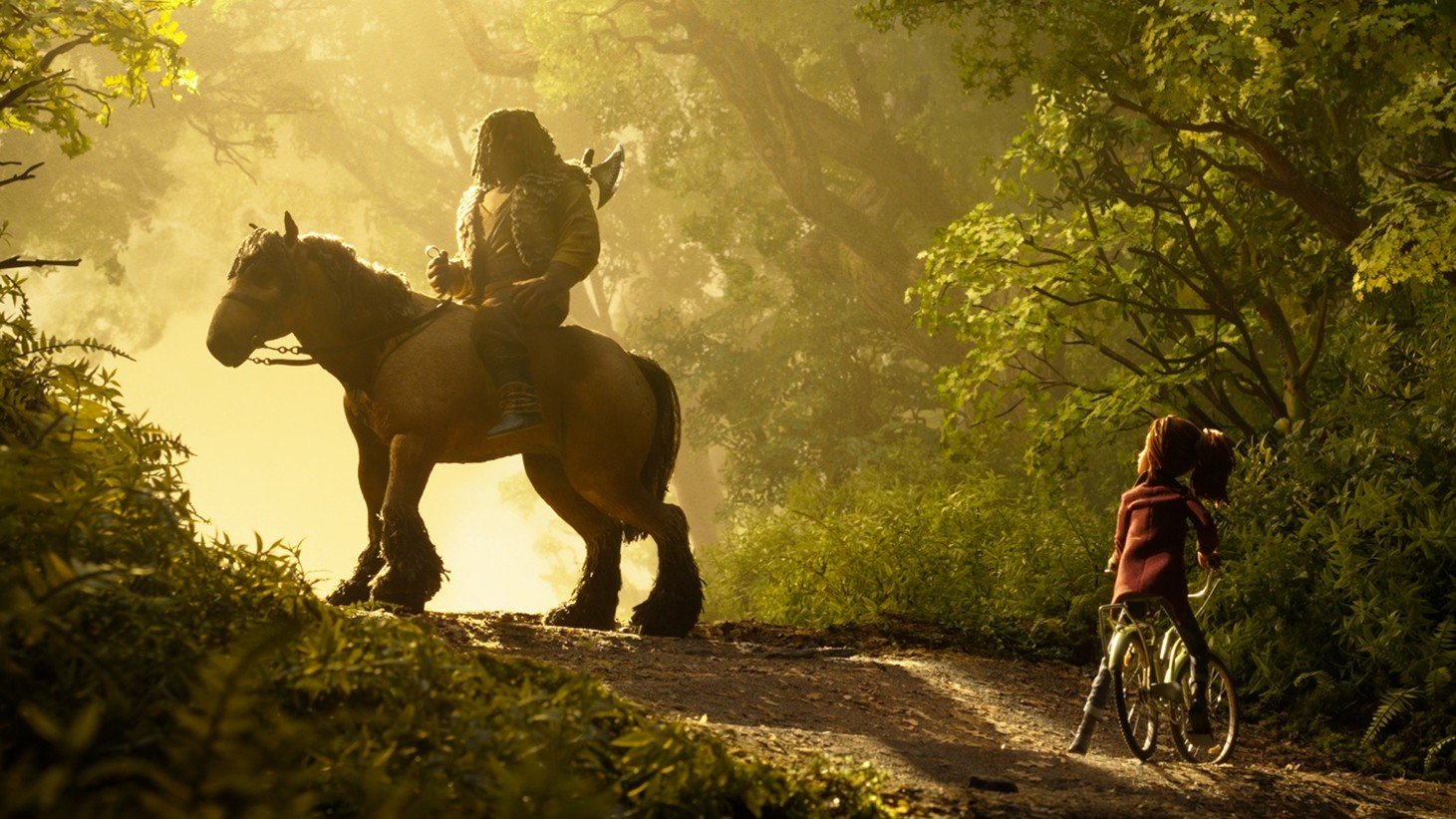
Prue McKeel (right, voiced by Peyton Elizabeth Lee) encounters Brendan (voiced by Mahershala Ali), leader of the Bandits, one of the warring factions in the stop-motion fantasy epic “Wildwood.” (Image courtesy of Laika.)

Review: 'Wildwood' is a stop-motion epic, creating an epic fantasy world that's massive and intimate at the same time

October 21, 2026 by Sean P. Means

Through five movies, from “Coraline” to “Missing Link,” animation fans have grown to expect a unique kind of craftsmanship from Laika, the Oregon-based stop-motion studio that produces handcrafted movies in a computer-driven world.

With the studio’s sixth and easily most ambitious movie, “Wildwood,” director Travis Knight (“Kubo and the Two Strings”) and his Laika team have outdone themselves by creating a fantasy on a level of “The Chronicles of Narnia” and using their little plastic-and-fabric figurines to create something both epic and intimate.

Our heroine, Prue McKeel (voiced by Peyton Elizabeth Lee, formerly of “Andi Mack”), is a 12-year-old girl living in Portland, Oregon, with her baby brother, Mac (voiced by the director’s son Arthur), and their granola-ish parents (voiced by Maya Erskine and Jake Johnson). When the parents assign Prue to babysit Mac, they give one command: Don’t leave the house. Prue, like most kids, disobeys and sticks Mac in a wagon behind her bicycle and heads into town, where she runs into her very nerdy classmate, Curtis (voiced by Jacob Tremblay).

Prue takes Mac to a playground, and is surprised when dozens of crows descend on the jungle gym. (Yes, comparisons to Hitchcock’s “The Birds” are inevitable, and the set-up remains as terrifying as ever.) Suddenly, the crows take Mac airborne, and Prue must pursue them to the bridge at the edge of town, which leads to what has been called “the Impassable Wilderness.” At first, it lives up to its name, but Prue and tagalong Curtis are allowed inside.

What they find is an army of coyotes, dressed in Napoleonic military uniforms. The coyotes serve the Dowager Princess, Alexandra (voiced by Carey Mulligan), who has designs on reshaping the forest to something dark and foreboding, for reasons that will present themselves in due course.

Prue’s journey to find Mac leads her through a bureaucratic rabbit warren, and eventually to The General (voiced by Angela Bassett), a giant hawk who commands the kingdom’s birds (except the crows). Prue also finds Wildwood’s wisest woman, Iphigenia (voiced by Tantoo Cardinal), who helps her understand the magic-fueled circumstances that led to her and Mac’s birth. 

Meanwhile, Curtis is taken down a different path. First drafted into Alexandra’s coyote army, Curtis eventually falls in with her rivals, the Bandits, and their swashbuckling leader, Breandan (voiced by Mahershala Ali). 

The voice cast is extraordinary. Besides the names I’ve already mentioned, there’s Awkwafina, Charlie Day, Tom Waits, Jemaine Clement, Len Cariou, Blythe Danner and Rob Delaney. That’s an impressive roster for any animated movie, and Knight deploys them expertly.

Screenwriter Chris Butler — who directed “Missing Link” and co-directed “ParaNorman” — has expertly adapted “Wildwood” from the children’s book series written by Colin Meloy (frontman for The Decembrists) and illustrated by Meloy’s wife, Carson Ellis. Meloy and Ellis are Portlanders, too, and the sense of place they and the Laika team bring out is note-perfect.

The most remarkable thing about “Wildwood” is its massive sweep. The grand finale is a battle sequence that would put “Braveheart” to shame, with hundreds of animated animals taking up arms and sacrificing their lives. (The PG-13 rating is to be taken seriously for that reason.) The stop-motion animation, augmented with some computer work, is intense, overwhelming and intimate in ways that even live-action films have difficulty achieving.

——

‘Wildwood’

★★★1/2

Opens Friday, October 23, in theaters everywhere. Rated PG-13 for strong fantasy violence/bloody images, thematic material, suicide-related material, brief partial nudity and language. Running time: 132 minutes.

October 21, 2026 /Sean P. Means
Comment
  • Newer
  • Older

Powered by Squarespace