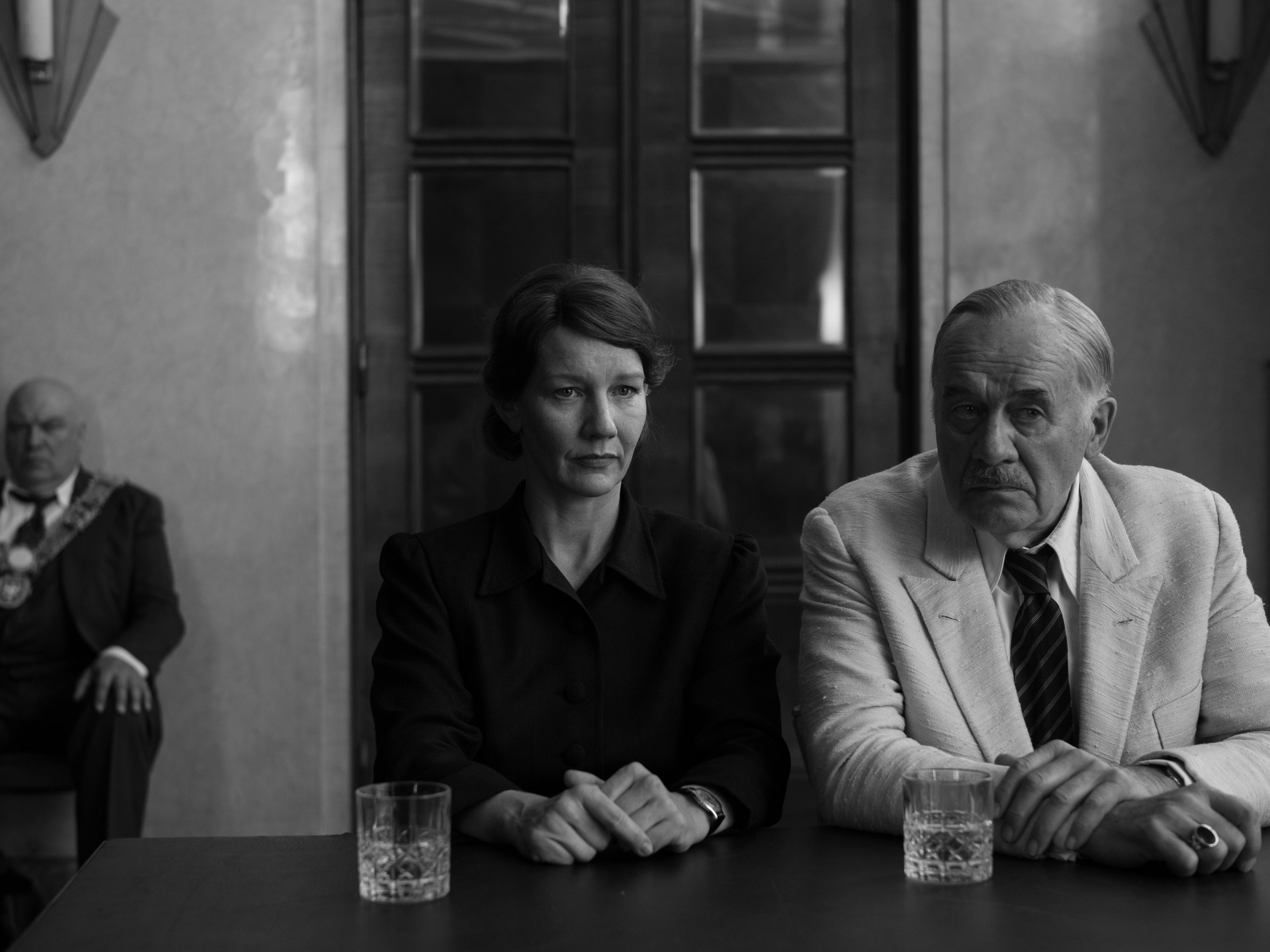
Review: 'Fatherland' explores the aftermath of a war, and the fractures between a famous writer and his daughter.
In the drama “Fatherland,” Polish director Paweł Pawlikowski captures the emotional tensions of a particular father-daughter road trip, and the shared sense of legacy and the survivor’s guilt that comes with thoughts of the family member who’s not there.
The story takes place in 1949, shortly after World War II has left much of Germany a wreck, and the burgeoning Cold War has begun to divide the country into the Soviet-controlled eastern zone and the Allied-occupied west side. It’s a country that the author Thomas Mann (Hanns Zischler) hasn’t visited since Hitler came to power in the ‘30s.
Mann is back to accept an award, the Goethe Prize for literature. Actually, he’s receiving it twice, because both the West German East German governments want to honor him. This gets tricky for Mann and his daughter, Erika (played by Sandra Hüller), his assistant and driver. Mann and Erika live in America, where Mann has received U.S. citizenship but Erika’s application has been denied.
Arriving in Frankfurt, Erika intercepts letters sent to her father, accusing him of being a traitor to his “fatherland.” She also has to convince Mann that the argument he wants to make, that Goethe’s work predates the war and has no Communist influences, isn’t likely to dissuade red-baiting American politicians from pursuing him as a Red.
The ghosts of the war linger. One of the people Erika runs into at a Frankfurt cocktail party is her ex-husband, a German actor who famously palled around with Hitler’s second-in-command, Hermann Göring; the conversation ends with Erika slapping him. And Mann is buttonholed by young twin men who are the grandsons of Richard Wagner, who’s trying to rehabilitate their grandpa’s image, tarnished when Hitler declared himself a fan.
Erika’s also dealing with a phone call, which we see in the movie’s opening scene, from her brother, Klaus (August Diehl). Klaus is in Cannes, and disillusioned about his writing and the art world in general. Erika invites him on this trip, and checks with the hotel clerk to see if he’s called back. Then she gets the word that Klaus has died from an intentional drug overdose, and Erika and Mann have to decide whether to go on with the trip.
Pawlikowski filmed “Fatherland” in black-and-white, as he did with his movies “Ida” and “Cold War,” and again the monochrome cuts away distractions and leaves the core emotions Mann and Erika are trying to reconcile. Zischler and Hüller give beautifully paired performances, as both actors present characters who know after decades how much to expect from the other. “Fatherland” is about a father and daughter wanting to go home, and understanding that for them and millions displaced by the war, there may not be any such place.
——
‘Fatherland’
★★★1/2
Opens Friday, November 6, at the Broadway Centre Cinemas (Salt Lake City). Not rated, but probably R for language, themes of suicide and drug use, and smoking. Running time: 82 minutes; in German, French and some English, with subtitles.