The Movie Cricket

Movie reviews by Sean P. Means.

  • The Movie Cricket
  • Sundance 2025
  • Reviews
  • Other writing
  • Review archive
  • About

David (voiced by Christian singer Phil Wickham) prepares to defend his people from King Saul, in a moment from the animated “David,” based on the Old Testament story of King David. (Image courtesy of Angel Studios.)

Review: 'David' puts a family-friendly animated gloss on the Old Testament, with strong visuals and forgettable songs

December 18, 2025 by Sean P. Means

It’s always interesting to watch filmmakers try to deliver Old Testament stories in animated form, as the makers of “David” do as they turn the bloodiest parts of the Bible into a cartoon musical spectacle that will earn a PG rating.

For those who don’t already know the story, as told in the first and second books of Samuel, a quick synopsis: A prophet, Samuel (voiced by Brian Stivale) enters Bethlehem and tells a family that their teen son, David (voiced by Brandon Engman at this age), is God’s choice to be the king of Israel. This is not welcome news for the current king, Saul (voiced by Adam Michael Gold), who got the job the same way — by Samuel’s pronouncement of God’s decision.

David says he doesn’t want to be king, Samuel answers, “that is a surprisingly good criteria to be a king.” David tells Samuel that he’s just a shepherd, to which Samuel replies, “the people are lost — they need a shepherd.” Still, Samuel advises David and his family to keep this prophecy a secret for now, so as not to incur Saul’s wrath.

Saul has a lot of wrath already, which he dumps on the line of musicians outside his throne room in Jerusalem, all under orders to try to distract the king from his heavy royal burdens. David ends up in this line, and his song — did I mention this is a musical, even if the songs are forgettable? — gives Saul something to smile and laugh about, and soon David is welcomed into the royal family, and quickly befriends Saul’s son, Prince Jonathan (voiced by Mark Jacobsen). David never lets on that he’s been told God wants him to replace Saul.

It takes nearly an hour of this two-hour movie to get to the moment everyone knows about David’s story: When he faces the massive champion of the Philistine army, Goliath, and fells him with a rock and a slingshot. I can’t decide whether the movie takes too long to get here, because it drags getting to this high spot, or too fast because defeating Goliath and the Philistines could easily be the climax to a perfectly decent Bible story.

The second half continues through the books of Samuel, as the adult David (now voiced by Christian singer Phil Wickham) first must escape the kingdom with his family to avoid Saul’s rage, then return understanding the weighty responsibility of following God’s will. That’s made more difficult because the townspeople in this B.C. era, like the Hebrews in Cecil B. deMille’s “The Ten Commandments,” whine and complain to David at every turn, no matter how many times he proves himself and God’s power.

Directors Phil Cunningham and Brent Dawes take the script (by Dawes) and use it to find some striking images in computer animation. “David” becomes a feast for the eyes, though likely only nourishing to those who already know their bible stories. 

——

‘David’

★★★

Opens Friday, December 19, in theaters everywhere. Rated PG for action/violence and some scary images. Running time: 115 minutes. 

December 18, 2025 /Sean P. Means
Comment

New hire Millie (Sydney Sweeney, left in mirror) is startled by the appearance of her new boss, Nina (Amanda Seyfried), in the psychological thriller “The Housemaid,” directed by Paul Feig. (Photo by Daniel McFadden, courtesy of Lionsgate.)

Review: 'The Housemaid' is a thriller with twists and steamy sex scenes — but it's the back-and-forth between stars Sydney Sweeney and Amanda Seyfried that turns up the heat.

December 16, 2025 by Sean P. Means

Part psychological thriller, part revenge thriller and part erotic thriller, “The Housemaid” does a good job of keeping the audience off balance because the script leans in so many different directions, most of them entertaining.

The protagonist, at least when we start, is Millie (Sydney Sweeney), a young woman who seems overqualified for the job of live-in housemaid, which is what she’s applying for with the rich Nina Winchester (Amanda Seyfried). We soon learn the reason Millie so eagerly accepts the job: She’s living in her car, and she’s out on probation and will go back to prison if she’s not gainfully employed.

But working for the Winchesters turns out to be more difficult than advertised. Nina’s daughter, Cece (Indiana Elle), is a sourpuss who doesn’t like anything Millie does. And Nina turns out to be demanding, and getting into screaming rages when things aren’t exactly as she wants them — with Millie being the main target of that anger. The upside is that Nina’s husband, Andrew (Brandon Sklenar), is hunky and a perfect gentleman.

After Millie learns more things about Nina — mostly from the gossiping PTA ladies in Nina’s neighborhood — you get a good sense of where this movie, based on Freida McFadden’s novel, is going to go. And, for a bit, the prospect of a furtive romance between Millie and Andrew seems very much in the cards. When things heat up, the movie earns its R-rating with some steamy sex scenes between Sweeney and Sklenar.

But that’s not the end of the story, and director Paul Feig (“A Simple Favor”) and screenwriter Rebecca Sonnenshine (an Emmy nominee for “The Boys”) pull out some twists from McFadden’s playbook that show Millie isn’t the only one who’s pretending to be what they’re not.

Some of the reveals are genuinely suspenseful, while others get telegraphed well ahead of time. Sweeney and Seyfried have the most fun, as their roles and perspectives shift through the narrative, and Sklenar puts his smoking-hot good guy persona — put to good use in “It Ends With Us” and “Drop” — through the ringer in some entertaining ways.

“The Housemaid” is purely a pulp potboiler, and it’s a delight to see a movie with nothing on its mind than messing with its audience, giving them some prurient thrills, and sending them home howling at the outlandishness of it all. 

——

‘The Housemaid’

★★★

Opens Friday, December 19, in theaters everywhere. Rated R for for strong/bloody violent content, sexual assault, sexual content, nudity and language. Running time: 131 minutes. 

December 16, 2025 /Sean P. Means
Comment

Varang (performed by Oona Chaplin), chief of the Ash People, represents a new kind of villain on Pandora, in “Avatar: Fire and Ash,” the third movie in James Cameron’s science-fiction franchise. (Image courtesy of 20th Century Studios.)

Review: 'Avatar: Fire and Ash' delivers more of James Cameron's beautiful spectacle — and adds Oona Chaplin's intimidating new villain to the mix.

December 16, 2025 by Sean P. Means

Director James Cameron guides us deeper into the world of Pandora in “Avatar: Fire and Ash,” the third movie in the franchise — and one where the human beings are becoming more irrelevant, both in the story and the production.

Where the first two movies were centered on the conflict between Pandora’s native Na’vi and the encroaching humans, this chapter introduces a new wrinkle: Natives who aren’t the peace-loving creatures the Na’vi and their waterborne cousins, the Metkayina, would prefer to be. Here, we meet the Ash People, led by the warrior queen Varang (performed, through the motion capture process, by Oona Chaplin). The Ash People are aggressive, and not above making a bargain with the humans if it gets them the territory and slaves they seek.

This puts the franchise’s central family, led by former Marine-turned-Na’vi Jake Sully (performed by Sam Worthington) and fierce Na’vi warrior Neytiri (performed by Zoe Saldaña), in the crosshairs of the Ash People and the “recombinant” artificial Na’Vi Miles Quaritch (performed by Stephen Lang). The Sullys — including son Lo’Ak (performed by Britain Dalton), youngest daughter Tuk (performed by Trinity Jo-Li Bliss), adopted daughter Kiri (performed by Sigourney Weaver) and human tagalong Spider (Jack Champion) — decide to leave the Metkayina, and draw the Quaritch’s and Ash People’s wrath elsewhere. 

These battles among the Na’vi, both real and artificially generated, have relegated the story’s lead humans — corporate jerk Parker Selfridge (Giovanni Ribisi) and Marine Gen. Ardmore (Edie Falco) — to the sidelines, except for a subplot where they want to capture Spider, who has developed the ability to breathe Pandora air unassisted. Meanwhile, the plot thread from “The Way of Water” involving whaling vessels pursuing the gentle giants, the Tulkun, continues uninterrupted. 

Things like plot and narrative have never been the prime mission for Cameron and his regular writing partners, Rick Jaffa and Amanda Silver. Neither has dialogue — I swear there’s a moment where Lo’ak says “everything I touch gets ruined,” which is what Charlie Brown said when he broke the Christmas tree.

No, the reason we go to “Avatar” movies is for the spectacle, and in “Fire and Ash,” Cameron delivers that and more. The computer-generated action, of Na’vi battling each other and defending their jungle and ocean homes, is as rich and detailed as in the previous films, and the action still as exciting and dynamic. 

If there is a human figure worthy of a shoutout in “Avatar: Fire and Ash,” it’s Oona Chaplin, who brings a dancer’s poise and a banshee’s wrath to Varang. It’s a character unlike any of the elongated Smurfs we’ve seen before in this franchise, and demonstrates what Cameron might do in a future installment — if he ever gets around to making one.

——

‘Avatar: Fire and Ash’

★★★1/2

Opens Friday, December 19, in theaters everywhere. Rated PG-13 for intense sequences of violence and action, bloody images, some strong language, thematic elements and suggestive material. Running time: 195 minutes. 

December 16, 2025 /Sean P. Means
Comment

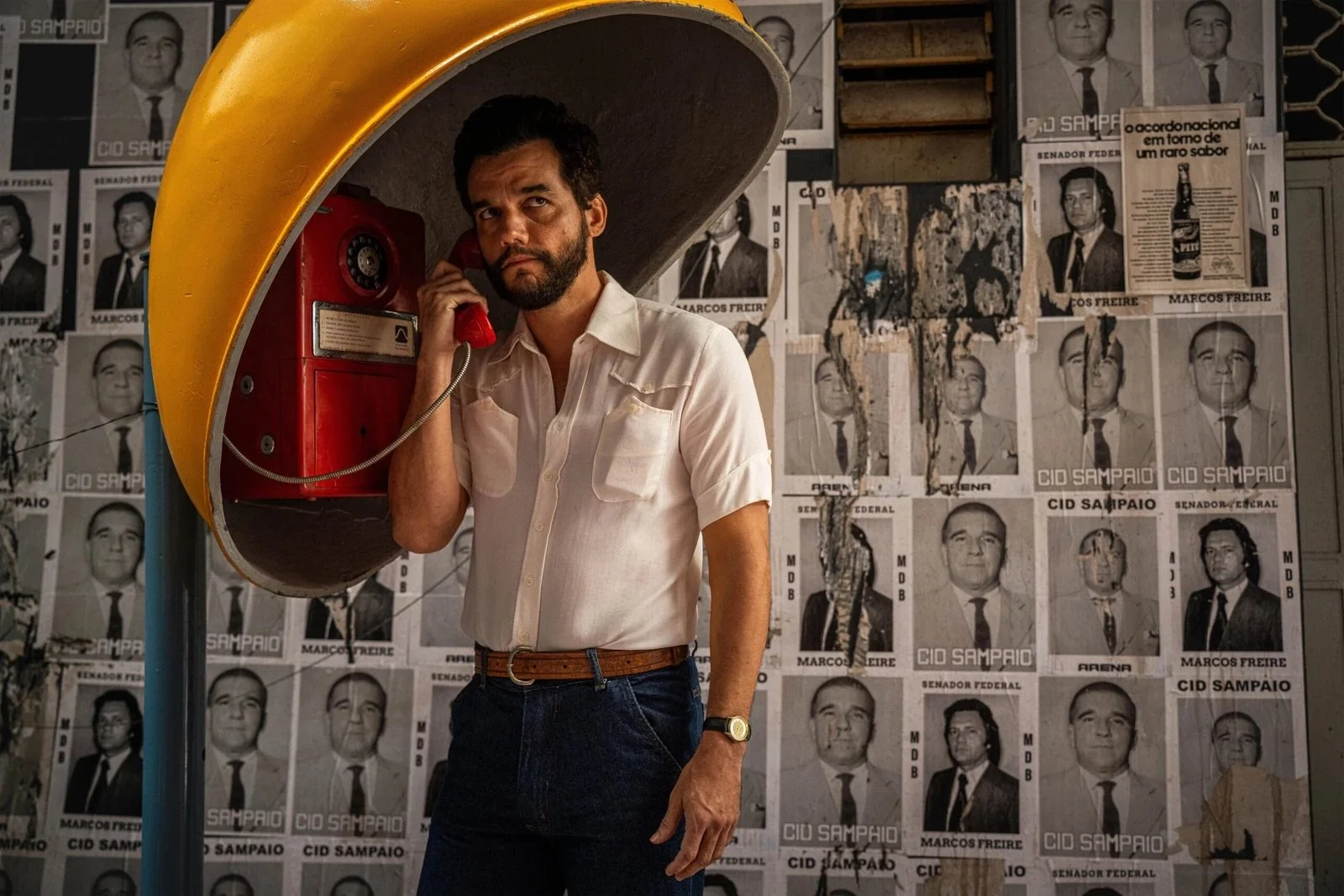
Wagner Moura plays Marcelo, who returns to his hometown in Brazil at the height of a military junta’s reign, in Kleber Mendonça Filho’s thriller “The Secret Agent.” (Photo courtesy of Neon.)

Review: 'The Secret Agent,' a paranoid thriller for a new era, puts Wagner Moura in a perfect role — a man thinking his way out of deadly trouble

December 11, 2025 by Sean P. Means

I’m going to keep my synopsis for “The Secret Agent” as brief as I can manage, because it’s best not to know too much going into writer-director Kleber Mendonça Filho’s a slow burn of a thriller — a movie that rewards the audience’s patience.

It’s 1977 in Brazil, which Mendonça Filho refers to as “a time of great mischief.” It’s here where we meet Marcelo (played by Wagner Moura), who’s driving across Brazil to his old home town, Recife. He settles into an apartment building where Dona Sebastiana (Tânia Maria), an old rebel, provides housing and sanctuary for refugees and other immigrants.

Why has Marcelo returned to Recife? That’s left deliberately under wraps for a while. The one hint Mendonça Filho provides is a scene where an old rich man (Luciano Chirolli) is paying two hitmen (Roney Villela and Gabriel Leone) to find and kill Marcelo. The old man’s reasons seem to be both monetary and personal — and, in later flashbacks, we find out why.

It’s in those flashbacks that we also learn what Marcelo — if that’s his real name — is doing back in Recife. For him, also, It’s personal on several fronts, including a reunion with his son, Fernando (Enzo Nunes), who’s obsessed with the movie he’s not allowed to see: “Jaws.” A news report about a severed leg found inside a shark’s belly doesn’t do anything to dissuade Fernando, but the thought of the shark feeds Marcelo’s nightmares.

When Marcelo gets a job in a government archive, he is befriended by Chief Euclides (Robério Diógenes), Recife’s corrupt head of the police. Euclides, flanked by two young thugs, doesn’t seem to know that people — powerful people the chief knows — want Marcelo dead.

Mendonça Filho steeps “The Secret Agent” in the film language of the ’70s — “Jaws,” obviously, but also early Brian de Palma movies and the paranoid thrillers of the era, like “Three Days of the Condor” and “The Parallax View.” The tension here, though, is also woven into Brazil’s history, and a time of a military junta that stifles dissent through censorship and forced disappearances. 

Moura gives a smoldering performance, one that earned him a Best Actor award at Cannes in May — where Mendonça Filho also was awarded Best Director. Moura keeps his emotions locked down, but in flashes he reveals a lot about what’s brought him back to Recife and what he’s determined to do.

Mendonça Filho also includes a framing story, involving a current researcher (Laura Lufési) transcribing tapes from Marcelo’s time for some government project. It’s a grace note that reminds us that the bad days of authoritarianism aren’t that far removed from today, and can sneak back up on us if we’re not careful.

——

‘The Secret Agent’

★★★1/2

Opens Friday, December 12, at the Broadway Centre Cinemas (Salt Lake City). Rated R for strong bloody violence, sexual content, language, and some full nudity. Running time: 161 minutes; in Portuguese, with subtitles. 

December 11, 2025 /Sean P. Means
Comment

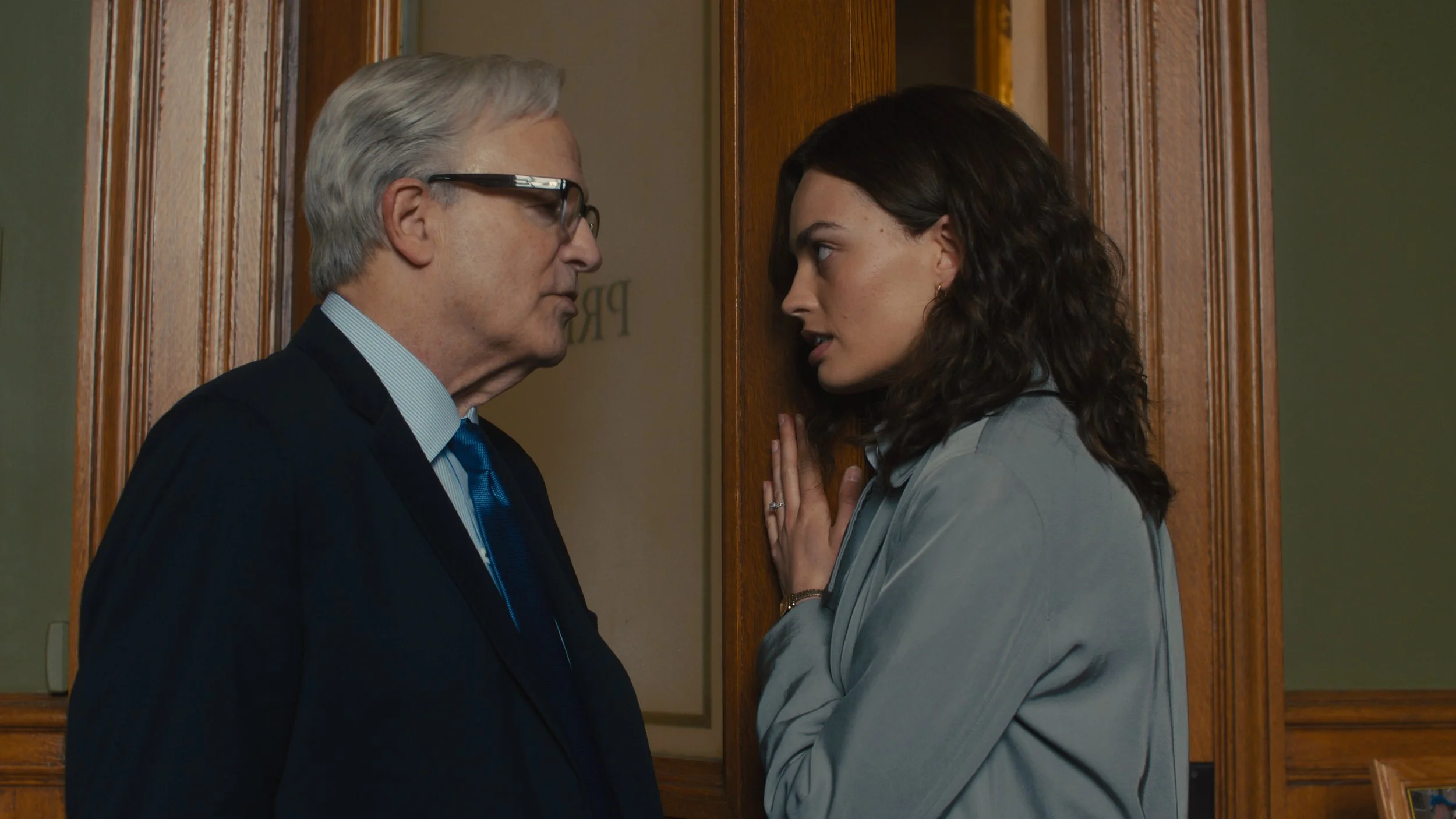
Lt. Gov. Ella McCay (Emma Mackey, right) talks to her boss, Gov. Bill Moore (Albert Brooks), in a moment from writer-director James L. Brooks’ comedy “Ella McCay.” (Photo by Claire Folger, courtesy of 20th Century Studios.)

Review: 'Ella McCay,' occasionally funny and earnest to a fault, falls to director James L. Brooks' habit of being too nice to his characters

December 11, 2025 by Sean P. Means

The thing about James L. Brooks, as a writer and as a director, is that he likes all his characters — sometimes to a fault, as seen in his shaggy, sloppy, overstuffed new comedy, “Ella McCay.”

The man behind “Terms of Endearment” and “Broadcast News” hasn’t directed a movie since “How Do You Know” in 2010, and there’s a certain creakiness in the way he conjures up these characters, many of them well-meaning and charming when taken separately but a little too much when flung together in one movie.

Our title character, played by Emma Mackey, is a young politician in an unnamed state, who’s better at policy details than the glad-handing and horse-trading of modern politics. She started out as aide to Bill Moore (Albert Brooks), a Democratic politician who is a natural at shaking hands and fund-raising — and when Moore became governor, he made Ella his lieutenant governor. 

Before we get to that, though, there’s a prologue showing the teen Ella coping with the death of her mother, Claire (Rebecca Hall), and the unfaithfulness of her father, Eddie (Woody Harrelson). Ella keeps her anger in check, to protect her younger brother, Casey, as they move in to live with their aunt, Helen (Jamie Lee Curtis). 

Back to the present: Gov. Moore gets the call to join the president’s cabinet, making Ella the governor. Ella tries to apply her head for policy to the state’s economic problems. Unfortunately, her lack of skill as a negotiator starts to unravel her governorship just as it’s starting. Compounding her problems is her husband, Ryan Newell (Jack Lowden), who owns some local pizza restaurants and wants to finagle his way into her administration. 

Then more family problems intrude. Eddie pops up unexpectedly, for starters. And Casey (played by Spike Fearn), now an agoraphobic sports-betting wizard with an unusual amount of recreational marijuana on hand, is pining for the woman (Ayo Edebiri) he let get away a year earlier.

Ella is not without support, chiefly from Aunt Helen, who acerbically cuts down anyone who dares to run afoul of her niece. Also in her corner is the state trooper who drives her (Kumail Nanjiani), and her cantankerous secretary, Estelle — played by Julie Kavner, who applies her Marge Simpson tones to the role of narrator.

That’s a lot of people to juggle in one movie, and maybe Brooks had it in mind to let things play out on the set and then cut a couple of characters in the editing bay. If Brooks is familiar with the advice given to writers, to “kill your darlings,” he didn’t heed it here.

Mackey gives a nice performance, though sometimes so subdued that she fades into obscurity amid her louder, wackier co-stars, like Curtis and Harrelson. Among the supporting cast, the standout is Brooks, in fleeting moments, who’s funny as the old-time politician who tries to mentor Ella. 

“Ella McCay” is a movie that hits on five interesting ideas when three would be enough. It’s an unfortunate example of subtraction by addition. 

——

‘Ella McCay’

★★

Opens Friday, December 12, in theaters everywhere. Rated PG-13 for strong language, some sexual material and drug content. Running time: 115 minutes.

December 11, 2025 /Sean P. Means
Comment

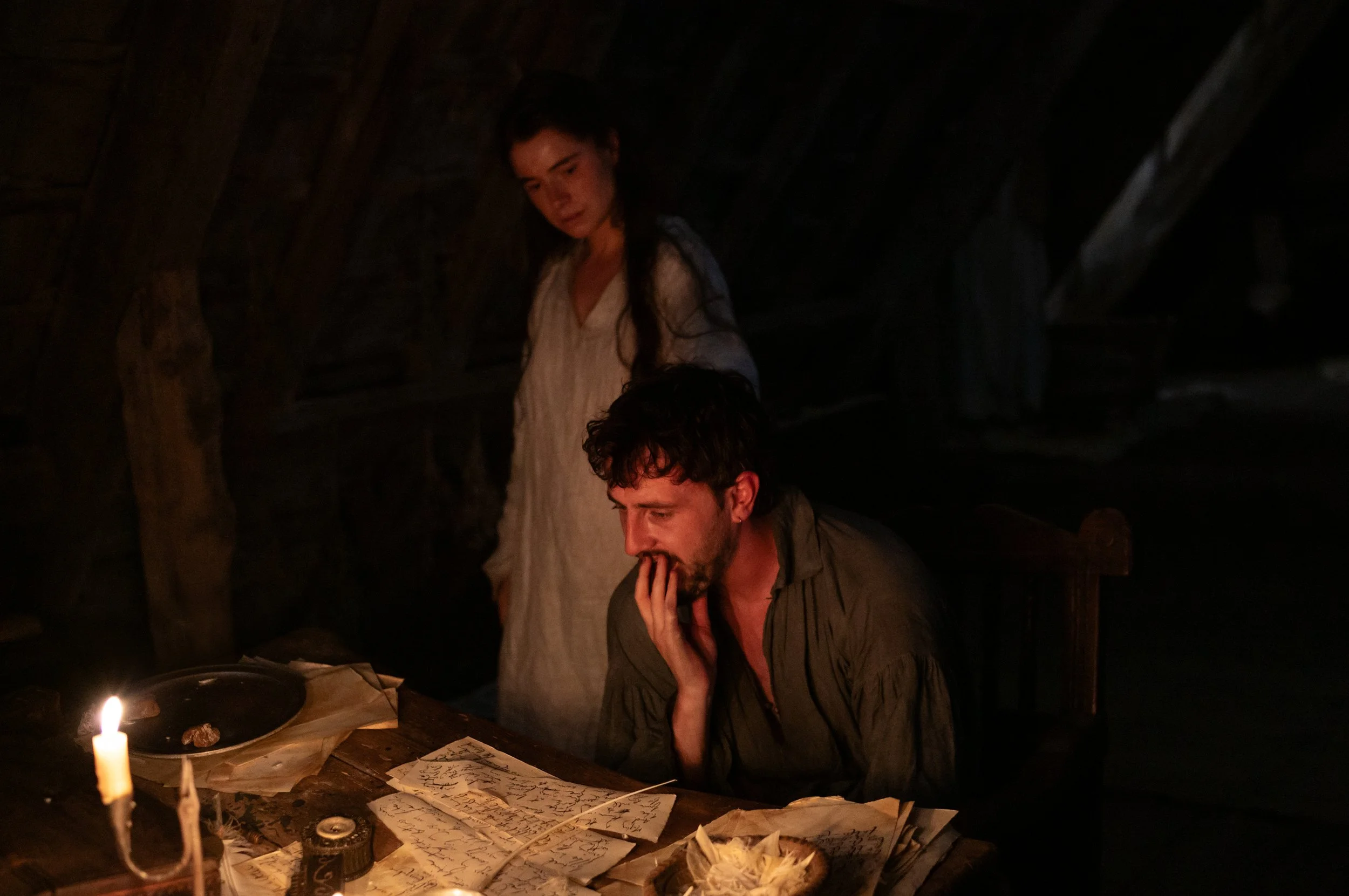
Agnes, or Anne, Hathaway (Jessie Buckley, left) and her husband, William Shakespeare (Paul Mescal), share a moment in director Chloé Zhao’s drama “Hamnet.” (Photo by Agata Grzybowska, courtesy of Focus Features.)

Review: 'Hamnet,' a tale of William Shakespeare and his wife, beautifully captures how nature and grief are lived and translated into art

December 04, 2025 by Sean P. Means

Director Chloe Zhao opens “Hamnet” in a forest, the sort of magical place where William Shakespeare could have set one of his lighter comedies, like “As You Like It” or “A Midsummer Night’s Dream” — which makes the emotional ride this imagined drama about Shakespeare’s personal life all the more moving.

Anne Hathaway (Jessie Buckley), referred to here as Agnes, spends her time in this forest collecting medicinal herbs and training her falcon — both talents she learned from her mother, who was labeled a forest witch. It’s also where Will (Paul Mescal), who teaches Latin to Agnes’ brothers to pay off his family’s debt to her father (David Wilmot), encounters Agnes. 

On their first meeting, he kisses her and she sends him away. On their second meeting, she asks him to tell a story — and he recalls the myth of Orpheus and Eurydice, which charms her. They have sex, and Agnes becomes pregnant. Her parents banish her, and Agnes and Will marry and have a daughter, Susanna.

Time passes, in an ethereal way that suits Zhao’s beautifully meditative style, and Agnes becomes pregnant again. Will is miserable trying to write in the country, so Agnes agrees that Will should go to London to pursue writing plays and staging them.

Agnes then gives birth to twins — a daughter, Judith, who seems at first to be stillborn but gradually comes to life, and a son, called Hamnet. All three children are a joy to their mother, and dote on Will when he occasionally comes home. In one scene, the three kids portray the witches from Will’s play, “Macbeth,” and he laughs heartily.

I do not intend to spoil what happens next, suffice it to say it involves how young Hamnet is connected to Shakespeare’s similarly named play — a play about parents and children dealing with grief and loss, and the expression of those emotions through some of the most soulful words ever put to paper. (In the film, the two also are connected by blood: The young actor who plays Hamnet, Jacobi Jupe, is the brother to Noah Jupe, who in the film’s shattering climax plays the actor performing as Hamlet in Will’s company.)

The script — which Zhao wrote with Maggie O’Farrell, on whose novel the movie is based — doesn’t tell when it can show, and Zhao shows with subtlety and quiet inference. This is a movie that gives its rewards to those willing to sit with it, to follow Agnes as she brings their children together with nature and grieves when tragedy strikes, and to listen to Will turn those emotions into poetry.

Mescal is ferociously good as the brooding Will, but it’s Buckley who becomes the heart and soul of “Hamnet” — as she channels Agnes’ bond with nature, and primarily as she lets waves of emotions play out quietly on her face in the movie’s brilliant ending. 

——

‘Hamnet’

★★★1/2

Opens Friday, December 5, in theaters. Rated PG-13 for thematic content, some strong sexuality, and partial nudity. Running time: 125 minutes.

December 04, 2025 /Sean P. Means
Comment

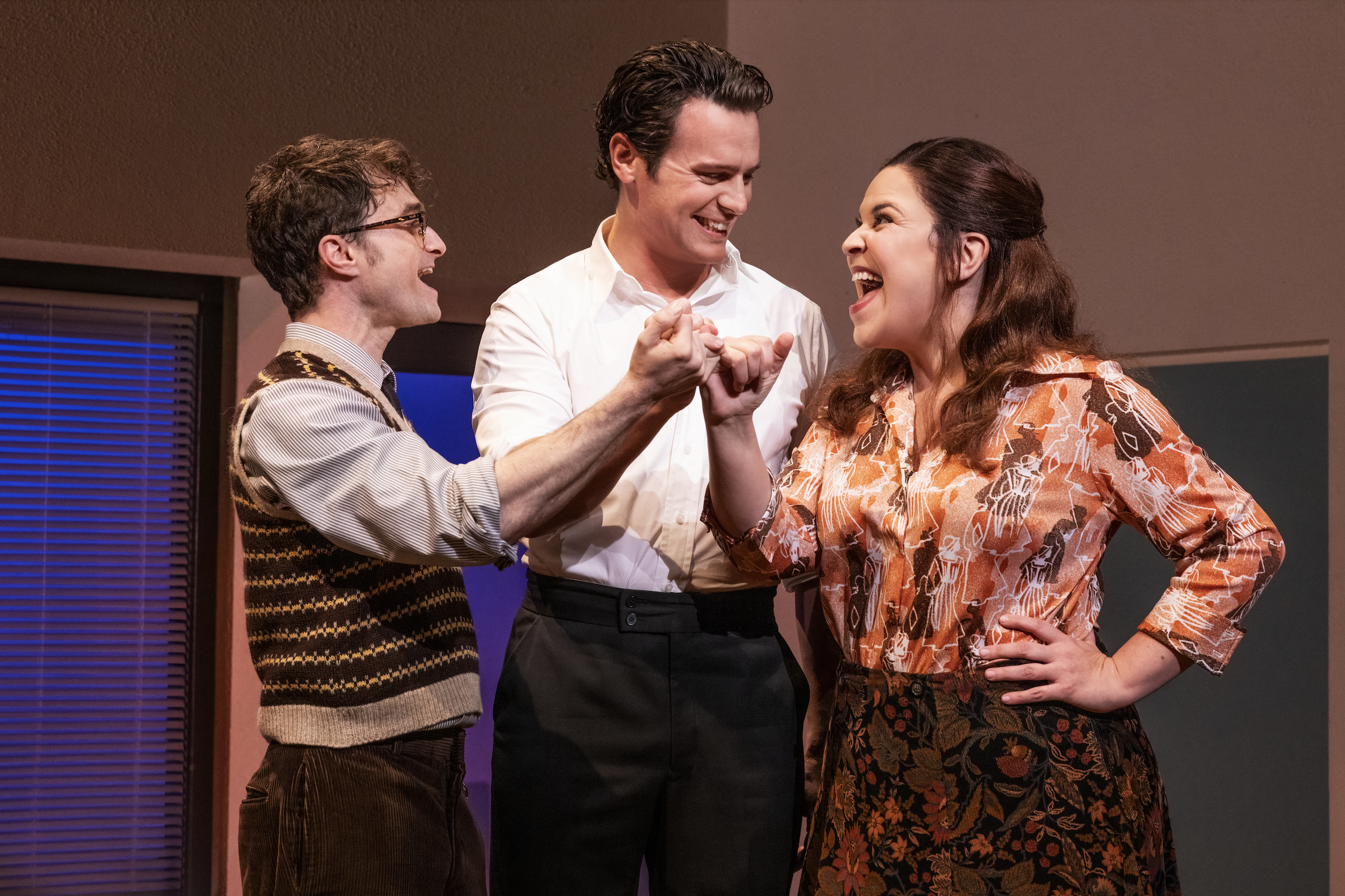
Three friends — from left, Charley Kringas (Daniel Radcliffe), Franklin Shepard (Jonathan Groff) and Mary Flynn (Lindsay Mendez) — stick together through bad times and good ones, in “Merrily We Roll Along,” a movie version of the Tony-winning revival of the Stephen Sondheim musical. (Photo courtesy of Sony Pictures Classics.)

Review: 'Merrily We Roll Along' captures the joys of the Broadway revival — including Jonathan Groff's impossibly good looks and Daniel Radcliffe's neuroses

December 04, 2025 by Sean P. Means

Since most of us don’t have the ready cash or proximity to New York to experience the magic of a Broadway musical, the next best thing is a movie like “Merrily We Roll Along,” which nicely captures the live show in a bottle.

Shot in June 2024 at New York’s Hudson Theatre, the movie features the Tony-winning revival of composer Stephen Sondheim’s smartly conceived musical about a playwright, Frank Shepard (played here by Jonathan Groff), and his two best friends, musician Charley Kringas (Daniel Radcliffe) and magazine writer-turned-novelist Mary Flynn (Lindsay Mendez). 

When Sondheim and playwright George Furst initially wrote the musical in 1981, they kept the story structure from the source material, a 1934 Kaufman/Hart play: Telling the story in reverse chronology — showing Frank, Charley and Mary first as older and disillusioned, gradually catching them younger and more idealistic.

The opening scene is in Frank’s Hollywood home in 1977, when he’s a successful producer of lucrative but dumb movies. Director Maria Friedman, who also directed the stage version, starts by putting Groff’s impossibly handsome face in tight closeup, even when he’s not the one singing — and Frank’s feelings of self-loathing and self-centeredness play out on his face.

Mary is on the sidelines, drunkenly acting as Frank’s conscience, making acerbic comments about the hangers-on trying to get Frank’s attention. She’s also watching as Frank’s wife, Broadway actress Gussie Carnegie (Krystal Joy Brown), is figuring out that Frank is having an affair with the ingenue of his latest show (Talia Robinson, part of the play’s versatile ensemble). Charley is missing, because he and Frank haven’t spoken to each other in four years.

A musical transition takes the story back to 1973, and the last time Frank and Charley talked. It was on live TV, when the two, then a successful songwriting duo, were promoting their latest Broadway show. The interviewer lets slip something Frank hadn’t told Charley yet: Frank has signed a three-picture deal, which will mean a move to Hollywood. Charley unloads to the interviewer about his frustration with Frank’s pursuit of money over art. The song, “Franklin Shepard, Inc.,” is a fast-moving ball of lyrical rage, and Radcliffe knocks it out of the park.

Then it’s 1968, and Frank has a new apartment overlooking Central Park, welcoming his son, Frankie (Max Rackenberg), who he hasn’t seen since a bitter divorce from Beth (Katie Rose Clarke). The reason for the divorce: Frank’s affair with Gussie, then married to Joe (Reg Rogers), the producer of Frank and Charley’s breakout stage hit, “Musical Husbands.” Mary, who we figure out has long carried a torch for Frank, learns of the affair and takes up drinking.

Each step backwards in the timeline, the story shows us the friendships as they started, grew and grew apart. We also see how Frank and Charley’s youthful enthusiasm, and their desire to make art that means something, took the blows that life usually delivers — family responsibilities, financial survival and the messiness of having other people depend on you. And all of it is delivered through some of Sondheim’s best compositions, with complex rhyme schemes and intelligent wordplay.

All three leads are a joy to watch. Mendez builds a mask of sarcastic wit to hide the pain of loving Frank and not feeling that love returned. Radcliffe shows Charley to be a jittery ball of anxiety, a perfect foil for the glad-handing Frank. And Groff dominates as he portrays, in reverse, Frank’s slow slide into artistic compromise. Seeing all three together, in this time capsule of a movie, is sheer theatrical delight.

——

‘Merrily We Roll Along’

★★★1/2

Opens Friday, December 5, in theaters. Rated PG-13 for drug use, some strong language, and smoking. Running time: 149 minutes.

December 04, 2025 /Sean P. Means
Comment

A new, nastier Freddy Fazbear walks through town in “Five Nights at Freddy’s 2,” a sequel based on the popular scary video game. (Photo courtesy of Universal Pictures.)

Review: 'Five Nights at Freddy's 2' is fan service at its worst, a horror thriller that will bore all but the die-hards

December 04, 2025 by Sean P. Means

Two years ago, director Emma Tammi had it both ways with her cinematic take on Scott Cawthon’s video game “Five Nights at Freddy’s” — delivering the characters and jump-scare shocks the game’s fans demanded, while trying to craft a plausible and fairly good horror thriller that newcomers could enjoy. 

Now, the inevitable sequel, “Five Nights at Freddy’s 2” goes all in with the fans, and leaves anyone on the outside wondering why anything this tedious and incoherent ever made it to theaters. And, what’s worse, the whole thing ends with an obvious attempt to set up a third movie.

The prologue sets up what’s ostensibly different about this chapter of the story. It’s a flashback to 1982, in what we quickly learn is the original location for Freddy Fazbear’s Pizza, where animatronic animal characters entertain kids amid the arcade games, ball pit and pizza parties going on around them. These scenes focus on one introverted girl, Charlotte (Audrey Lynn Marie), whose obsession with one animatronic creature — The Marionette — ends badly.

Fast-forward 20 years, and we’re back with the characters from the first movie. Mike Schmidt (Josh Hutcherson) is trying to raise his kid sister, Abby (Piper Rubio), who’s now 11 and has a not-so-healthy fascination with robotics. Mike is also, as we see early, about to go out on a first date with Vanessa (Elizabeth Lail), the cop who helped take down the possessed animatronics in their local Freddy’s restaurant.

Vanessa is dealing with bad dreams, mostly involving her dead father, William Afton (Matthew Lillard), the creator of the original Freddy’s and its creepy animal figures. She hasn’t been entirely honest with Mike about everything she knows about her father’s work, but it all comes spilling out when a group of young ghost-hunting social-media stars (led by “Regretting You’s” McKenna Grace) accidentally unleash the Charlotte-possessed Marionette, which aims to kill parents everywhere by remotely controlling the original Freddy robots.

Tammi is back directing this sequel, and she manages to create a few good movie scares. The key weakness here is the script, credited solely to Cawthon, the game’s creator, who’s good at referencing his past work but terrible at setting up a movie scenario more complicated than a jump scare. Those tricks may work repeatedly in a video game, where they catch you because your mind is busy trying to figure out the gameplay, but get old fast in a movie.

Then there are the copious Easter eggs, which are given more thought than the movie’s actual plot. One sequence involves the Freddy character attacking a family on Elm Street (get it?). YouTuber CoryxKenshin returns in a cameo as a disbelieving cab driver. And horror movie fans will get a chuckle, maybe, when they see the actor who plays Charlotte’s father: Skeet Ulrich, Lillard’s partner in crime in the original “Scream” back in 1996. 

Winking references, though, do not a good movie make. Neither do telegraphed “twists” that are included only to set up a third movie. If the point of the “Five Nights at Freddy’s” franchise is that observers are supposed to survive in this creepy scenario, the makers should really make sure those entering Freddy’s world don’t die from boredom first.

——

‘Five Nights at Freddy’s 2’

★

Opens Friday, December 5, in theaters everywhere. Rated PG-13 for violent content, terror and some language. Running time: 104 minutes.

December 04, 2025 /Sean P. Means
Comment
  • Newer
  • Older

Powered by Squarespace