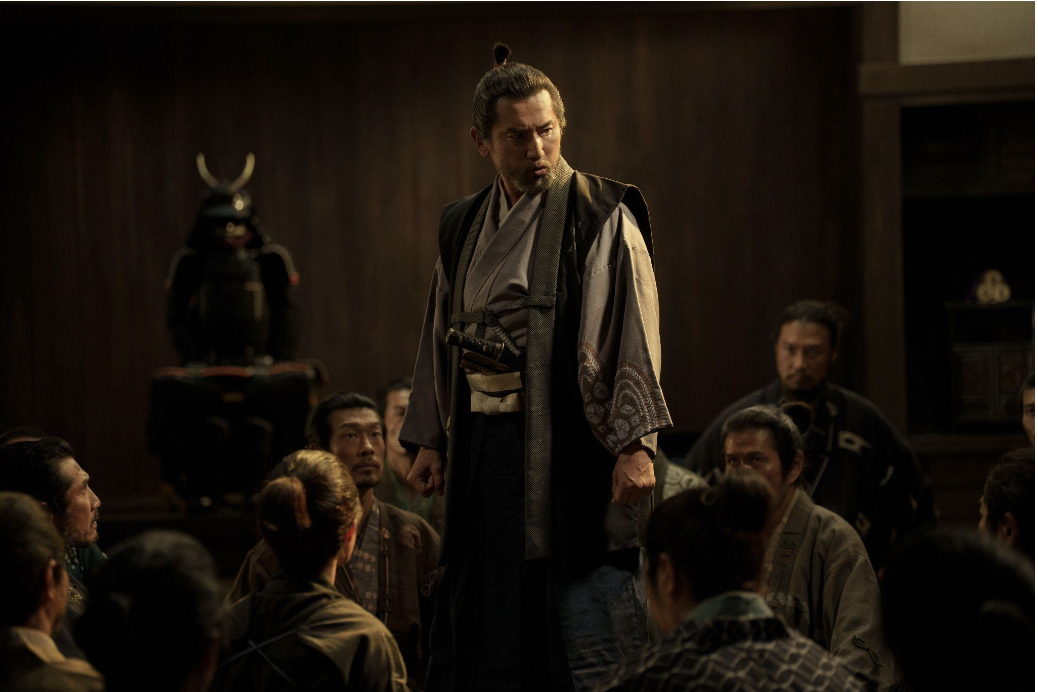
Review: 'The Samurai and the Prisoner' is an elegantly staged and intense drama of power and hubris in 16th century Japan
A sharply tense thriller wrapped in the trappings of a period drama, writer-director Kiyoshi Kurosawa’s “The Samurai and the Prisoner” is an elegantly mounted tale of a warrior who thinks he’s outsmarted his enemies — only to find the threat was under his own roof.
It’s 1587, and the samurai commander Murashige Araki (Masahiro Motoki) has betrayed his warlord, Nobunaga Oda, and has fortified his position in Arioki Castle. Surrounded by advisers and generals, Murashige is sure that Oda can be defeated, particularly if he enlists other samurai to change their allegiances. But Murashige’s methods — particularly his decision not to kill his prisoners, in the honorable tradition — confuse his supporters, who fear Murashige is showing dishonor and that no samurai will join his side.
When Oda sends an emissary, Kuroda Kanbei (Masaki Suda), to negotiate a truce, Murashige throws Kanbei in his dungeon. When another prisoner, another warlord’s son, Jinen, demands he be killed, as is customary, Murashige refuses, and makes sure there are no weapons in his cell that he could use to kill himself. When Jinen ends up dead anyway, Murashige has a mystery to solve — and only Kanbei, who is given the facts of the case, can solve it.
This pattern repeated himself, through the seasons, and Murashige can’t figure out why he’s plagued with unexplained deaths. He talks about it with his wife, Chiyoho (Yuriko Yoshitaka), but her advice is clouded with the knowledge that she belongs to the same religious order as Jinen, and believes in honor being upheld through bloodshed. Kanbei, locked up below the castle, seems to be the only one who understands Murashige’s problem — but, given his bloody incarceration, what motive does he have to help his jailer?
It’s a bit surprising to learn that Kurosawa is not related to the legendary Japanese filmmaker Akira Kurosawa, in part because Murashige’s attempts at interrogating his underlings and parsing through stories that don’t agree with each other bears a striking resemblance to the older man’s classic memory drama “Rashomon.” Kiyoshi Kurosawa also stages some impressive samurai fight scenes, reminiscent of his namesake’s films, like “The Seven Samurai” and “Yojimbo.”
That’s enough comparisons, though. Kiyoshi Kurosawa’s adaptation of Honobu Yonezawa’s novel stands up on its own. “The Samurai and the Prisoner” is sweeping yet intimate, and moves from whisper-soft to bold and brash as Murashige slowly discovers who he can trust in his castle — and the chilling answer is that he can’t even trust himself.
——
‘The Samurai and the Prisoner’
★★★1/2
Opens Friday, August 7, at the Broadway Centre Cinemas (Salt Lake City). Not rated, but probably R for bloody violence. Running time: 148 minutes; in Japanese with subtitles.