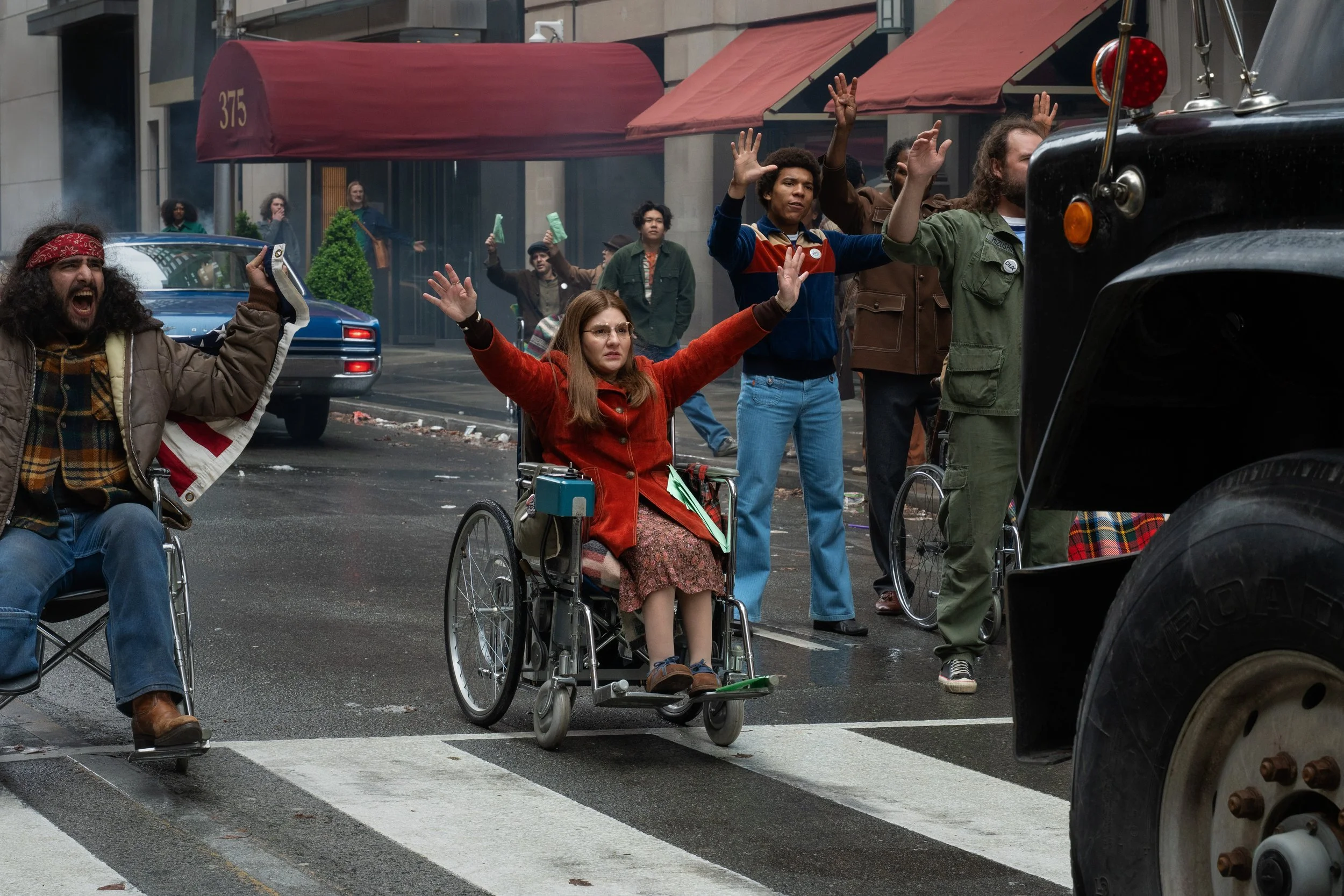
Review: 'Being Heumann' tells a different and inspiring civil rights story, focusing on a hard-charging and abrasive disabled activist
There is so much admirable and even wonderful in the biographical drama “Being Heumann” — in its depiction of resilience and its authentic portrayal of disability — that it largely overcomes the way director Sian Heder makes the movie’s virtue feel like a chore.
The main character, and the inspiration for the groaning pun in the title, is Judy Heumann, a Brooklyn-born civil rights activist who protested and agitated to improve the lives of people with disabilities, like herself. (Heumann contracted polio at 18 months, and used a wheelchair for the rest of her life.) Here, Judy’s played by the British actor Ruth Madeley, who was born with spina bifida and is best known to American audiences for her recurring role on “Doctor Who.”
I mention the health conditions of both Heumann and Madeley to point out that Heder, who cast Marlee Matlin and other deaf actors to play deaf characters in “Coda,” is determined to not give some non-disabled actor a cheap chance to generate Oscar buzz by mimicking a disability. It may have worked before — Daniel Day-Lewis in “My Left Foot” and Eddie Redmayne in “The Theory of Everything” leap to mind — but those days are gone.
In the film, it’s 1977 in San Francisco, and Judy is leading the protests to get the U.S. Secretary of Health, Education and Welfare, Joseph Califano (played by Mark Ruffalo), to sign Section 504 of the Rehabilitation Act — a law guaranteeing inclusion for disabled people in programs that get federal funding. The issue for Califano, a member of President Jimmy Carter’s cabinet, is that implementing 504 will be massively expensive. So Califano, when the story begins, has been stalling.
Judy is done with waiting. Impulsively packing a toothbrush in her bag for a protest outside HEW’s San Francisco office, she decides to take the fight inside. She leads a few dozen of her fellow protesters — deaf, blind, in wheelchairs, or their assistants — into the building, declaring they won’t leave until Califano signs 504. She and her colleagues, notably her perky right-hand woman, Kitty Cone (Madeline Delp, a former Ms. Wheelchair USA), defy the federal authorities, and persist with help from members of the Black Panthers and a naive but eager TV reporter (Dylan O’Brien).
The script — by Heder and Rebekah Taussig, a disabled author writing her first screenplay — hits all the beats one would expect of a biopic, and it’s honest about the many small indignities its disabled characters endure, and refreshingly honest about how abrasive the real Judy could be, though for a righteous cause. The script’s biggest flaw is in making Califano into a cartoon villain because a movie like this needs one, something the character practically say out loud by the end.
“Being Heumann” is the sort of biopic that audiences will love for its rousing depiction of the protesters’ pluck, and for the way it shows Judy Heumann as a modern-day hero. The only disappointment is in wanting an emotional authenticity to match the uncompromising casting.
——
‘Being Heumann’
★★★
Opens Friday, November 13, at the Broadway Centre Cinemas (Salt Lake City). Rated R for language, some sexual material and drug use. Running time: 127 minutes.