The Movie Cricket

Movie reviews by Sean P. Means.

  • The Movie Cricket
  • Sundance 2026
  • Reviews
  • Other writing
  • Review archive
  • About

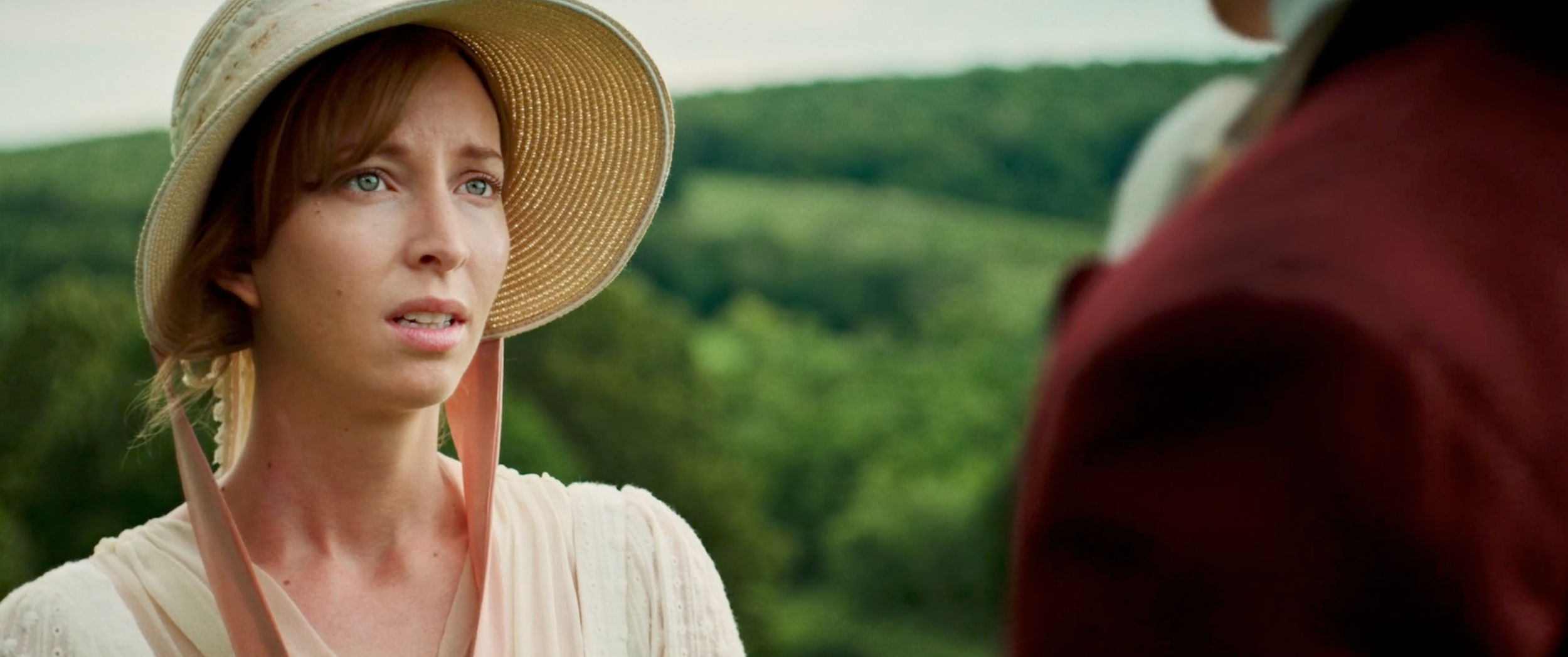
Julia Aks stars as an Austen-esque heroine in “Jane Austen’s Period Drama,” which Aks co-wrote and co-directed with Steve Pinder. It’s one of the five Academy Award nominees in the live-action short category. (Photo courtesy of Roadside Attractions.)

Review: This year's Oscar-nominated animated and live-action shorts are 10 solid stories, with a couple of standouts

February 26, 2026 by Sean P. Means

This year’s Academy Award nominees in the animated short and live-action short categories are uniformly good, and in some cases great. It’s a relief to say there’s not a clunker in the bunch.

The distributor of this year’s program, Roadside Attractions, solicited director Taika Waititi (whose “Two Cars, One Night” was nominated in the live-action short category back in 2005) to curate the programs. Waititi’s contribution seems to be in choosing the best order for each group of five — making sure audiences leave smiling by seeing something funny at the end.’

The animated program starts with “The Three Sisters,” by Russian-born director Konstantin Bronzit, a humorous and wordless tale of three lonely sisters who rent a room to a crusty sea captain. That’s followed by the more whimsical “Forevergreen,” in which directors Nathaniel Engelhardt and Jeremy Spears depict the loving relationship between a pine tree and an orphaned bear cub. Then comes the Canadian stop-motion entry “The Girl Who Cried Pearls,” directed by Chris Lavis and Maciek Szczerbowski, a beautifully rendered fable of love and greed set in Montreal of about a century ago.

Then comes the best of the animated crop, French director Florence Miailhe’s “Papillon (Butterfly).” It’s based on the real life of Alfred Nakache, an Algerian-born swimmer who competed for France in the 1930s, including at the 1936 Olympics in Berlin — where, as a Jew, he helped the French swimming team beat out the Germans. In a swirl of images resembling oil paintings, Miailhe shows Nakache swimming through memories of marriage, antisemitism and Auschwitz. 

The fifth nominee, director John Kelly’s “Retirement Plan,” is a sweet discourse on the dreams of a man (voiced by Domhnall Gleeson) making plans for his years after retiring. (Since the five nominees add up to about 65 minutes of screen time, the distributors add a sixth short, “Eiru,” a bit of Irish folklore by director Giovanna Ferrari and the folks at Cartoon Saloon, the production company behind “Wolfwalkers” and “Song of the Sea.”)

The live-action slate begins with director Sam A. Davis’ “The Singers,” a melancholy short that depicts a group of barflies trying to win a bet by displaying the best singing voice. That’s followed by a sweet British story, Lee Knight’s “A Friend of Dorothy,” where a teen (Alistair Nwachukwu) befriends an elderly woman (the great Miriam Margolyes) with a love of theater. 

Then come the two shorts that, if I had to guess, will duke it out for the Oscar. The first, writer-director Meyer Levinson-Blount’s “Butcher’s Stain,” is a chilling study of intolerance, where a Palestinian butcher working in a Tel Aviv market tries to fight an accusation of tearing down hostage posters in the break room. The second, “Two People Exchanging Saliva,” written and directed by Natalie Musteata and Alexandre Singh, is a formally composed story of a forbidden love between a rich woman (Zar Amir, from “Holy Spider”) and a shop clerk (Luàna Bajrami), set in a metaphor-rich world where kissing is outlawed and slaps across the face are currency.

The last of the five is the funniest and wittiest. “Jane Austen’s Period Drama” is a satire that imagines an Austen-esque woman (Julia Aks, who co-wrote and co-directed with Steve Pinder) explaining her menstrual cycle to a clueless suitor (Ta’imua). Even the characters’ names induce some solid laughs.

——

Oscar-nominated animated short films 2026 

★★★1/2

Oscar-nominated live-action short films 2026

★★★1/2

Both programs open Friday, February 27, at the Broadway Centre Cinemas (Salt Lake City). The compilations are unrated, but probably PG-13 for references to violence, sexual material and language. The animated program is 83 minutes, and includes a short in French with subtitles; the live-action program is 115 minutes, and features one short in Hebrew and Arabic, and one in French, both with subtitles.
February 26, 2026 /Sean P. Means
Comment

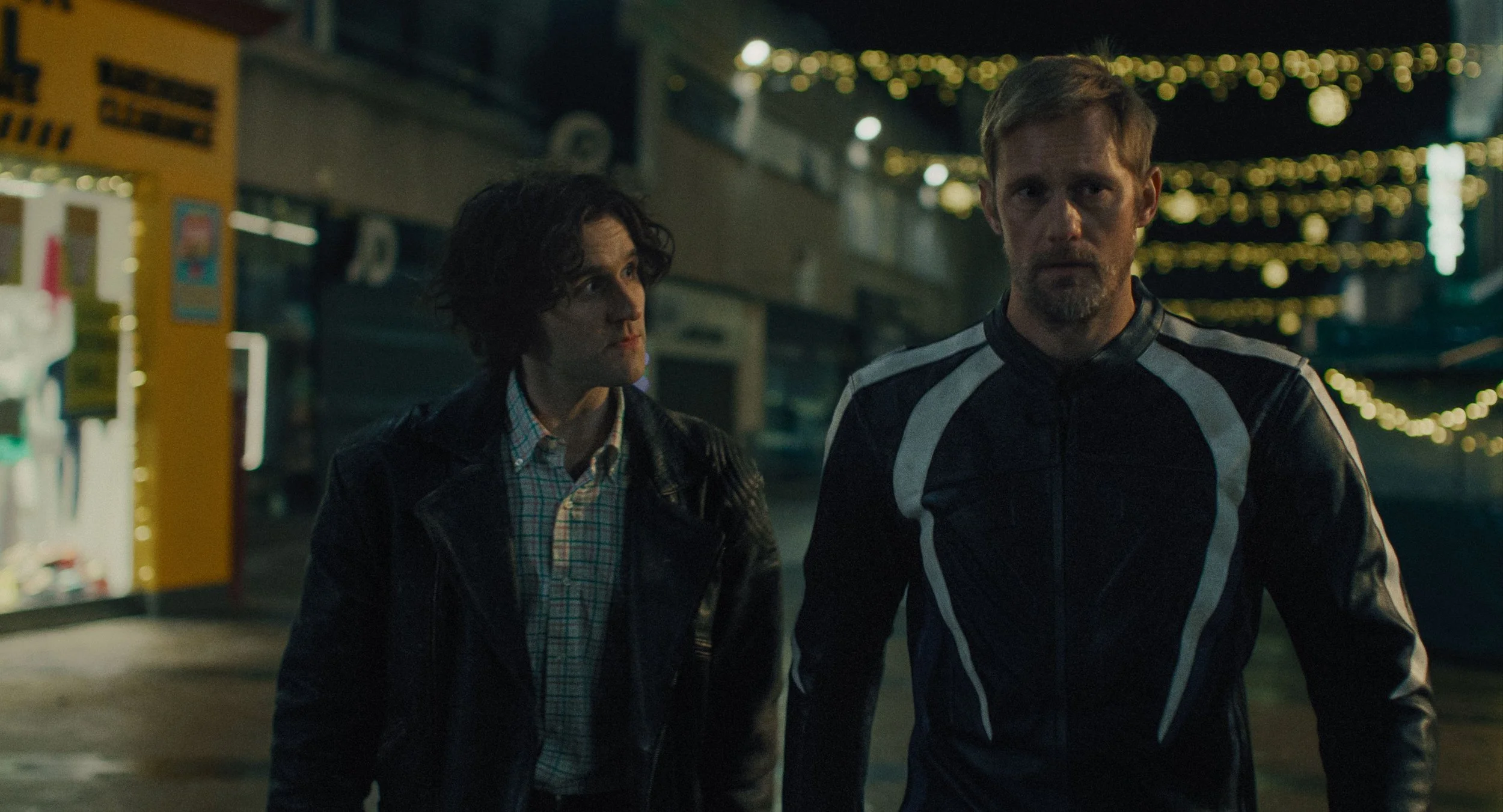
Colin (Harry Melling, left) has an encounter with Ray (Alexander Skarsgåard), the leader of a motorcycle group, in writer-director Harry Lighton’s “Pillion.” (Photo courtesy of A24.)

Review: 'Pillion' presents the sexual dynamics between a studly biker and his young submissive with an unflinching eye, and finds tender romance beneath the leather surface.

February 19, 2026 by Sean P. Means

If you’ve heard anything about writer-director Harry Lighton’s bondage-themed drama “Pillion,” you may already know that it’s unflinching in its portrayal of a young man’s sexual exploits as a submissive partner to a dominating motorcycle rider. What you might not latch onto, through the “don’t try this at home” exploration of the BDSM subculture, it’s oddly sweet and romantic.

The young man at the center of Lighton’s adaptation of Adam Mars-Jones’ book “Box Hill,” is Colin (played by Henry Melling), a young man seeking his first gay sexual encounter. He does this with the blessing of his parents, Pete (Douglas Hodge) and Peggy (Lesley Sharp), who even drive him to the bar for his first blind date. 

That date doesn’t go anywhere, but at the pub, Colin first encounters Ray (Alexander Skarsgård), an impossibly handsome man in motorcycle leathers. Colin later meets Ray on the street, and Ray guides him through a sexual experience in an alley. 

“What am I going to do with you?” Ray asks. “Whatever you want, really,” Colin replies.

Colin finds out how far that answer goes. Ray takes his measurements, and orders Colin is own set of leather ware — and puts a chain with a padlock around his neck, an outer symbol that Colin is Ray’s “property” within this biker group. Colin revels in this role, happily sleeping on the floor while Ray sleeps on the bed. He doesn’t share the details of his relationship with his parents or coworkers, except to say that he has “an aptitude for devotion.”

Lighton is forthright in his depiction of the strong sexual component to this culture — one doesn’t usually see this much butt-baring clothing outside a fetish supply store — but he also leans into the commitment and cooperation inherent in such a dominant/submissive relationship. The movie also digs into the camaraderie of the other submissive’s in Ray’s motorcycle group, and how Colin finds in it a place he can belong.

As magnetic as Skarsgård is as the hunky Ray, it’s Melling as the vulnerable Colin who really shines here. A quarter century from being introduced as Harry Potter’s bullying cousin, Dudley Dursley, Melling has grown into a mature actor, and watching how his Colin presses his leverage within the relationship is downright heart-warming.

“Pillion” isn’t for everyone — the sexual content is too in-your-face for many moviegoers, and makes “Midnight Cowboy” look tame. But it’s a movie that, for an audience who can meet it halfway, delivers a poignant romance under that rough exterior.

——

‘Pillion’

★★★1/2

Opens Friday, February 20, at the Broadway Centre Cinemas (Salt Lake City). Not rated, but likely on the border between R and NC-17 for strong sexuality and suggestions of extreme nudity. Running time: 106 minutes.

February 19, 2026 /Sean P. Means
Comment

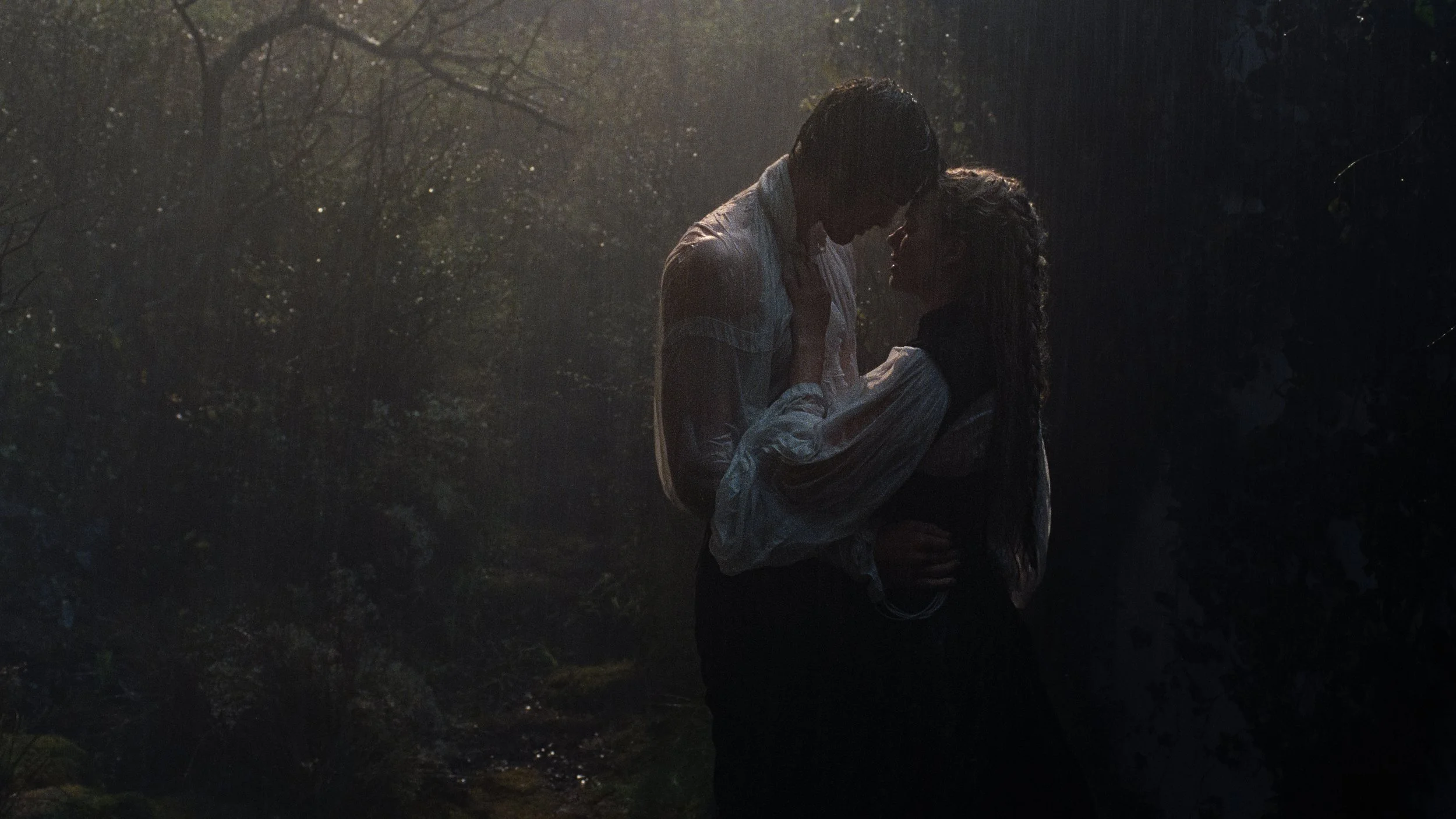
Heathcliff (Jacob Elordi, left) and Cathy (Margot Robbie) get caught in the rain in a scene from writer-director Emerald Fennell’s adaptation of Emily Brontë’s “Wuthering Heights.” (Photo courtesy of Warner Bros. Pictures.)

Review: "Wuthering Heights" is a delirious, delicious mess of a romance, with Margot Robbie and Jacob Elordi steaming up Emily Brontë's classic

February 12, 2026 by Sean P. Means

Some people consider Emily Brontë’s 1847 novel “Wuthering Heights” not just a great romance novel but THE great romance novel, against which every love story is measured. So director-writer Emerald Fennell has her work cut out for her as she attempts to fashion a steamy, sensual movie out of it.

Fennell, who gave us plenty to chew on in “Promising Young Woman” and “Saltburn,” has the building blocks to adapt a cracking version of “Wuthering Heights.” Those include windswept moors for locations, a sumptuous visual palette, gorgeous costumes and two leads — Margot Robbie as the flighty Catherine Earnshaw and Jacob Elordi as the darkly brooding Heathcliff — who don’t just fill out those costumes but inhabit their legendary characters.

It’s not always smooth sailing for Robbie and Elordi, because the characters’ moods and motivations flit from one extreme to the other over the course of more than two hours. Both Cathy and Heathcliff swear their love to each other, but they also behave in the most beastly ways to each other and to anyone who comes into their orbit. They are, by turn, both the moth and the flame for each other, and they and others get burned.

Heathcliff starts out as an orphan, taken in by Mr. Earnshaw (Martin Clunes), who has squandered his fortune on gambling and strong drink. Cathy gives Heathcliff his name and, at first, treats him as a pet — but over time they grow into friendship. This stirs jealousy in Nellie, who lives in the Earnshaw’s home, called Wuthering Heights, and as an adult (played by Hong Chau) becomes Cathy’s paid companion.

Cathy and Heathcliff always seem on the verge of expressing their love for each other, but society pressures and occasional external events get in the way. One such event is the arrival of new neighbors, wealthy Edgar Linton (Shazad Latif) and his barely-adult ward, Isabella (Alison Oliver). Cathy is cajoled to think about marrying Edgar, because of his wealth, and abandon the idea of marrying Heathcliff. When Heathcliff overhears Cathy talking about Edgar, it drives him to a desperate decision.

Fennell’s script leans heavily into Brontë’s creaky plot mechanics — there’s a lot of things overheard, or attempts at communication thwarted by third parties — that border on silliness. Where the movie is more sure of itself is when Robbie’s Cathy and Elordi’s Heathcliff are together, getting soaked in the English rain or making out in various settings. 

People who watch this “Wuthering Heights” may argue online from here to doomsday about whether Robbie and Elordi have any romantic chemistry here. That’s in the eye of the beholder, really — but it’s clear they are hungry to fulfill Fennell’s sometimes contradictory impulses to capture Brontë’s 19th century moodiness while also working over the classic story into something more current and alive. 

——

‘Wuthering Heights’

★★★1/2

Opens Friday, February 13, in theaters everywhere. Rated R for sexual content, some violent content and langauge. Running time: 136 minutes. 

February 12, 2026 /Sean P. Means
Comment

Will Harris (voiced by Caleb McLaughlin), a goat trying to prove himself in the big-animal world of roarball, is the lead character in the animated tale “Goat.” (Image courtesy of Sony Pictures Animation / Columbia Pictures.)

Review: 'Goat' puts a vibrant spin on classic sports-movie tropes, with an underdog goat trying to prove he can play with the big animals

February 12, 2026 by Sean P. Means

Animated movies about animals are fun, and so are underdog sports stories — so getting both tropes at once, as the sports-minded animal movie “Goat” does, turns out to be more enjoyable than the trailers would have you believe.

Will Harris (voiced by “Stranger Things” star Caleb McLaughlin) has dreamed all of his young life of playing professional roarball — which looks a lot like basketball, and is played by large muscular animals. Will’s dream is a little more specific, as he wants to play for his hometown squad, the Vineland Thorns, alongside their star player, a panther named Jett Fillmore (voiced by Gabrielle Union). 

The main obstacle to Will’s roarball dreams is that he’s a goat — and smaller animals have never played in the pros in roarball. Will aims to prove himself, accepting an all-comers street ball challenge from the league’s biggest showboat, a horse named Mane Attraction (voiced by Aaron Pierre). When the footage goes viral, it catches the attention the Thorns’ owner, Flo Everson (voiced by Jenifer Lewis), who signs Will to a contract.

Of course there’s a catch — an obvious one to anyone who’s ever seen the 1989 baseball comedy “Major League.” And, like in that movie, everything hinges on whether this bunch of misfit athletes can come together and win the championship for Vineland. (By the way, basketball star Stephen Curry is one of the movie’s producers, so it’s no coincidence that Vineland evokes thoughts of the Golden State Warriors’ former home of Oakland.)

Thankfully, the parents of the target audience for “Goat” weren’t alive yet in 1989, so who’s going to tell the kids in the seats that this vibrantly animated, excitingly paced cartoon is made from recycled material? They’re going to have fun, so who am I to spoil their good time?

——

‘Goat’

★★★

Opens Friday, February 13, in theaters everywhere. Rated PG for some rude humor and brief mild language. Running time: 100 minutes. 

February 12, 2026 /Sean P. Means
Comment

Scarlet flies toward her destiny in director Mamoru Hosoda’s vivid animated tale “Scarlet.” (Image courtesy Toho Co., Ltd., and Sony Pictures Classics.)

Review: 'Scarlet' is a boldly realized trip through an animated underworld, from the wild imagination of 'Mirai' director Mamoru Hosoda

February 12, 2026 by Sean P. Means

The Japanese animated wonder “Scarlet” is an eye-popping and fiercely colorful work from director Mamoru Hosoda — and it stands shoulder to shoulder with his previous films, like “Mirai” or “Belle,” in their technical wizardry and boundless imagination.

Scarlet is a princess, but not the damsel-in-distress sort. She wields a sword expertly, and is on a mission to avenge her father, the king. He was killed by his brother, Claudius, who took his crown and the hand of the queen, Gertrude. Yes, this sounds familiar — it’s the basic plot of “Hamlet,” and Hosoda, as writer and director, even gives other characters names like Rosencrantz and Guildenstern to underline the comparison.

Hamlet, though, never traveled through the Otherworld, a shadow realm where the dead get a second chance to die horribly. Scarlet is looking for a way out of this purgatory so she can pursue Claudius among the living. And in an afterlife where conflict and combat are commonplace, it’s a surprise for Scarlet to meet Hijiri, a 20th century EMT who teaches the warrior princess about the value of nonviolence. 

The animation by Hosoda’s team is richly layered and sumptuous. The digital techniques used here maintain the crispness of classic line animation, staying away both from the big-eyed caricatures of traditional anime and the fleshy roundness of 3-D computer animation. If Hayao Miyazaki had ever overcame his aversion to computers, he might have come up with something like this.

——

‘Scarlet’

★★★1/2

Opens Friday, February 13, at the Megaplex Theatres at The District (South Jordan) and the AMC West Jordan. Rated PG-13 for strong violence/bloody images. Running time: 111 minutes, in Japanese with subtitles.

February 12, 2026 /Sean P. Means
Comment

The singer Charli XCX, left, enters a hotel, trailed by her assistant (Trew Mullen), in the satirical mock-documentary “The Moment.” (Photo courtesy of A24.)

Review: 'The Moment' gives Charli XCX a star vehicle, and a platform to mock the machinery behind 'brat summer'

February 05, 2026 by Sean P. Means

Not since The Beatles in “A Hard Day’s Night” has a real pop star satirized themselves as thoroughly and as smartly as Charli XCX does in “The Moment,” a mock-documentary from director Aidan Zamiri that skewers the whole machinery behind rock ’n’ roll glory.

Charli plays herself, or a version of herself, as she’s getting ready to launch an arena tour to capitalize on the global success of her 2024 album “brat” and all the green-tinted “brat summer” trendiness that went along with it. As the rehearsals begin for the arena shows, everyone has an opinion of how it should go.

At the center, Charli is relying on her artistic adviser and friend, Celeste (Hailey Benton Gates), to keep the show true to the singer’s creative vision. But everyone — the hard-charging record company boss (Rosanna Arquette), Charli’s double-talking manager (Jamie Demetriou) and even her assistant (Trew Mullen) and her makeup artist (Kate Berlant) — wants to chime in, in an effort to keep the “brat” bandwagon moving.

The tension grows significantly when the label wants to bring in a hotshot film director, Johannes, played by Alexander Skarsgard. Johannes is a desirable director to the suits, because he has a track record making commercially successful music videos. Charli and Celeste think Johannes’ work is artistically devoid of style or substance, and would kill the “brat” movement.

Charli’s handling of the tour’s artistic voice is just one of the fires she’s putting out. She’s hearing a pitch for a “brat”-themed credit card. She runs into one of her shallow American friends (Rachel Sennott) in one nightclub bathroom, and at a spa in Ibiza she encounters Kylie Jenner. She’s also struggling with self-doubt that her artistic vision is worth the record label’s time and money.

“The Moment” isn’t just about the noise that surrounds a pop star, but also about the screaming in Charli XCX’s head as she juggles her artistic expectations with the hangers-on who only see Charli’s art as an ATM. 

Zamiri, who wrote the script by Bertie Brandes (from an original idea by Charli XCX), moves at a frenetic and highly energetic pace. (If you you are sensitive to high-speed strobing lights in your movies, stay away.) The rapid edits and jump cuts between, for example, the record label’s London offices and the Dagenham warehouse where the tour rehearsal is going on are reflective of the quicksilver mind of a singer who is making a pointed statement about art vs. commerce. 

——

‘The Moment’

★★★1/2

Opens February 6 in theaters everywhere. Rated R for language throughout and some drug material. Running time: 103 minutes.

——

This review ran previously on this site on January 26, when the movie premiered at the 2026 Sundance Film Festival.

February 05, 2026 /Sean P. Means
Comment

Arco and Iris go flying in the year 2075, in the time-travel adventure “Arco.” (Image courtesy of Neon.)

Review: 'Arco' presents two views of the future, both of them radiant and perilous, and gives children hope for what's on the other side of the apocalypse

January 29, 2026 by Sean P. Means

The near future meets the far future in “Arco,” a warmly whimsical story of children, robots and a glimpse at life on the other side of the apocalypses.

The story starts in the 30th century, when humans live in floating cities in the clouds, and travel through time with the aid of rainbow-striped jumpsuits — when every trip looks like the star streaking across the screen in one of those “The More You Know” public service announcements. It’s in this timeline that Arco, a 10-year-old boy voiced in the English dub by Juliano Krue Valdi, dreams of traveling in time like his parents, maybe going back to see the dinosaurs.

His plan is to take his sister’s rainbow suit and take the trip. Something goes wrong, of course, because he’s never flown the suit by himself, and he crash-lands in the year 2075. It’s a time when houses have protective bubbles, to keep the violent storms out. It’s also a time when parents work such long hours that their kids often seem them only as holograms, while the house robots do all the parenting and other jobs.

Arco is befriended by Iris (voiced in English by Romy Fay), a girl about his age, who lives with a robot-tended baby brother. She tries to help Arco figure out a way to get back to his time, while also avoiding a trio of lunatic scientists — voiced by Will Ferrell, Andy Samberg and Flea — who want to uncover the technology that put Arco some 900 years in his own past.

There are scenes in “Arco” — a movie that’s up for an Academy Award in the animated feature category — that are beautifully luminous, as the title hero and his new friend try to bridge the time gap and the fears a child would face in a perilous situation. There also are clever touches, like casting Natalie Portman and Mark Ruffalo as the voices of Iris’s parents, then blending both actors’ voices to create the voice of Mikki, the robot who cares for Iris and her baby brother.

It’s a bit odd, though ultimately refreshing, to deal with issues of environmental collapse in a film made for children. On the other hand, Pixar did it with “Wall-E,” and the little tykes’ brains didn’t explode from confusion. “Arco” presents a world that is in the middle of the planet’s disaster and shows a glimpse of what happens after — a hopeful time where people become rainbows.

——

‘Arco’

★★★

Opens Friday, January 30, in theaters. Rated PG for action/peril, mild thematic elements and a brief injury image. Running time: 88 minutes. 

January 29, 2026 /Sean P. Means
Comment

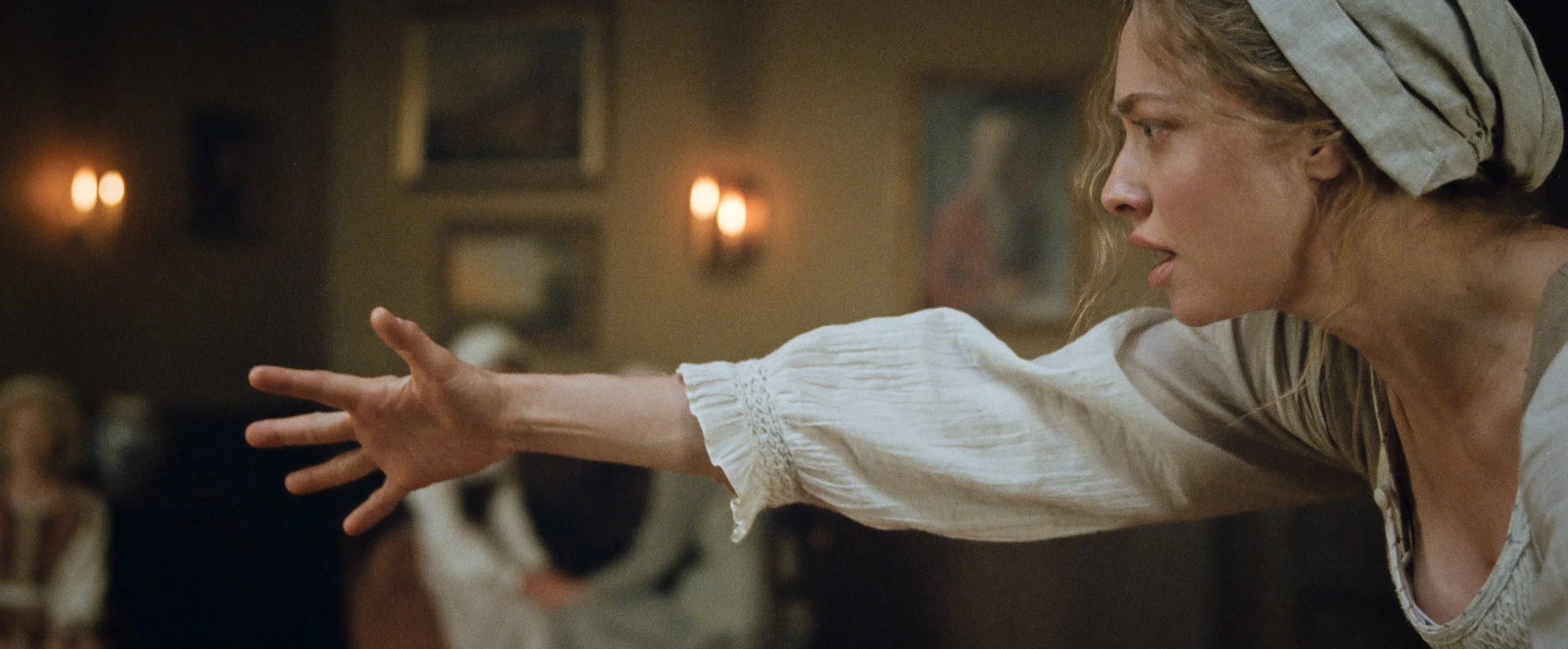
Amanda Seyfried plays Ann Lee, leader of the Shaker movement in 18th century America, in director Mona Fastvold’s “The Testament of Ann Lee.” (Photo courtesy of Searchlight Pictures.)

Review: 'The Testament of Ann Lee' is a riveting and radical account of religious fervor, anchored by Amanda Seyfried's fearless performance

January 22, 2026 by Sean P. Means

You may not believe me when I say that “The Testament of Ann Lee,” in its radical depiction of the founding of the Shaker movement and its adherence to musical movement and rigid celibacy, is the most profoundly moving film about religious ecstasy I’ve seen in I don’t know when. You’ll have to take it on faith, which is the point of director Mona Fastvold’s daring movie.

It’s the middle of the 18th century in Manchester, England, when Ann Lee — played as an adult by Amanda Seyfried — and her brother William (Lewis Pullman), who have lived a brutal but typical life so far. One of the traumas Ann experiences is seeing her parents having sex, which leads her to believe fornication is sinful and should always be avoided.

One day, Ann, along with Willam and their niece, Nancy (Viola Prettejohn), visit the home of Jane and James Wardley (Stacy Martin and Scott Handy). The Wardleys are Quakers who preach that Jesus will return to Earth as a woman. The Quakers also celebrate their faith with dance, song and impromptu shouting — and Ann quickly takes to this enthusiastic and physical form of worship. Soon she becomes a major member of this group of so-called “shaking Quakers,” or “Shakers.”

Facing persecution in England, Ann and her cohort — which includes her husband, Abraham (Christopher Abbott) — leave for New England. Once there, Nancy leaves the community to marry a new convert, while Abraham leaves Ann because she follows her vow of celibacy. 

The Shakers establish a settlement in upstate New York and begin to attract new followers. This time is only a few decades before various religious movements sprung up in this part of the country — notably, Joseph Smith, founder of The Church of Jesus Christ of Latter-day Saints. Fastvold, working from a script she wrote with her husband, “The Brutalist” director Brady Corbet, captures an era where people are yearning for spiritual answers and seeking them outside their familiar churches. So why wouldn’t a woman who preaches a chaste life filled with making elegantly simple furniture and ritualistically singing and dancing appeal to some people?

It’s in those rituals that Fastvold finds the movie’s power. The film is technically a musical, in that there are many scenes where people are singing and dancing to express their feelings. But it’s not the tuneful jukebox you’d recognize from Broadway or old Hollywood. Instead, Fastvold and composer Daniel Blumberg draw from Shaker hymns to create a series of songs that produce the droning, rhythmic sensation you’d expect from cloistered monks. It’s jarring at first, but as the movie goes, these songs convey a hypnotic grace.

All would be for naught, though, without Amanda Seyfried’s captivating performance at the movie’s center. Though seemingly thin, almost birdlike, Seyfried’s Ann shows herself to be a force of nature, creating a form of worship and an American community through sheer will — and by sharing a fervent conviction that her view of the universe is the correct one. Seyfried’s performance is fearless and astonishing, in a movie that breaks all the rules of what we think a biographical drama should be.

——

‘The Testament of Ann Lee’

★★★1/2

Opens Friday, January 23, in theaters. Rated R for sexual content, graphic nudity, violence and bloody images. Running time: 137 minutes.

January 22, 2026 /Sean P. Means
1 Comment
  • Newer
  • Older

Powered by Squarespace