The Movie Cricket

Movie reviews by Sean P. Means.

  • The Movie Cricket
  • Sundance 2026
  • Reviews
  • Other writing
  • Review archive
  • About
Fern (Frances McDormand) and Dave (David Straithairn) enjoy a meal together in the wide-open spaces of South Dakota, in writer-director Chloe Zhao’s drama “Nomadland.” (Photo courtesy of Searchlight Pictures.)

Fern (Frances McDormand) and Dave (David Straithairn) enjoy a meal together in the wide-open spaces of South Dakota, in writer-director Chloe Zhao’s drama “Nomadland.” (Photo courtesy of Searchlight Pictures.)

Review: 'Nomadland' is a beautiful look at people constantly on the road, anchored by Frances McDormand's soulful performance

December 03, 2020 by Sean P. Means

In “Nomadland,” filmmaker Chloe Zhao envelops us in a world that most of us don’t know, with the familiar face of Frances McDormand as our guide.

McDormand plays Fern, a woman who lost her home in Nevada when the gypsum plant shut down in the Great Recession. Now she lives in a rundown van, driving to where the seasonal jobs are. At her first stop, she’s in a pre-Christmas seasonal job at an Amazon warehouse, filling boxes and moving shipments. Other times of the year, she’s a camp host at a national park, or flipping burgers at Wall Drug in South Dakota, or hauling beets for harvest in Nebraska.

At most stops, she parks her van with other people who live their lives on the road. Sometimes it’s an encampment on Bureau of Land Management land; other times its in a trailer park. When she’s alone, she may park at a truck stop or supermarket, running the risk of being rousted by security guards.

Fern finds friendship and life hacks from three mentors, all portrayed here by real-life nomads. Linda May, a woman just a few years older than Fern, shows her the most efficient way to clean a campground men’s room. Bob Wells is a guru of sorts, delivering lectures about life on the road. And Swankie is a gruff old woman who recounts the wonders she has seen in her many travels.

With Jessica Bruder’s 2017 book about nomadic Americans as her compass, Chao follows Fern as she travels in her van, her solitude sometimes broken by brief friendships. One such friend is Dave (David Staithairn), who contemplates leaving the road to live with his estranged son. Fern is offered the chance at domesticity, in a scene where she’s reunited with Dolly (Melissa Smith), her suburbanite sister — who knows that Fern’s wandering spirit, not merely her economic plight, that draws her to the road.

The images of these campsites have historical parallels, from the covered wagons venturing to the West to the caravans of Okies escaping the Dust Bowl. But the problems of their inhabitants are also entirely modern, from a busted carburetor to the limitations of Social Security benefits.

One cannot overstate how multifaceted and how powerful McDormand’s performance is here. She conveys the fierce independence she’s chosen, the tenacity it takes to maintain it, and the crushing loneliness that comes with it — often with imperceptibly small gestures and without saying a word.

Zhao — who directed and edited the film, and wrote the screenplay — follows the pattern of her past films, “Songs My Brothers Taught Me” and “The Rider,” as she and her regular cinematographer, Joshua James Richards, set her quiet, brooding characters in contrast to the wide-open spaces of the American West. As Zhao and McDormand patiently reveal throughout “Nomadland,” Fern may seem dwarfed by the vastness of the plains, but we come to see her heart is as big as the mountains on the horizon.

——

‘Nomadland’

★★★★

Available Friday, December 4, for one week on the Film at Lincoln Center virtual cinema (and is sold out); scheduled to open in theaters on Friday, February 19, 2021. Rated R for some full nudity. Running time: 108 minutes.

December 03, 2020 /Sean P. Means
2 Comments
Young lovers Jennifer Carter (Jessica Rothe, left) and Solomon Chau (Harry Shum Jr.) celebrate moving in together in the romantic drama “All My Life.” (Photo by Patti Perret, courtesy of Universal Pictures.)

Young lovers Jennifer Carter (Jessica Rothe, left) and Solomon Chau (Harry Shum Jr.) celebrate moving in together in the romantic drama “All My Life.” (Photo by Patti Perret, courtesy of Universal Pictures.)

Review: 'All My Life' is a real-life romance that gets its sparks from stars Jessica Rothe and Harry Shum Jr.

December 03, 2020 by Sean P. Means

Sometimes all a movie needs for a sweet romance is what “All My Life” delivers: A couple of actors with good chemistry, a few moments that show genuine affection for the characters and the audience’s appreciation of love.

The story here is as earnest and straightforward as a romance gets. Jennifer Carter (Jessica Rothe, from the “Happy Death Day” movies) is having a drink with her girl friends in a sports bar, when a couple of guys walk up trying to chat them up. They’re failing miserably, but Jennifer notices the embarrassment of the guys’ third wheel, Solomon Chau (Harry Shum Jr., formerly of “Glee”), and engages him in conversation. Sparks don’t fly just yet, but there’s something there.

A Saturday afternoon jogging date reveals an easygoing rapport, and when they arrive at the local farmer’s market, we can feel them click. In one moment, Jenn looks up and notices Sol isn’t there. As she later describes, “I missed you, and I barely knew you.” Within minutes, they share their first kiss.

Jenn is a psychology grad student. Sol has a job at a tech firm, but hates it; his real passion is cooking, but he’s afraid to risk a steady paycheck to follow his dream. Sol can save expenses, Jenn tells him, by moving in with her. Soon they are living their fullest lives, and Sol proposes, Jenn accepts, and they start planning their wedding.

Then the bad news: Sol learns he has a tumor in his liver. Jenn is at his bedside after his first surgery, and tending to him at home through his recuperation. Through chemo and other treatments, Sol starts to question whether they can still go through with a wedding — afraid that everyone will see her as “a widow in white.” Jenn argues back: “You don’t get to decide when it’s time for me to tap out.”

Their friends come up with another idea: Speed up the plans, raise $20,000 through crowd-funding, and give Sol and Jenn their dream wedding in weeks rather than months.

By this point, it’s probably not surprising to hear that “All My Life” is based on a true story. The press notes call this “the powerful true love story that inspired an entire nation” — and If you haven’t heard of it, that’s because the nation is Canada. (The movie was filmed in Louisiana, but the script never specifies where the movie takes place.)

Director Mark Meyers (“My Friend Dahmer”) and first-time screenwriter Todd Rosenberg find much beauty in the everyday moments of Sol and Jenn’s romance. There are the loving glances, the boisterous gatherings, the moments of blissful quiet and loving laughter. They also don’t shy away from the moments of tragedy that have made people cry at movies from “Dark Victory” and “Love Story” to the present.

The movie also boasts an offbeat supporting cast, including Ever Carradine, singer Keala Settle (“The Greatest Showman”) and comic Jay Pharoah. But to whatever degree “All My Life” works as a romance is the chemistry between Rothe and Shum. She’s sunny and engaging, he’s cool and collected, and together they deliver in both the light and heavy passages.

——

‘All My Life’

★★★

Opens Friday, December 4, in theaters where open. Rated PG-13 for brief language. Running time: 93 minutes.

December 03, 2020 /Sean P. Means
Comment
Children at a school in Brighton Beach, New York, wrap presents, in a scene from the documentary “Dear Santa.” (Photo courtesy of IFC Films.)

Children at a school in Brighton Beach, New York, wrap presents, in a scene from the documentary “Dear Santa.” (Photo courtesy of IFC Films.)

Review: Documentary 'Dear Santa' doesn't give enough credit to the real-life volunteers who bring Christmas to thousands of kids

December 03, 2020 by Sean P. Means

Children, the documentary “Dear Santa” shows some of the many helpers across the United States — many of them working for the United States Postal Service — who answer thousands of letters mailed to Santa every year. 

It’s a movie that believes in Santa as much as you do, children, and works to share that holiday joy that only Santa can bring.

Now be good little children and run off to bed, so Santa knows you’ve been behaving. OK, good night, and don’t worry your heads about anything else in this review.

…

…

…

OK, now that the children aren’t reading this, it’s time for some harsh honesty: “Dear Santa” is a disappointing misfire of a movie that takes a juvenile approach to what could have been a fascinating subject.

Director Dana Nachman shows us the workings of Operation Santa, the U.S. Postal Service’s annual effort to help some of the thousands of children, and some adults, who write letters to Santa Claus. 

In some towns, postmasters take on the job, to solicit donations and gather toys and other goods to fulfill the wishes of the young letter writers. In bigger cities, postal employees hand over the letters to charity organizations, whose volunteers take on the herculean effort of making a merry Christmas for kids who otherwise wouldn’t have one.

In Chico, Calif., for example, a postmistress gets emotional talking about trying to help families in her town, some of whom lost their homes in the wildfires that destroyed the town of Paradise. In Chicago, a couple and their friends take on gift-giving for large families. In Lansing, Mich., a couple adopts a rescue dog to give to a 12-year-old girl who asked for a puppy for her little sister. And so on.

Nachman, who followed the training of guide dogs for the blind in “Pick of the Litter,” skims the surface of these stories, creating a series of feel-good features without deeper context. There’s a lot in these stories that speaks to such issues as economic inequity and the limits of charity, but are left unsaid.

Then there’s the decision Nachman makes that undercuts “Dear Santa” and the people she’s profiling: Depicting Santa as a real person, rather than a fanciful story adults tell their kids. The narrative device may allow young audiences to watch — but it demeans the humans who are doing Santa’s job, giving a fictional character credit for their hard work.

——

‘Dear Santa’

★★

Opens Friday, December 4, in theaters where open. Not rated, but probably G. Running time; 83 minutes.

December 03, 2020 /Sean P. Means
1 Comment
Indiana high-school students Emma Nolan (Jo Ellen Pellman, left) and Alyssa Greene (Ariana DeBose) get the prom of their dreams, in the movie musical "The Prom." (Photo by Melinda Sue Gordon, courtesy of Netflix.)

Indiana high-school students Emma Nolan (Jo Ellen Pellman, left) and Alyssa Greene (Ariana DeBose) get the prom of their dreams, in the movie musical "The Prom." (Photo by Melinda Sue Gordon, courtesy of Netflix.)

Review: 'The Prom' benefits from big stars, but it's the young performers who shine in this high school musical

December 02, 2020 by Sean P. Means

It’s fitting that Ryan Murphy, the man who gave us “Glee,” would return to high school by directing the movie adaptation of the Broadway musical “The Prom” — and even more fitting that a story about fresh-faced kids winning out over self-absorbed adults should succeed because a first-time lead outshines the big stars.

The story starts in Edgewater, Indiana, where high-school senior Emma Nolan (Jo Ellen Pellman) asks the PTA at James Madison High School for one small thing: Let her go to prom with her girlfriend. The PTA, headed by the imperious Mrs. Greene (Kerry Washington), says no — but since barring Emma would bring legal ramifications, the PTA opts to cancel prom altogether.

Read the full review at sltrib.com.

December 02, 2020 /Sean P. Means
Comment
Harper (Mackenzie Davis, left) and Abby (Kristen Stewart) are the couple at the center of the Christmas rom-com “Happiest Season.” (Photo courtesy of TriStar Pictures.)

Harper (Mackenzie Davis, left) and Abby (Kristen Stewart) are the couple at the center of the Christmas rom-com “Happiest Season.” (Photo courtesy of TriStar Pictures.)

Review: 'Happiest Season' is a warm and smart Christmas rom-com, with an LGBTQ twist

November 25, 2020 by Sean P. Means

If things had gone according to plan, before the COVID-19 pandemic destroyed every shred of the Hollywood release schedule, “Happiest Season” would have been a groundbreaking film: The first Christmas rom-com from a major studio whose main couple is gay.

Even without the baggage of movie history, as a gem waiting to be discovered on Hulu, “Happiest Season” is a delightful romantic comedy — and proof that the old formula works, whatever the character’s sexual orientation.

Abby (Kristen Stewart) doesn’t love Christmas — it’s when her parents died 10 years earlier — but she loves Harper (Mackenzie Davis). They’ve been dating about a year, and living together since September (as shown in the Hallmark-esque artwork that depicts the relationship over the opening credits). After a romantic night together in December, Harper impulsively invites Abby to share Christmas with her family upstate, and Abby eagerly accepts.

As Abby explains to her sassy gay best friend, John (Dan Levy, from “Schitt’s Creek”), she plans to propose to Harper on Christmas morning — after asking Harper’s dad for his blessing, because Abby’s old-fashioned like that. The plan runs into an obstacle on the drive over, when Harper informs Abby that she’s never come out to her family. What’s more, Harper asks Abby to keep the secret, and pretend to be straight, until Harper can muster up the courage to come out, after the holidays.

When Abby meets Harper’s family, she gets a fuller picture of the dynamic. Her conservative father, Ted (Victor Garber), is a city councilman contemplating a run for mayor — a move endorsed by his control-freak wife, Tipper (Mary Steenburgen). Abby also meets Harper’s older sister, Sloane (Alison Brie), and discovers the sisters have a long-running competition for their father’s affection. 

Also informing Abby’s view of her girlfriend is the re-emergence of two of Harper’s high-school exes: Connor (Jake McDornan), whom Harper dated publicly, and Riley (Aubrey Plaza), Harper’s first lesbian crush — and perhaps the sharpest observer of Abby’s frustration over Harper’s unwillingness to come out to her family.

Director Clea DuVall has tackled similar thorny family dynamics in her 2016 debut, “The Intervention,” and knows how to gently but firmly prod her characters into awkward and funny situations. DuVall’s secret weapon is her co-writer, Mary Holland, who also steals the show as Harper’s oddball younger sister, Jane.

Stewart isn’t the most natural of comic actors, so DuVall smartly deploys her as the (forgive the term) straight woman, the calm observer of the family craziness going on around her. Stewart also brings the drama when needed, particularly in scenes with Davis, as Abby questions whether she wants to marry somebody who can’t declare her love openly.

There are plenty of laughs, ranging from subtle jabs at manners to full-out slapstick, and a powerhouse comic cast led by Holland, Brie, Levy, Plaza, Garber and particularly Steenburgen, who takes passive-aggressive mothering to a new level.

“Happiest Season” deserves to join the pantheon of Christmas romantic comedies, because it’s fun, witty, and as sweet as gingerbread. And in Stewart and Davis, it has a romantic couple only a Grinch wouldn’t want to see together in the final shot.

——

‘Happiest Season’

★★★1/2

Available starting Wednesday, November 25, for streaming on Hulu. Rated PG-13 for some language. Running time: 102 minutes. 

November 25, 2020 /Sean P. Means
Comment
Guy (left, voiced by Ryan Reynolds) and Eep (voiced by Emma Stone) share a quiet moment during the prehistoric mayhem in the animated adventure “The Croods: A New Age.” (Image courtesy of DreamWorks Animation.)

Guy (left, voiced by Ryan Reynolds) and Eep (voiced by Emma Stone) share a quiet moment during the prehistoric mayhem in the animated adventure “The Croods: A New Age.” (Image courtesy of DreamWorks Animation.)

Review: Stone Age animated tale 'The Croods: A New Age' packs too many characters and not enough laughs

November 25, 2020 by Sean P. Means

Just in time for Thanksgiving comes “The Croods: A New Age,” an overstuffed bird of a movie with too many characters and not enough genuinely funny gags.

You may recall (or, like me, maybe you didn’t) meeting the Croods in their 2013 animated debut. They are a not-so-modern Stone Age family, with protective parents Grug (voiced by Nicolas Cage) and Ugga (voiced by Catherine Keener) guiding their children — teen daughter Eep (voiced by Emma Stone), dimbulb son Thunk (voiced by Clark Duke) and semi-feral youngster Sandy (voiced this time by Kailey Crawford) — and aging Gran (voiced by Cloris Leachman) through a prehistoric land where everything seems ready to kill them. In the first movie, the family met the slightly more evolved Guy (voiced by Ryan Reynolds), who became part of their group and Eep’s instant crush.

The sequel starts with Eep and Guy’s swooning romance, with Guy talking about how his deceased parents urged him to find his future in a place called Tomorrow. Meanwhile, Grug is worried both about Eep will leave the family to go off with Guy — if they aren’t all killed by every predator out in the wild. 

Then the family finds a sanctuary, free of deadly animals and filled with bounteous food — all of it growing in oddly straight rows. Soon they meet the more-evolved people who live here: The Bettermans. (Character names in this franchise are not subtle.) Phil (voiced by Peter Dinklage) and Hope (voiced by Leslie Mann) welcome the Croods as guests. Guy, whose family knew the Bettermans, is welcomed as a long lost friend — and reunited with Guy’s childhood friend, Dawn Betterman (voiced by Kelly Marie Tran), setting up a potential triangle with Eep.

That’s a lot of plot for one animated movie to carry, and we haven’t even gotten to the mysterious threat beyond the Betterman’s compound walls. And 10 characters is more than this much-handled script (with four credited writers, plus franchise creators Kirk DeMicco and Chris Sanders getting story credit) and director Joel Crawford, a story artist on the “Kung Fu Panda” films and making his directing debut here, can comfortably carry.

What’s worse, “The Croods: A New Age” isn’t funny. There are moments clearly meant to be funny, but the jokes wither on the vine, and through weak conception or labored execution fail to generate more than a chuckle. 

——

‘The Croods: A New Age’

★★

Opening Wednesday, November 25, in theaters where open. Rated PG for peril, action and rude humor. Running time: 95 minutes.

November 25, 2020 /Sean P. Means
Comment
Madalena (Regine Casé, center) finds out federal agents are searching her missing employer’s house, in the Brazilian comedy-drama “Three Summers.” (Photo courtesy of Distrib Films.)

Madalena (Regine Casé, center) finds out federal agents are searching her missing employer’s house, in the Brazilian comedy-drama “Three Summers.” (Photo courtesy of Distrib Films.)

Review: Brazilian 'Three Summers' is a wry comedy-drama about the oblivious rich and the people left in their wake

November 25, 2020 by Sean P. Means

Think back to the first episode of “Schitt’s Creek,” and imagine that instead of following the suddenly impoverished Rose family to their small town, you instead watch the mansion’s maid trying to make ends meet. That’s the idea at play in the merrily offbeat Brazilian comedy-drama “Three Summers.”

Madalena (played by Regina Casé) is the head housekeeper for a rich couple, Marta (Gisele Fróes) and Edgar (Otávio Müller), at their ocieanside mansion. When we meet them, the couple s throwing a lavish anniversary party in December 2015, and Madalena is busy trying to keep everything flowing.

Madalena also has a side hustle, a takeout dining service, running through the kitchen. That is a precursor to her dream, of starting her own roadside food kiosk. Director Sandra Kogut (who co-wrote with Iana Cossoy Paro) shows, in the movie’s first scenes, Madalena negotiating with a real estate agent for the land on which to build the kiosk — and later getting a loan from Edgar, a prosperous contractor, to finalize the deal.

Act II is in December 2016, and things have changed. Marta and Edgar are gone, having left behind Edgar’s aged father, Lira (played by Gisele Fróes’ real-life father, Rogério Fróes). Madalena cares for Lira, while also trying to juggle expenses to pay the staff, even holding a yard sale of Marta’s abandoned designer duds and using Edgar’s boats to charter tours of the harbor. Then the police show up with a warrant, looking for the ill-gotten gains from Edgar’s corrupt building deals — which puts Madalena’s kiosk in jeopardy.

Act II is a year later, and Madalena’s entrepreneurial zeal has extended to renting out the house to produce TV commercials.

Kogut deftly switches from comedy to drama throughout the story, as the absurdity of Madalena’s get-rich-quick plans bumps up against the despair that she and the other servants feel at being left behind by their uncaring employers. And she has, in Casé, a quick-witted performer who can keep pace with the hairpin turns of the story’s emotional arc.

——

‘Three Summers’

★★★

Available starting Friday, November 27, on streaming via the Salt Lake Film Society virtual cinema, SLFS@Home. Not rated, but probably PG-13 for language. Running time: 94 minutes; in Portuguese with subtitles.

November 25, 2020 /Sean P. Means
Comment
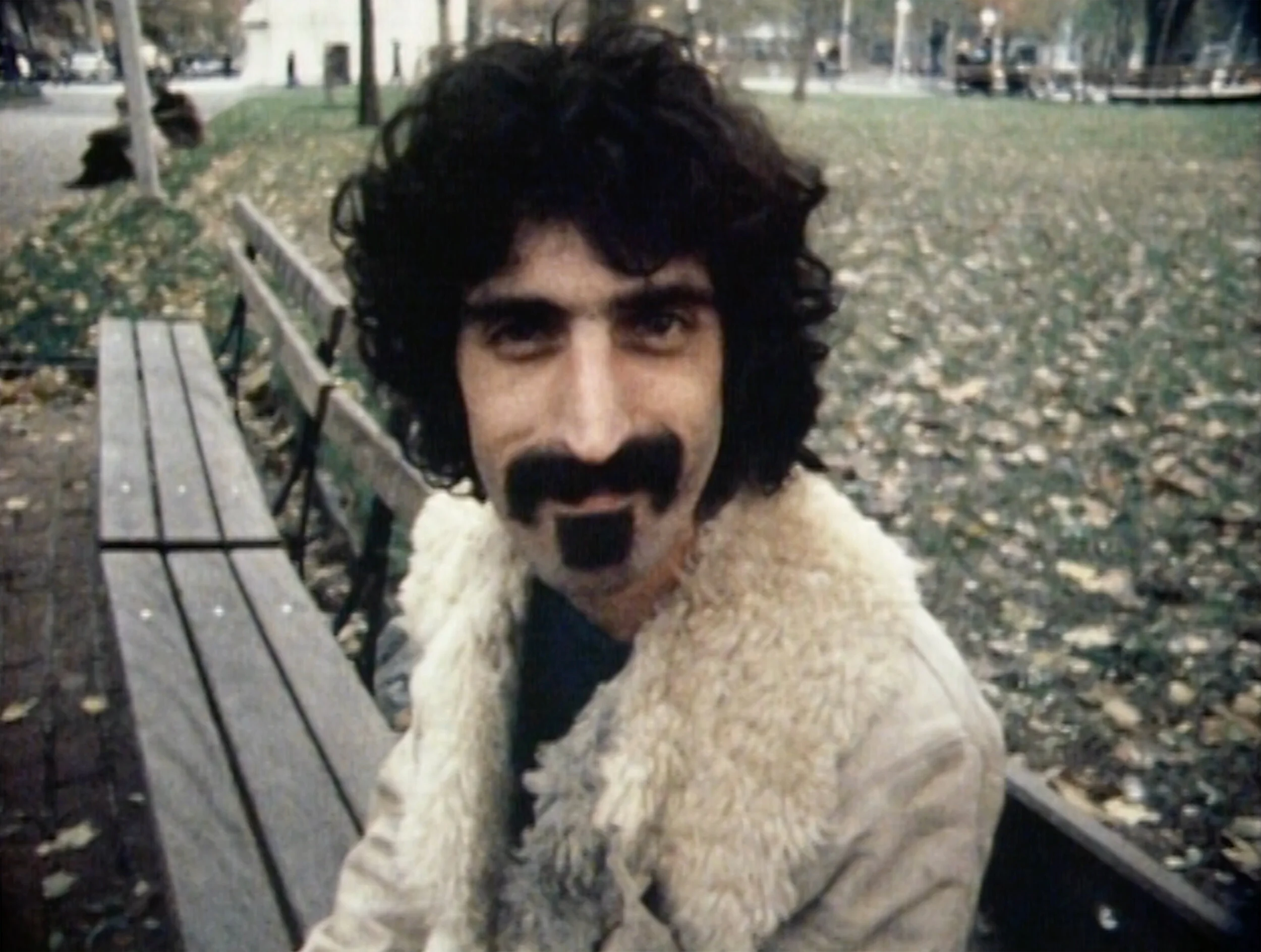
Rock icon Frank Zappa is the subject of director Alex Winter’s documentary “Zappa.” (Photo by Roelof Kiers, courtesy of Magnolia Pictures.)

Rock icon Frank Zappa is the subject of director Alex Winter’s documentary “Zappa.” (Photo by Roelof Kiers, courtesy of Magnolia Pictures.)

Review: 'Zappa' documentary captures the music and the perfectionism of Frank Zappa

November 25, 2020 by Sean P. Means

It’s not likely there will be another documentary about Frank Zappa, the iconic and iconoclastic rocker, considering both he and the keeper of his legend, his wife Gail, are now departed — so “Zappa” will serve as the definitive look at the musician’s legacy and prickly personality.

The movie is directed by Alex Winter — yes, Bill from “Bill and Ted’s Excellent Adventure.” But deep-six your preconceptions and read the guy’s IMDb profile. He’s got a solid resumé as a director of music videos, TV movies, TV shows, and documentaries on such far-ranging topics as the Panama Papers corruption case and the rise of cryptocurrency.

Winter seems to have plowed through many hours of video of Zappa’s performances, interviews and random bits, and emerged through the other end with a thorough accounting of his career.

The story starts near the end, with the last time Zappa played guitar in public. It was 1991 in Prague, and Zappa was invited by the fledgling democratic government of Czechoslovakia’s president, Vaclav Havel, two years after the departure of the ruling Communists. Havel and his countrymen saw Zappa as a symbol of artistic freedom — and the rest of Winter’s movie makes a good case for that status.

Winter takes a conventionally chronological approach, starting with Zappa’s not-musical childhood in southern California, his discovery as a teen of both R&B and the experimental, cacophonous music of the composer Edgard Varesé. The mix of the two started a lifelong pattern, of being presented with the choice between the commercially viable and the artistically interesting — and always choosing the latter.

This pattern becomes established through his formation of the Mothers of Invention, his move to forming his own independent label (after dropping four complete albums on Warner Bros.’ doorstep to complete his contractual obligation), and his moves away from rock performances to composing orchestral works that are too fiendishly complicated for most orchestras to tackle. (In the end, the movie shows Zappa hiring the London Symphony, just so he can hear the music he’s written.)

Because of his independence, Zappa was one of the few musicians to speak up in defense of the First Amendment when the Parents Music Resource Center — led by Susan Baker, wife of longtime Republican power broker James Baker, and Tipper Gore, wife of then-Sen. Al Gore — ginned up controversy about offensive rock lyrics.

Zappa is depicted as an uncompromising musician, but also a little aloof to his wife, Gail, and their four children. There’s a nice irony that the one time Zappa tried to involve his daughter, Moon, in the music-making process, it led to Zappa’s only Top 40 hit, the culture-defining 1982 song “Valley Girl.” (None of Zappa’s four children, who reportedly have feuded over control of their father’s estate and copyrights, are interviewed in this film.)

An interview with Gail (who died in 2015) and some archival interviews with Frank are the movie’s only windows into his personal side — and those views are fleeting and difficult to read. What Winter brings is a solid appreciation of Zappa’s music, particularly his lesser-known orchestral creations, and the singular passion that went into making it.

——

‘Zappa’

★★★

Available starting Friday, November 27, on streaming via the Salt Lake Film Society virtual cinema, SLFS@Home. Not rated, but probably R for language. Running time: 129 minutes.

November 25, 2020 /Sean P. Means
Comment
  • Newer
  • Older

Powered by Squarespace