The Movie Cricket

Movie reviews by Sean P. Means.

  • The Movie Cricket
  • Sundance 2025
  • Reviews
  • Other writing
  • Review archive
  • About
Harper (Mackenzie Davis, left) and Abby (Kristen Stewart) are the couple at the center of the Christmas rom-com “Happiest Season.” (Photo courtesy of TriStar Pictures.)

Harper (Mackenzie Davis, left) and Abby (Kristen Stewart) are the couple at the center of the Christmas rom-com “Happiest Season.” (Photo courtesy of TriStar Pictures.)

Review: 'Happiest Season' is a warm and smart Christmas rom-com, with an LGBTQ twist

November 25, 2020 by Sean P. Means

If things had gone according to plan, before the COVID-19 pandemic destroyed every shred of the Hollywood release schedule, “Happiest Season” would have been a groundbreaking film: The first Christmas rom-com from a major studio whose main couple is gay.

Even without the baggage of movie history, as a gem waiting to be discovered on Hulu, “Happiest Season” is a delightful romantic comedy — and proof that the old formula works, whatever the character’s sexual orientation.

Abby (Kristen Stewart) doesn’t love Christmas — it’s when her parents died 10 years earlier — but she loves Harper (Mackenzie Davis). They’ve been dating about a year, and living together since September (as shown in the Hallmark-esque artwork that depicts the relationship over the opening credits). After a romantic night together in December, Harper impulsively invites Abby to share Christmas with her family upstate, and Abby eagerly accepts.

As Abby explains to her sassy gay best friend, John (Dan Levy, from “Schitt’s Creek”), she plans to propose to Harper on Christmas morning — after asking Harper’s dad for his blessing, because Abby’s old-fashioned like that. The plan runs into an obstacle on the drive over, when Harper informs Abby that she’s never come out to her family. What’s more, Harper asks Abby to keep the secret, and pretend to be straight, until Harper can muster up the courage to come out, after the holidays.

When Abby meets Harper’s family, she gets a fuller picture of the dynamic. Her conservative father, Ted (Victor Garber), is a city councilman contemplating a run for mayor — a move endorsed by his control-freak wife, Tipper (Mary Steenburgen). Abby also meets Harper’s older sister, Sloane (Alison Brie), and discovers the sisters have a long-running competition for their father’s affection. 

Also informing Abby’s view of her girlfriend is the re-emergence of two of Harper’s high-school exes: Connor (Jake McDornan), whom Harper dated publicly, and Riley (Aubrey Plaza), Harper’s first lesbian crush — and perhaps the sharpest observer of Abby’s frustration over Harper’s unwillingness to come out to her family.

Director Clea DuVall has tackled similar thorny family dynamics in her 2016 debut, “The Intervention,” and knows how to gently but firmly prod her characters into awkward and funny situations. DuVall’s secret weapon is her co-writer, Mary Holland, who also steals the show as Harper’s oddball younger sister, Jane.

Stewart isn’t the most natural of comic actors, so DuVall smartly deploys her as the (forgive the term) straight woman, the calm observer of the family craziness going on around her. Stewart also brings the drama when needed, particularly in scenes with Davis, as Abby questions whether she wants to marry somebody who can’t declare her love openly.

There are plenty of laughs, ranging from subtle jabs at manners to full-out slapstick, and a powerhouse comic cast led by Holland, Brie, Levy, Plaza, Garber and particularly Steenburgen, who takes passive-aggressive mothering to a new level.

“Happiest Season” deserves to join the pantheon of Christmas romantic comedies, because it’s fun, witty, and as sweet as gingerbread. And in Stewart and Davis, it has a romantic couple only a Grinch wouldn’t want to see together in the final shot.

——

‘Happiest Season’

★★★1/2

Available starting Wednesday, November 25, for streaming on Hulu. Rated PG-13 for some language. Running time: 102 minutes. 

November 25, 2020 /Sean P. Means
Comment
Guy (left, voiced by Ryan Reynolds) and Eep (voiced by Emma Stone) share a quiet moment during the prehistoric mayhem in the animated adventure “The Croods: A New Age.” (Image courtesy of DreamWorks Animation.)

Guy (left, voiced by Ryan Reynolds) and Eep (voiced by Emma Stone) share a quiet moment during the prehistoric mayhem in the animated adventure “The Croods: A New Age.” (Image courtesy of DreamWorks Animation.)

Review: Stone Age animated tale 'The Croods: A New Age' packs too many characters and not enough laughs

November 25, 2020 by Sean P. Means

Just in time for Thanksgiving comes “The Croods: A New Age,” an overstuffed bird of a movie with too many characters and not enough genuinely funny gags.

You may recall (or, like me, maybe you didn’t) meeting the Croods in their 2013 animated debut. They are a not-so-modern Stone Age family, with protective parents Grug (voiced by Nicolas Cage) and Ugga (voiced by Catherine Keener) guiding their children — teen daughter Eep (voiced by Emma Stone), dimbulb son Thunk (voiced by Clark Duke) and semi-feral youngster Sandy (voiced this time by Kailey Crawford) — and aging Gran (voiced by Cloris Leachman) through a prehistoric land where everything seems ready to kill them. In the first movie, the family met the slightly more evolved Guy (voiced by Ryan Reynolds), who became part of their group and Eep’s instant crush.

The sequel starts with Eep and Guy’s swooning romance, with Guy talking about how his deceased parents urged him to find his future in a place called Tomorrow. Meanwhile, Grug is worried both about Eep will leave the family to go off with Guy — if they aren’t all killed by every predator out in the wild. 

Then the family finds a sanctuary, free of deadly animals and filled with bounteous food — all of it growing in oddly straight rows. Soon they meet the more-evolved people who live here: The Bettermans. (Character names in this franchise are not subtle.) Phil (voiced by Peter Dinklage) and Hope (voiced by Leslie Mann) welcome the Croods as guests. Guy, whose family knew the Bettermans, is welcomed as a long lost friend — and reunited with Guy’s childhood friend, Dawn Betterman (voiced by Kelly Marie Tran), setting up a potential triangle with Eep.

That’s a lot of plot for one animated movie to carry, and we haven’t even gotten to the mysterious threat beyond the Betterman’s compound walls. And 10 characters is more than this much-handled script (with four credited writers, plus franchise creators Kirk DeMicco and Chris Sanders getting story credit) and director Joel Crawford, a story artist on the “Kung Fu Panda” films and making his directing debut here, can comfortably carry.

What’s worse, “The Croods: A New Age” isn’t funny. There are moments clearly meant to be funny, but the jokes wither on the vine, and through weak conception or labored execution fail to generate more than a chuckle. 

——

‘The Croods: A New Age’

★★

Opening Wednesday, November 25, in theaters where open. Rated PG for peril, action and rude humor. Running time: 95 minutes.

November 25, 2020 /Sean P. Means
Comment
Madalena (Regine Casé, center) finds out federal agents are searching her missing employer’s house, in the Brazilian comedy-drama “Three Summers.” (Photo courtesy of Distrib Films.)

Madalena (Regine Casé, center) finds out federal agents are searching her missing employer’s house, in the Brazilian comedy-drama “Three Summers.” (Photo courtesy of Distrib Films.)

Review: Brazilian 'Three Summers' is a wry comedy-drama about the oblivious rich and the people left in their wake

November 25, 2020 by Sean P. Means

Think back to the first episode of “Schitt’s Creek,” and imagine that instead of following the suddenly impoverished Rose family to their small town, you instead watch the mansion’s maid trying to make ends meet. That’s the idea at play in the merrily offbeat Brazilian comedy-drama “Three Summers.”

Madalena (played by Regina Casé) is the head housekeeper for a rich couple, Marta (Gisele Fróes) and Edgar (Otávio Müller), at their ocieanside mansion. When we meet them, the couple s throwing a lavish anniversary party in December 2015, and Madalena is busy trying to keep everything flowing.

Madalena also has a side hustle, a takeout dining service, running through the kitchen. That is a precursor to her dream, of starting her own roadside food kiosk. Director Sandra Kogut (who co-wrote with Iana Cossoy Paro) shows, in the movie’s first scenes, Madalena negotiating with a real estate agent for the land on which to build the kiosk — and later getting a loan from Edgar, a prosperous contractor, to finalize the deal.

Act II is in December 2016, and things have changed. Marta and Edgar are gone, having left behind Edgar’s aged father, Lira (played by Gisele Fróes’ real-life father, Rogério Fróes). Madalena cares for Lira, while also trying to juggle expenses to pay the staff, even holding a yard sale of Marta’s abandoned designer duds and using Edgar’s boats to charter tours of the harbor. Then the police show up with a warrant, looking for the ill-gotten gains from Edgar’s corrupt building deals — which puts Madalena’s kiosk in jeopardy.

Act II is a year later, and Madalena’s entrepreneurial zeal has extended to renting out the house to produce TV commercials.

Kogut deftly switches from comedy to drama throughout the story, as the absurdity of Madalena’s get-rich-quick plans bumps up against the despair that she and the other servants feel at being left behind by their uncaring employers. And she has, in Casé, a quick-witted performer who can keep pace with the hairpin turns of the story’s emotional arc.

——

‘Three Summers’

★★★

Available starting Friday, November 27, on streaming via the Salt Lake Film Society virtual cinema, SLFS@Home. Not rated, but probably PG-13 for language. Running time: 94 minutes; in Portuguese with subtitles.

November 25, 2020 /Sean P. Means
Comment
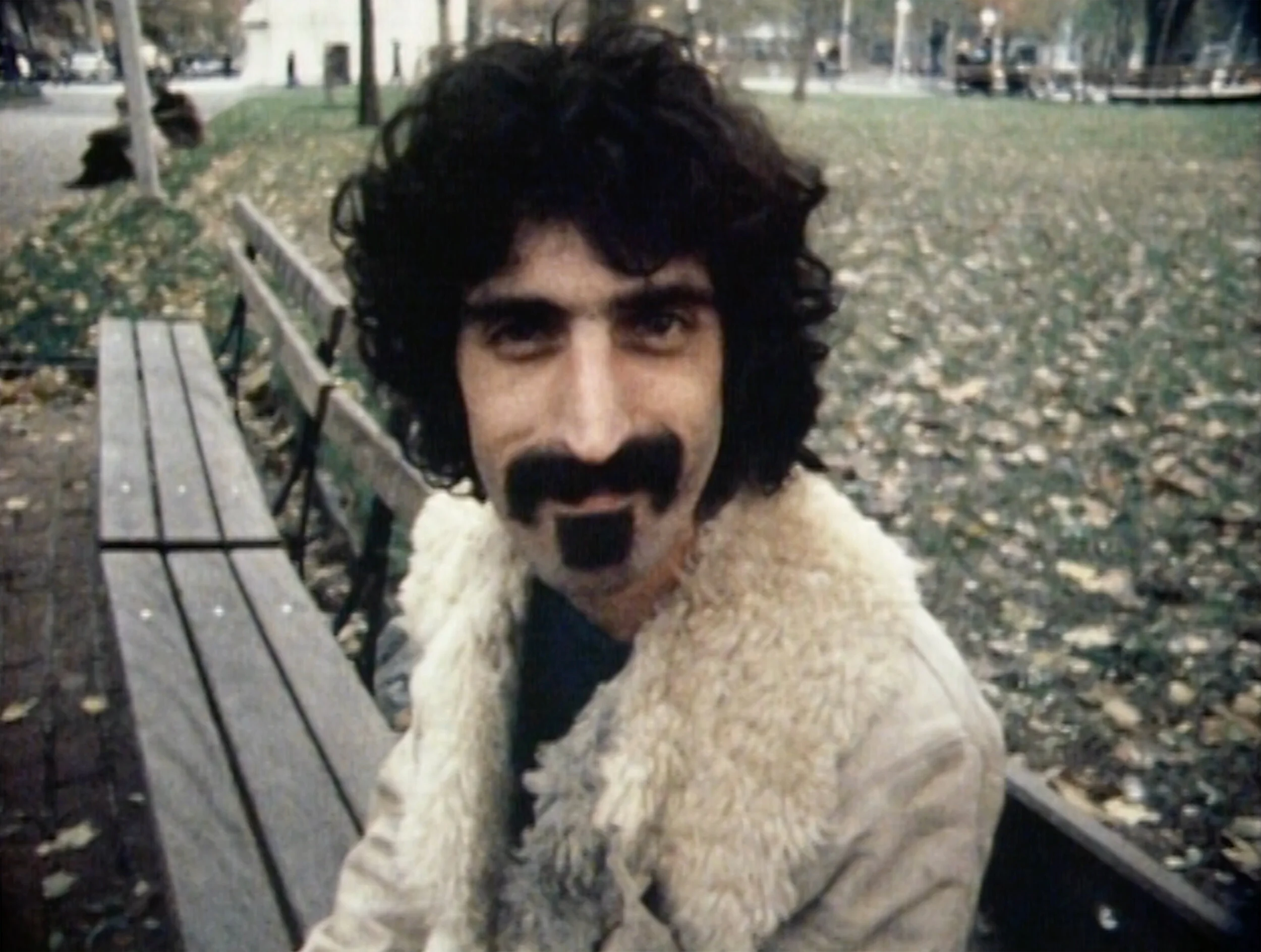
Rock icon Frank Zappa is the subject of director Alex Winter’s documentary “Zappa.” (Photo by Roelof Kiers, courtesy of Magnolia Pictures.)

Rock icon Frank Zappa is the subject of director Alex Winter’s documentary “Zappa.” (Photo by Roelof Kiers, courtesy of Magnolia Pictures.)

Review: 'Zappa' documentary captures the music and the perfectionism of Frank Zappa

November 25, 2020 by Sean P. Means

It’s not likely there will be another documentary about Frank Zappa, the iconic and iconoclastic rocker, considering both he and the keeper of his legend, his wife Gail, are now departed — so “Zappa” will serve as the definitive look at the musician’s legacy and prickly personality.

The movie is directed by Alex Winter — yes, Bill from “Bill and Ted’s Excellent Adventure.” But deep-six your preconceptions and read the guy’s IMDb profile. He’s got a solid resumé as a director of music videos, TV movies, TV shows, and documentaries on such far-ranging topics as the Panama Papers corruption case and the rise of cryptocurrency.

Winter seems to have plowed through many hours of video of Zappa’s performances, interviews and random bits, and emerged through the other end with a thorough accounting of his career.

The story starts near the end, with the last time Zappa played guitar in public. It was 1991 in Prague, and Zappa was invited by the fledgling democratic government of Czechoslovakia’s president, Vaclav Havel, two years after the departure of the ruling Communists. Havel and his countrymen saw Zappa as a symbol of artistic freedom — and the rest of Winter’s movie makes a good case for that status.

Winter takes a conventionally chronological approach, starting with Zappa’s not-musical childhood in southern California, his discovery as a teen of both R&B and the experimental, cacophonous music of the composer Edgard Varesé. The mix of the two started a lifelong pattern, of being presented with the choice between the commercially viable and the artistically interesting — and always choosing the latter.

This pattern becomes established through his formation of the Mothers of Invention, his move to forming his own independent label (after dropping four complete albums on Warner Bros.’ doorstep to complete his contractual obligation), and his moves away from rock performances to composing orchestral works that are too fiendishly complicated for most orchestras to tackle. (In the end, the movie shows Zappa hiring the London Symphony, just so he can hear the music he’s written.)

Because of his independence, Zappa was one of the few musicians to speak up in defense of the First Amendment when the Parents Music Resource Center — led by Susan Baker, wife of longtime Republican power broker James Baker, and Tipper Gore, wife of then-Sen. Al Gore — ginned up controversy about offensive rock lyrics.

Zappa is depicted as an uncompromising musician, but also a little aloof to his wife, Gail, and their four children. There’s a nice irony that the one time Zappa tried to involve his daughter, Moon, in the music-making process, it led to Zappa’s only Top 40 hit, the culture-defining 1982 song “Valley Girl.” (None of Zappa’s four children, who reportedly have feuded over control of their father’s estate and copyrights, are interviewed in this film.)

An interview with Gail (who died in 2015) and some archival interviews with Frank are the movie’s only windows into his personal side — and those views are fleeting and difficult to read. What Winter brings is a solid appreciation of Zappa’s music, particularly his lesser-known orchestral creations, and the singular passion that went into making it.

——

‘Zappa’

★★★

Available starting Friday, November 27, on streaming via the Salt Lake Film Society virtual cinema, SLFS@Home. Not rated, but probably R for language. Running time: 129 minutes.

November 25, 2020 /Sean P. Means
Comment
The headquarters of Boston’s city government, profiled in Frederick Wiseman’s documentary “City Hall.” (Photo courtesy of Zipporah Films.)

The headquarters of Boston’s city government, profiled in Frederick Wiseman’s documentary “City Hall.” (Photo courtesy of Zipporah Films.)

Review: In 'City Hall,' Frederick Wiseman digs into the mechanisms that make Boston tick

November 19, 2020 by Sean P. Means

At 90 years old, and with a half-century of methodically fascinating documentaries under his belt, Frederick Wiseman doesn’t have to prove anything to anyone. He can knock out a thought-provoking, richly detailed portrait of municipal government like “City Hall,” and all we have to do is appreciate it.

The city here is Boston, and Wiseman uses his access to show multiple faces of Boston’s government at every level. He takes inside the start-of-shift briefing at a Boston Police precinct, rides along on a garbage truck, and even attends a civil wedding performed by a city clerk. (Congratulations, Becca and Molly!)

Wiseman=s cameras also sit in on a lot of meetings. There’s a lunch meeting for immigrant business owners, with a Chinese noodle cooking demonstration. There are long discussions about caring for Boston’s homeless population. There is a town hall about whether the working-class neighbors of Dorchester want a cannabis dispensary in their part of town. There are earnest city officials discussing how to create an art-friendly space, or helping minority-owned businesses take full advantage of city programs.

And everywhere, it seems, is Marty Walsh, the mayor of Boston. Wiseman finds Walsh congratulating the Red Sox for winning the World Series (this was filmed in 2018), or opening a food bank, or speaking to a Veteran’s Day remembrance, or chatting with the head of the local NAACP chapter about bringing the civil-rights group’s annual convention to Boston. My favorite moment may be when Walsh is serving gravy to homeless Bostonians at a Goodwill Industries Thanksgiving dinner. (Walsh got a gravy boat; Sen. Ed Markey got to serve the mashed potatoes.)

As with all of Wiseman’s films — whether he’s chronicling life in a boxing gym, a Parisian strip joint, or the Jackson Heights neighborhood in Brooklyn — the moments form a mosaic of an organization at work. Here, over four-and-a-half hours, Wiseman shows us not only see how much Boston’s government is overseeing, but we’re seeing how many dedicated people are doing that work. They are the heart and soul of “City Hall,” the faces of a no-longer-faceless bureaucracy.

——

‘City Hall’

★★★1/2

Available for streaming starting Friday, November 20, on the SLFS@Home virtual cinema. Not rated, but probably PG-13 for language. 275 minutes.

November 19, 2020 /Sean P. Means
1 Comment
Guy Pearce plays Han Van Meegeren, a Dutch art dealer accused of selling priceless art to the Nazis, in the drama “The Last Vermeer.” (Photo by Jack English, courtesy of TriStar Pictures / Sony.)

Guy Pearce plays Han Van Meegeren, a Dutch art dealer accused of selling priceless art to the Nazis, in the drama “The Last Vermeer.” (Photo by Jack English, courtesy of TriStar Pictures / Sony.)

Review: 'The Last Vermeer' can't settle on being a brooding post-war thriller or a flamboyant courtroom drama

November 19, 2020 by Sean P. Means

In his directing debut, Dan Friedkin delivers two half-movies in “The Last Vermeer,” and the halves never come together into a satisfying whole.

Based on a true story, the film starts weeks after the fall of the Third Reich, as Amsterdam is starting to rebuild from the horrors of World War II, with the sometimes unwelcome help of the Allied forces. Capt. Joseph Piller (Claes Bang), a Dutch Jew who survived as a member of the Resistance and now wears a Canadian uniform, is at work trying to identify artworks acquired by the Nazis, in hopes of reuniting them with their original owners — some whom were Jewish families.

Piller is onto a big discovery, a rare work by Johannes Vermeer, the 17th century Dutch master, in a train car that held works pilfered by Herman Göring, one of Hitler’s top officials. Piller follows the paper trail, and discovers the painting was sold to Göring by Han Van Meegeren (Guy Pearce), a party-loving Dutch art dealer and unsuccessful painter, for a record sum of 1.6 million guilders.

Soon Van Meegeren is on trial for collaborating with the Nazis. Piller is pressed into helping make a novel defense argument: That Van Meegeren wasn’t selling priceless Vermeers to the Nazis, but rather fooling the Nazis into wasting their money buying worthless fakes.

The performances are intriguing, with Pearce’s overly confident showman striking a contrast with Bang’s morose survivor. Among the supporting cast, the most fascinating is Vicky Krieps (Daniel Day-Lewis’ young foil in “Phantom Thread”), who brings a sexy competence to the role of Piller’s sharp-eyed assistant.

Friedkin and his screenwriting team, adapting Jonathan Lopez’ book “The Man Who Made Vermeers,” have trouble deciding whose movie this really is. Is it Piller’s, following the former Resistance fighter as he tries to uncover the truth about the Vermeer? Or is it Van Meegeren, the self-absorbed bon vivant trying to pull a con on the Nazis? Friedkin can’t seem to choose, leaving a muddled mess between them.

——

‘The Last Vermeer’

★★1/2

Opens Friday, November 20, in theaters where open. Rated R for some language, violence and nudity. Running time: 117 minutes.

November 19, 2020 /Sean P. Means
Comment
William Lyon McKenzie King (Dan Beirne) trains on the skills of ribbon-cutting in the Canadian drama “The Twentieth Century.” (Photo courtesy of Oscilloscope Records.)

William Lyon McKenzie King (Dan Beirne) trains on the skills of ribbon-cutting in the Canadian drama “The Twentieth Century.” (Photo courtesy of Oscilloscope Records.)

Review: History takes an abstract turn in Canadian 'The Twentieth Century'

November 19, 2020 by Sean P. Means

If you took Canadian history and ran it through the visual palette of German Expressionism and the drag sensibilities of The Kids in the Hall, you would get something like Matthew Rankin’s confounding but compelling biographical drama “The Twentieth Century.”

Rankin creates a portrait of the young William Lyon McKenzie King, the 10th prime minister of Canada, and it’s quite an odd portrait. As portrayed by Dan Beirne, McKenzie King doesn’t strike as leadership material, even in the snobbish private school circles in which he lives. He is ambitious and frequently complaining, which seems contrary to the Canadian ethos espoused here: “Do more than is your duty, expect less than is your right.”

McKenzie King is convinced that he is destined to be prime minister, and it’s clear that his bedridden mother (played by Louis Negin, in drag) has spent her life convincing him of this. To further that end, Mother insists that McKenzie King marry Ruby Eliott (Catherine St-Laurent), the beautiful daughter of the governor general, Lord Muto (Sean Cullen), who is busy whipping up a mob frenzy in support of the war against the Boers. Unfortunately for McKenzie King, Ruby is already betrothed to his more attractive classmate, Bert Harper (Mikhail Ahooja). 

McKenzie King aims to show himself worthy of Ruby, and to secure an endorsement from Lord Muto to become prime minister. To do so, he must overcome his sinful urges — namely, a fetish for the smell of leather boots.

The look of Rankin’s scenes resembles such German Expressionist silent films as “Nosferatu” and “Metropolis,” with jagged angles of light thrusting themselves onto the screen at odd angles. There’s also an otherworldly quality, like the darkest and most depressing entrance to hell, that echoes Rankin’s fellow Canadian, filmmaker Guy Madden.

The performances are stilted, as they must be, to make such strangeness work effectively. Beirne is especially strange, conveying a weird mix of Mark Zuckerberg and Alfalfa from “The Little Rascals.” He propels “The Twentieth Century” through the soundstage fakery and frequent drag performances that keep us viewers off kilter. 

——

‘The Twentieth Century’

★★★

Available for streaming starting Friday, November 20, on the SLFS@Home virtual cinema. Not rated, but probably R for language, sexual content and stylized violence.

November 19, 2020 /Sean P. Means
Comment
Mebh, left, a wild girl of the woods, befriends Robin, who lives in the nearby village, in the Irish animated tale “Wolfwalkers.” (Photo courtesy of GKIDS / Apple TV+ / Cartoon Saloon.)

Mebh, left, a wild girl of the woods, befriends Robin, who lives in the nearby village, in the Irish animated tale “Wolfwalkers.” (Photo courtesy of GKIDS / Apple TV+ / Cartoon Saloon.)

Review: 'Wolfwalkers' is a luminous telling of Irish folklore, with beautiful images and a touching story

November 12, 2020 by Sean P. Means

Irish filmmaker Tomm Moore shows with his latest folk tale, “Wolfwalkers,” that he and his Cartoon Saloon studio are the most consistently wonderful animation brand since Pixar.

Moore’s first two features — “The Secret of Kells” (2009) and “The Song of the Sea” (2014), both Oscar nominees — combined precisely rendered animation and Irish folk legends. “Wolfwalkers” builds on the magic of those films, and with them creates a beautiful trilogy.

It’s 1650 in Kilkenny, Ireland, and Bill Goodfellow (voiced by Sean Bean) is charged by the Lord Protector (voiced by Simon McBurney), the governor of the colonizing British forces, with hunting down the wolves that live in the woods outside the walled village. Bill also cares for his daughter, Robin (voiced by Honor Kneafsey), a headstrong girl who wants to hunt at her dad’s side.

Robin sneaks out of the village and goes into the woods, where she meets Mebh Óg MacTíre (voiced by Eva Whittaker), a wild girl who communes with the wolfpack. Mebh is a Wolfwalker, and when she sleeps, the wolf spirit in her roams free. Robin can’t convince her father that the Wolfwalkers are more than Irish superstition — even when, because of an errant bite on the arm from Mebh, Robin becomes a Wolfwalker, too.

Moore and co-director Ross Stewart — who, with Jerrica Cleland, created the story that forms the backbone of Will Collins’ screenplay — create a deeply detailed visual palette. The woods are painted in lush greens and autumn reds, a verdant playground for Mebh and Robin. The town is presented as flat and gray, like something out of a 17th-century tapestry. The contrast is striking, and also serves to illustrate the divide between the regimented control of the English invaders and the natural wildness of Irish folk wisdom.

The animation is both detailed and varied, and one of the most stunning images is when Robin discovers that, as a wolf, she can see smells that guide her through the forest. And though there may be some computer-driven augmentation, Moore and his artists use the look of old-school hand-drawn animation to give “Wolfwalkers” a roughhewn humanity that takes one’s breath away.

——

‘Wolfwalkers’

★★★1/2

Opens Friday, November 13, in theaters where open; available for streaming on AppleTV+ starting Dec. 11. Rated PG for sequences of violence and peril, scary images, some thematic elements and brief language. Running time: 102 minutes.
November 12, 2020 /Sean P. Means
Comment
  • Newer
  • Older

Powered by Squarespace