The Movie Cricket

Movie reviews by Sean P. Means.

  • The Movie Cricket
  • Sundance 2025
  • Reviews
  • Other writing
  • Review archive
  • About
Rep. John Lewis, D-Georgia, member of Congress and icon of the civil-rights movement, is the subject of the documentary “John Lewis: Good Trouble.” (Photo courtesy of Magnolia Pictures.)

Rep. John Lewis, D-Georgia, member of Congress and icon of the civil-rights movement, is the subject of the documentary “John Lewis: Good Trouble.” (Photo courtesy of Magnolia Pictures.)

Review: A civil-rights leader's past and present inform each other in documentary 'John Lewis; Good Trouble'

July 02, 2020 by Sean P. Means

In the absorbing documentary “John Lewis: Good Trouble,” director Dawn Porter tells two remarkable stories: One about an aging Georgia congressman scrapping to preserve voting-rights legislation under attack; the other about a young firebrand in the 1960s who nearly got killed protesting at lunch counters and in marches in the segregated South.

Yes, the subjects of both stories are the same man, Rep. John Lewis, which adds urgency to the historical record and gravity to the current action.

In the film, Porter (“Gideon’s Army,” “Trapped”) follows Lewis during the 2018 midterm elections. Then 78, Lewis keeps up an impressive schedule in his D.C. and Atlanta offices, and makes appearances for progressive Democratic candidates — all the while sounding the warnings about Republican efforts to suppress the vote, with voter ID laws and limits on polling places, all aimed at the young, the elderly and people of color.

Porter intercuts scenes of Lewis’ current fights with stirring footage of Lewis’ days as an activist during the civil-rights movement of the 1960s. He sat at whites-only lunch counters in Nashville, where he went to college. He rode with the Freedom Riders to desegregate bus stations across the South. He spoke at the March on Washington, one of the opening acts for Dr. Martin Luther King Jr. He marched on the Edmund Pettis Bridge in Selma, Ala., and got his skull cracked by an Alabama state policeman’s club for his efforts — and, a week later, marched from that bridge to Montgomery with Dr. King.

Porter captures those moments of history with interviews with Lewis and others who are still alive to tell the story, augmented with remarkable footage — some of which, Lewis says at one point, he had never seen. She also tells Lewis’ personal story, of a young Alabama boy who went from raising chickens to raising awareness of the injustices against African-Americans.

Porter gets interviews with plenty of the greats, including Bill and Hillary Clinton, but doesn’t dwell on them. More interesting are interviews with his older colleagues — including Rep. Jim Clyburn of South Carolina and the late Rep. Elijah Cummings of Maryland — who understand where Lewis’ came from, and the next generation of leaders who are following his example of righteous radicalism. (The whole “squad” is here: Reps. Alexandria Ocasio-Cortez, Ayanna Pressley, Rashida Tlaib and Ilhan Omar all make appearances.) 

Porter’s documentary also shows the span of years between the ’60s and today, including the contentious primary against friend and fellow civil-rights icon Julian Bond in 1986, which first put Lewis in Congress. The movie shows how Lewis pivoted from activist to legislator, while always remembering that there are times where it’s important, in his words, “to make trouble, good trouble, necessary trouble” — and how Lewis, at 80, isn’t done doing just that. 

——

‘John Lewis: Good Trouble’

★★★1/2

Available Friday, July 3, on the SLFS@Home and Utah Film Center virtual cinemas and other rental platforms, and playing at the Megaplex Theatres at The Gateway (Salt Lake City), Jordan Commons (Sandy) and The Junction (Ogden). Rated PG for thematic material including some racial epithets/violence, and for smoking. Running time: 96 minutes.

July 02, 2020 /Sean P. Means
Comment
French movie star Fabienne Dangeville (Catherine Deneuve, center) goes out on a Paris night with her daughter, Lumir (Juliette Binoche, left), Lumir’s husband, Hank (Ethan Hawke, right), and granddaughter Charlotte  (Clémentine Grenier), in a moment…

French movie star Fabienne Dangeville (Catherine Deneuve, center) goes out on a Paris night with her daughter, Lumir (Juliette Binoche, left), Lumir’s husband, Hank (Ethan Hawke, right), and granddaughter Charlotte (Clémentine Grenier), in a moment from writer-director Hirokazu Kore-eda’s drama “The Truth.” (Photo courtesy of IFC Films.)

Review: In 'The Truth,' French film icons Catherine Deneuve and Juliette Binoche pair up for a quietly stirring mother-daughter standoff

July 02, 2020 by Sean P. Means

It’s a bit of a shock to learn that, before writer-director Hirokazu Kore-eda’s “The Truth,” its stars — Catherine Deneuve and Juliette Binoche, two icons of French film — have never done a movie together. It’s less shocking to see how natural a pairing they are, portraying opposite ends of a prickly mother-daughter relationship.

Deneuve plays Fabienne Dangeville, a famous French movie star whose diva tendencies are apparent in the first scene, when a nervous journalist is interviewing her on the occasion of her about-to-be-published memoir. The interview is cut short with the arrival of her daughter, Lumir (Binoche), a New York-based screenwriter, along with her husband, Hank (Ethan Hawke), a second-tier TV actor, and their 7-year-old daughter, Charlotte (Clémentine Grenier).

Lumir’s visit is partly a vacation, but also her first chance to read Fabienne’s memoir. When she does, Lumir isn’t happy about it. Lumir accuses her mother of fabricating parts of her life, like the story about the mother picking the daughter up from school — something Fabienne was always too busy to do. What’s worse, in Lumir’s mind, is that Fabienne has omitted any mention to her onetime friend and acting rival, Sarah, for reasons that are explained as the story progresses.

Also omitted from the book is Fabienne’s long-suffering assistant Luc (Alain Libolt), who quits his job in protest. This leaves Lumir to hold Fabienne’s hand on her new movie set, where she plays the oldest incarnation of a woman whose mother goes into space and never ages. (Kore-eda based the film-within-a-film on a short story by Ken Liu.) Fabienne’s regular insecurity while performing is compounded by the fact that the actress playing her ageless mother (played by newcomer Manon Clavel) reminds Fabienne and Lumir of Sarah.

Kore-eda, who directed the 2018 Palme D’Or winner “Shoplifters,” is writing and directing his first film outside his native Japan, but he doesn’t stray far from the small domestic dramas at which he excels. We learn, more by observation than exposition, that Jacques (Christian Crahay) is Fabienne’s current live-in boyfriend, and that Pierre (Roger Van Hool), her ex, sometimes drops by. We also learn that Lumir’s relationship with Hank is strained, again for reasons Kore-eda unfolds gradually.

Deneuve — who gave Fabienne her own middle name — seems to revel in playing off her persona as a legendary movie star, rolling her eyes at the mention of Brigitte Bardot and revealing the neuroses beneath the thespian facade. Binoche, whose screen persona has always been more raw and vulnerable than Deneuve’s, uses that difference to full advantage, portraying Lumir as the wounded daughter who had to go to America to get out from under her mother’s shadow. The combination is quietly intense, setting off small emotional explosions on the path toward a moving conclusion.

——

‘The Truth’

★★★1/2

Available Friday, July 3, on the SLFS@Home virtual cinema and other rental platforms. Rated PG for thematic and suggestive elements, and for smoking and brief language. Running time: 107 minutes; mostly in French, with subtitles.

July 02, 2020 /Sean P. Means
Comment
George Washington (Christopher Jackson, left) talks about his farewell address with Alexander Hamilton (Lin-Manuel Miranda) in “Hamilton,” the filmed version of the Tony- and Pulitzer-winning musical. (Photo courtesy of Disney+.)

George Washington (Christopher Jackson, left) talks about his farewell address with Alexander Hamilton (Lin-Manuel Miranda) in “Hamilton,” the filmed version of the Tony- and Pulitzer-winning musical. (Photo courtesy of Disney+.)

Review: Filmed version of 'Hamilton' captures the moment and the movement of a revolutionary play

June 30, 2020 by Sean P. Means

Like a Fourth of July firework, the movie version of “Hamilton” bursts forth with color and spectacle, bottling the emotional fire that made Lin-Manuel Miranda’s hip-hop history lesson a Tony- and Pulitzer-winning masterpiece and a cross-cultural hit.

Miranda’s collaborator Thomas Kail, who directed both the stage version and this movie, makes the smart move of rendering “Hamilton” in its purest, original form, from the stage of the Richard Rodgers Theatre on Broadway. Shot with multiple cameras during two performances in June 2016, with Miranda in the title role and with most of the original cast — and with close-ups and crane shots taken without an audience present — the movie harnesses the evocative lighting, surrealistic staging and hip-hop inventiveness.

Read the full review at sltrib.com.

June 30, 2020 /Sean P. Means
Comment
J.J. (Dave Bautista, right) has dinner with Sophie (Chloe Coleman, far left) — who knows he’s a CIA agent spying on their apartment — and her mom, Kate (Parisa Fitz-Henley), who doesn’t know, in the kid-targeted action movie “My Spy.” (Photo co…

J.J. (Dave Bautista, right) has dinner with Sophie (Chloe Coleman, far left) — who knows he’s a CIA agent spying on their apartment — and her mom, Kate (Parisa Fitz-Henley), who doesn’t know, in the kid-targeted action movie “My Spy.” (Photo courtesy of Amazon Studios / STX Films.)

Review: 'My Spy' can't decide if it's an action movie or a kiddie film, and fails at both

June 24, 2020 by Sean P. Means

When you’re a big guy like Dave Bautista — 6-foot-6, 290 pounds, and none of it flabby — you’re either going to wind up in action movies or kiddie comedies. If you try to do both at once, you’re likely to end up with a violent, unappealing mess like “My Spy.”

Bautista plays J.J., a former Army Ranger who’s now an agent for the CIA, though he’s not exactly adept at the whole stealth thing. That’s why, after taking down a Russian smuggler in an explosion-filled opening, his boss (Ken Jeong) assigns him to a boring mission: To go to Chicago (which, as usual, means they shot in Toronto) to run surveillance on Kate (Parisa Fitz-Henley), the widow of a dead arms dealer whose brother, Marquez (Greg Bryk), is trying to obtain classified blueprints for a nuclear bomb.

As much as J.J. loathes the assignment, he’s even grumpier that the boss has paired him with a tech analyst, Bobbi (Kristen Schaal), an eager beaver who idolizes J.J.’s exploits. But things take a turn when Kate’s 9-year-old daughter, Sophie (Chloe Coleman), figures out that the new neighbors down the hall are, in fact, CIA agents. It takes Sophie less than five minutes to figure this out, but that’s because she’s in the movie and not as smart as the 9-year-olds in the audience who will take half that time to predict all the film’s moves.

Screenwriting brothers Erich and Joh Hoeber (“RED,” “The Meg”) never met an action-movie cliche they didn’t love — which is fine, if the purpose is to satirize the genre, but their tone is at once too serious and too silly to make that work. Director Peter Segal, who plowed similar ground in the 2008 reboot of “Get Smart,” can’t decide whether to make a movie for action-hungry teens or humor-seeking little kids, and ends up making an undigestible catastrophe that neither group will love.

——

‘My Spy’

★1/2

Available Friday, June 26, for streaming on Amazon Prime. Rated PG-13 for action/violence and language. Running time: 99 minutes.

June 24, 2020 /Sean P. Means
1 Comment
Samuel Adewunmi stars as Femi, a teen who learns to grow up in a poor part of London, in the drama “The Last Tree.” (Photo courtesy of ArtMattan Films.)

Samuel Adewunmi stars as Femi, a teen who learns to grow up in a poor part of London, in the drama “The Last Tree.” (Photo courtesy of ArtMattan Films.)

Review: 'The Last Tree' is a touching portrait of a boy growing up alienated in London

June 24, 2020 by Sean P. Means

Calling “The Last Tree” a coming-of-age story is both accurate and inadequate, because the brief descriptor doesn’t begin to hint at the emotion and insight writer-director Shola Amoo packs into this intense drama.

The story starts in the English countryside, with a Black boy, Femi (Tai Golding), who’s about 11 or 12, playing in a muddy field with three white friends. The opening shots of Femi and his friends — just playing rough, having fun and ignoring everything outside of their circle — are poignant, in part because we know they won’t last.

Femi is a foster child, living with Mary (Denise Black), who loves her charges like they were her own. But they’re not, and that point is made with shattering force when Femi’s Nigerian-born mother, Yinka (Gbemisola Ikumelo), comes after several years, with plans to reclaim her son. Femi doesn’t want to go, but Mary tearfully informs him he has no choice.

Yinka takes Femi to London, to a small apartment on a council estate (what in America they’d call “the Projects”). Femi quickly learns that Yinka, who has lived a hard life, demands that Femi do his chores — and gets physically violent when he disobeys her. Femi also finds school difficult, getting into a fight on the first day of class.

After establishing young Femi’s new life in London, the movie abruptly jumps ahead, to Femi as a teen, played by Samuel Adewunmi. (The cut suggests the story has a three-part structure, similar to “Moonlight.”) Teen Femi has settled into London life, though still at odds with his mother. Mostly, Femi hangs out with his friends at school, until he’s befriended by Mace (Demmy Ladipo), the neighborhood crime lord. Femi also finds time to talk to Tope (Ruthxjiah Bellenea), a shy student who shares Femi’s secret passion for The Cure.

In the third act, Aloo’s theme of finding home where you can is taken in another direction, when Yinka brings Femi to Nigeria to connect with his roots — and the father he never knew.

Aloo captures the details of Femi’s two lives, and the juxtaposition of Mary’s quiet country home and the airless box that is Yinka’s apartment, with solid detail and sensitivity. The filmmaker also draws a powerful performance from Adewumni, who conveys the hurt and the survival instinct in Femi with spare gestures and soulful eyes. It’s a breakout portrayal that helps make “The Last Tree” so much more than your ordinary coming-of-age story.

——

‘The Last Tree’

★★★1/2

Available Friday, June 26, as a VOD rental on most platforms, and through virtual cinemas (including SLFS@Home). Not rated, but probably R for violence, drug use and language. Running time: 98 minutes.

June 24, 2020 /Sean P. Means
Comment
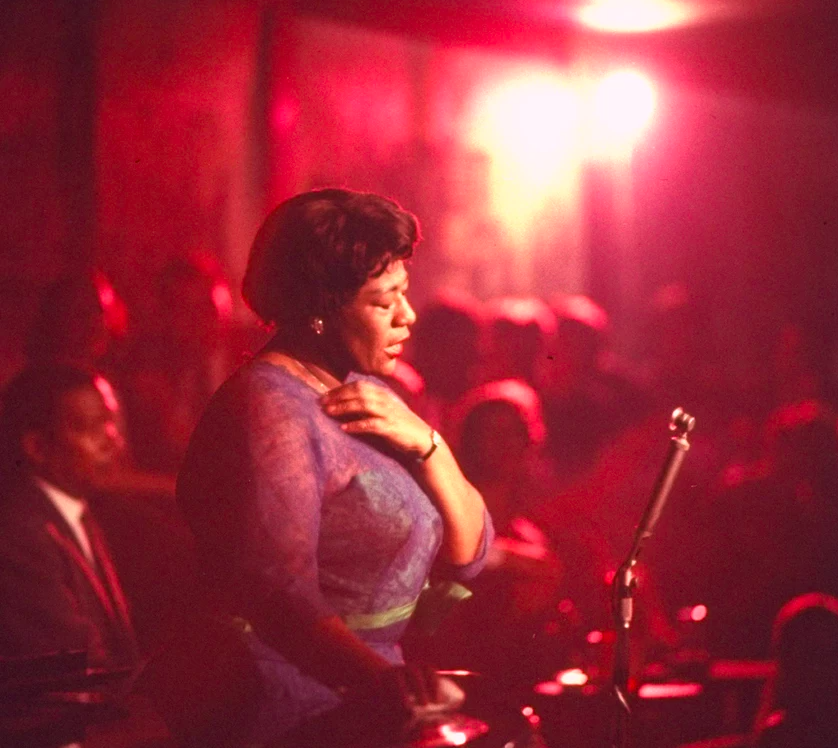
Jazz singer Ella Fitzgerald is the subject of the documentary “Ella Fitzgerald: Just One of Those Things.” (Photo courtesy of Getty Images / Eagle Rock Entertainment.)

Jazz singer Ella Fitzgerald is the subject of the documentary “Ella Fitzgerald: Just One of Those Things.” (Photo courtesy of Getty Images / Eagle Rock Entertainment.)

Review: Ella Fitzgerald documentary shows how she became a musical icon and a showbiz chameleon

June 24, 2020 by Sean P. Means

There are two things to know about Ella Fitzgerald, two things that director Leslie Woodhead’s fleet-footed documentary “Ella Fitzgerald: Just One of Those Things” spells out wonderfully:

 1) Ella Fitzgerald remains the pre-eminent singer of the 20th century.

 2) She worked very hard, and sacrificed much of herself and her personal life, to make that happen.

Woodhead follows Fitzgerald’s career from when she was a skinny-legged teen, nervously giving her first performance in front of an audience — on an amateur-night open-mic show at The Apollo, the legendary Harlem theater. They laughed at her shabby dress, but they thrilled to her voice.

So did the bandleader Chick Webb, who hired Ella as his singer. She was an instant star and landed on the hit parade, with her nursery-rhyme adaptation “A-Tisket A-Tasket.” When Webb died young, Fitzgerald’s name replaces his as the band leader.

But while Fitzgerald was becoming the queen of swing jazz, she started branching out. She started hanging out with the likes of Dizzy Gillespie, and reinvented herself as a bebop jazz musician — using her voice as an improvisational instrument the way horn players and pianists did. In her scat solos, she could work in dozens of samples from other songs, all off the top of her head.

The third major phase of Fitzgerald’s career is when she became a global headliner. With guidance from her manager, Norman Granz, Fitzgerald recorded albums in which she reinterpreted the Great American Songbook — works by the Gershwins, Cole Porter and other great songwriters.

Woodhead assembles a wide range of interviewees — writers, biographers, former colleagues, and her adopted son, jazz musician Ray Brown Jr. — to reflect on Fitzgerald’s talent and impact. She also collects comments from generations of admiring musicians, including Johnny Mathis, Smokey Robinson, Patti Austin, Tony Bennett, Itzhak Perlman, Andre Previn (who died in 2019), Jamie Cullum and Laura Mvula. They tell us what we already know: That Fitzgerald’s talent and drive were one of a kind.

Thankfully, there’s a good amount to Fitzgerald’s own voice, both in interviews and her music, throughout Woodhead’s thorough documentary. There’s enough of that voice — the one Stevie Wonder praised in “Sir Duke” — to entertain and enthrall, and make us bookmark our favorite streaming service to hear more.

——

‘Ella Fitzgerald: Just One of Those Things’

★★★

Available Friday, June 26, as a VOD rental on most platforms, and through virtual cinemas (including SLFS@Home). Not rated, but probably PG-13 for language and mature themes. Running time: 89 minutes.

June 24, 2020 /Sean P. Means
Comment
Filmmaker Mark Titus brings his young niece, Poppy, to see the salmon climb the fish ladder at Seattle’s Ballard Locks, in a scene from the documentary “The Wild.” (Photo courtesy of August Island Pictures.)

Filmmaker Mark Titus brings his young niece, Poppy, to see the salmon climb the fish ladder at Seattle’s Ballard Locks, in a scene from the documentary “The Wild.” (Photo courtesy of August Island Pictures.)

Review: 'The Wild' is an absorbing documentary that melds the personal with the political in a fight to preserve a wild salmon run

June 24, 2020 by Sean P. Means

In his return trip to the world’s last pristine wild salmon run, filmmaker Mark Titus turns his film “The Wild” into something unique: A mix of the environmental and the emotional, the political and the personal.

In his 2014 documentary “The Breach,” Titus described the battle for Bristol Bay, Alaska, where the wild salmon run — the only one left in the world that hasn’t been altered by humans — was under threat by the proposed Pebble Mine. The proposed open-pit mine would extract gold and copper from the ground, but likely leave behind environmental damage that would never be completely fixed.

The good news at the end of “The Breach” was that the efforts of those opposed to the mine — an alliance of fishermen, activists, artists, native Alaskans and others — the U.S. Environmental Protection Agency put a permanent ban on mining in Bristol Bay. All seemed right with the world.

“The Wild” explains what brought the mining plans back from the dead: The election of Donald Trump, and his appointment of Scott Pruitt, the climate-change denier and former Oklahoma attorney general who was picked to head the EPA. Suddenly, the Pebble Mine was back in play, and the opposition had to start all over again.

Trump’s election also put Titus in a personal tailspin. He talks about becoming an alcoholic, and how his decline coincided with his grandmother’s death and his mother’s cancer diagnosis. As the movie starts, Titus is 55 days’ sober, and questioning his decision to grab his cameras and return to Bristol Bay.

Titus soldiers on, reacquainting viewers with the people battling against the mine, and introducing us to celebrities — including actors Adrian Grenier and Mark Harmon, and restaurateur and “Top Chef” judge Tom Colicchio — who are taking up the cause. He even snags an interview with the mining corporation’s reasonable-sounding CEO, someone Titus couldn’t get near in his first film.

Titus weaves his personal story into his goal of saving Bristol Bay, and hits on a touching metaphor: Just as he deluded himself into thinking his life and his drinking could co-exist, so the mining company has lied to itself (and to Alaskans) that the salmon run and the mine can co-exist. Titus’ human-sized perspective gives “The Wild” an emotional clarity some environmental documentaries lack.

——

‘The Wild’

★★★

Available Friday, June 26, as a VOD rental on most platforms, and through virtual cinemas (including SLFS@Home). Not rated, but probably PG-13 for mature themes. Running time: 64 minutes.

June 24, 2020 /Sean P. Means
Comment
Lars (Will Ferrell, left) and Sigrit (Rachel McAdams) perform for the world in the music-filled comedy “Eurovision Song Contest: The Story of Fire Saga.” (Photo by John Wilson, courtesy of Netflix.)

Lars (Will Ferrell, left) and Sigrit (Rachel McAdams) perform for the world in the music-filled comedy “Eurovision Song Contest: The Story of Fire Saga.” (Photo by John Wilson, courtesy of Netflix.)

Review: Musical wackiness of Will Ferrell's 'Eurovision' sometimes gets in the way of a sweet love story

June 24, 2020 by Sean P. Means

Will Ferrell’s innate wackiness gets an international stage in “Eurovision Song Contest: The Story of Fire Saga,” a goofy and scattershot comedy that tries to lovingly satirize something apparently impervious to satire: The Eurovision Song Contest.

Eurovision is one of those things, like soccer and Kylie Minogue, for which the rest of the world shares a deep fondness while most Americans have no clue. It’s an annual singing competition, started in 1956, in which one musical act from each participating country performs a hit single — big voices and campy theatrics are favored — with winners chosen by juries and fans worldwide. Only a few winners ever became superstars: Lulu (a co-winner in 1969), Katrina and the Waves (1997), Celine Dion (1988) and, most famously, ABBA in 1974, with their classic “Waterloo.”

It’s seeing ABBA on TV that fuels the dream of Lars Erickssong, a boy from the small fishing village of Husavik, Iceland. In adulthood, Lars (played by Ferrell), dreams of competing in the Eurovision Song Contest — earning him scorn from his fisherman father, Erick (Pierce Brosnan). His friend since childhood, Sigrid Ericksdottir (Rachel McAdams), believes in Lars’ dream, and has a long-standing crush to which Lars is oblivious. Together, under the name Fire Saga, they play their synth-pop songs in hopes of someday competing at Eurovision.

The folks at Icelandic Public Television think the super-talented Katiana (Demi Lovato) will not only represent Iceland, but could win the whole contest — a prospect that worries one of the network’s board members, Victor (Michael Persbrandt), because he fears Iceland would be bankrupted by having to host next year’s contest. (Tradition holds that one year’s winning country is next year’s host.) However, in a twist of fate (and, perhaps, a nod to “The Producers”), Fire Saga ends up as Iceland’s entry.

The excitement of competing at Eurovision threatens to overwhelm our Icelandic heroes. Besides the pressure of performing, and surviving the mechanics of a big production number, there’s the intrigue brought by the competition. The favorite, the Russian showman Alexander Lemtov (played by “Downton Abbey” hunk Dan Stevens), starts flirting with Sigrit — while the sultry Greek entrant, Mita Xenakis (Melissanthi Mahut), has her eye on Lars.

Ferrell and co-screenwriter Andrew Steele (a writer on “Saturday Night Live” during Ferrell’s tenure there) try to cram too much into their script, and the bloated two-hour running time suffers for it. The parts about Lars and Sigrit, finding their musical voices and figuring out their feelings for each other, are delightfully earnest and quite sweet. The jokes about the contest itself, and the odd behavior of Icelanders (for example, Sigrit believes in elves), don’t wear as well.

Since the backdrop is a musical contest, director David Dobkin (who worked with McAdams making “Wedding Crashers”) amps up the song cues to a ferocious degree. Dobkin uses his music-video background (he’s made videos for Tupac Shakur, Elton John and Maroon 5 over the years) to make the Eurovision competitors as over-the-top as possible. And he borrows from the “Pitch Perfect” playbook for a lively impromptu sing-off that features several past Eurovision winners — though most Americans won’t recognize any of them.

Ferrell is funny — no surprise there — but he also brings a wide-eyed enthusiasm for the sincerity underneath the silliness of Eurovision. (Reportedly, he’s been a fan ever since his Swedish wife, then girlfriend, introduced him to it in 1999.) The movie filmed some parts backstage at last year’s competition in Tel Aviv (this year’s contest in Rotterdam was postponed to 2021 because of COVID-19), and the organizers seem happy to let Ferrell and company make fun of them. The real punchline, one that most Americans won’t get, is that what the movie treats as parody isn’t that far removed from the real contest.

McAdams shines brightest in “Eurovision,” though. She’s a strong comic foil for Ferrell, and a charming object of Lars’ affection — and, in the movie’s sweet finale, an artist finding her own voice. (Never mind that McAdams’ singing voice is dubbed, by Swedish singer Molly Sandén, once a Junior Eurovision competitor.) McAdams also brings out the romantic in Ferrell, and when the movie is focused on them, and not the spectacle of the competition, there’s some real magic at work.

——

‘Eurovision Song Contest: The Story of Fire Saga’

★★1/2

Debuts Friday, June 26, streaming on Netflix. Rated PG-13 for crude sexual material including full nude sculptures, some comic violent images, and language. Running time: 122 minutes.

June 24, 2020 /Sean P. Means
Comment
  • Newer
  • Older

Powered by Squarespace